Object found beyond Neptune orbiting the Sun in the opposite direction

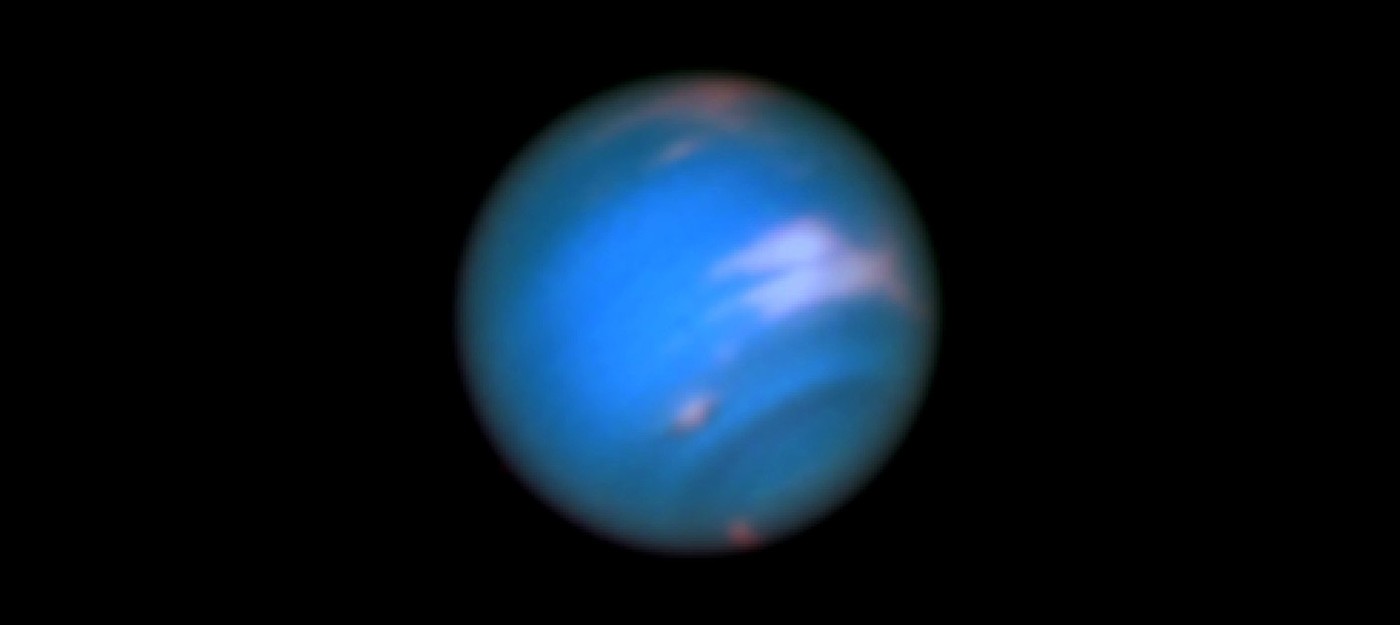
Far out in the outer solar system, astronomers have found an object moving against the flow of cosmic traffic. It cuts across the plane where the planets orbit at a remarkably steep angle. Where it came from is still unknown. Neptune may have tossed it onto this trajectory, but it could also be a visitor from another star system.
The Rubin Observatory in Chile spotted the object beyond Neptune, roughly 4.8 billion kilometers from the Sun. For now it carries the temporary designation R631, and scientists don't yet know whether it's a rocky body or a volatile-rich comet.
To see what makes the orbit of R631 unusual, it helps to rewind 4.6 billion years to the birth of the solar system. A giant cloud of gas and dust collapsed under its own gravity and flattened into a thin, rotating disk around the young Sun. Dust grains in that disk collided and stuck together, gradually growing into larger bodies that became the planets, asteroids, and comets.
Since all of these objects were born from the same disk, they inherited its flat structure and its direction of rotation. Seen from above Earth's north pole, most bodies circle the Sun counterclockwise and in roughly the same plane. R631 breaks that pattern.
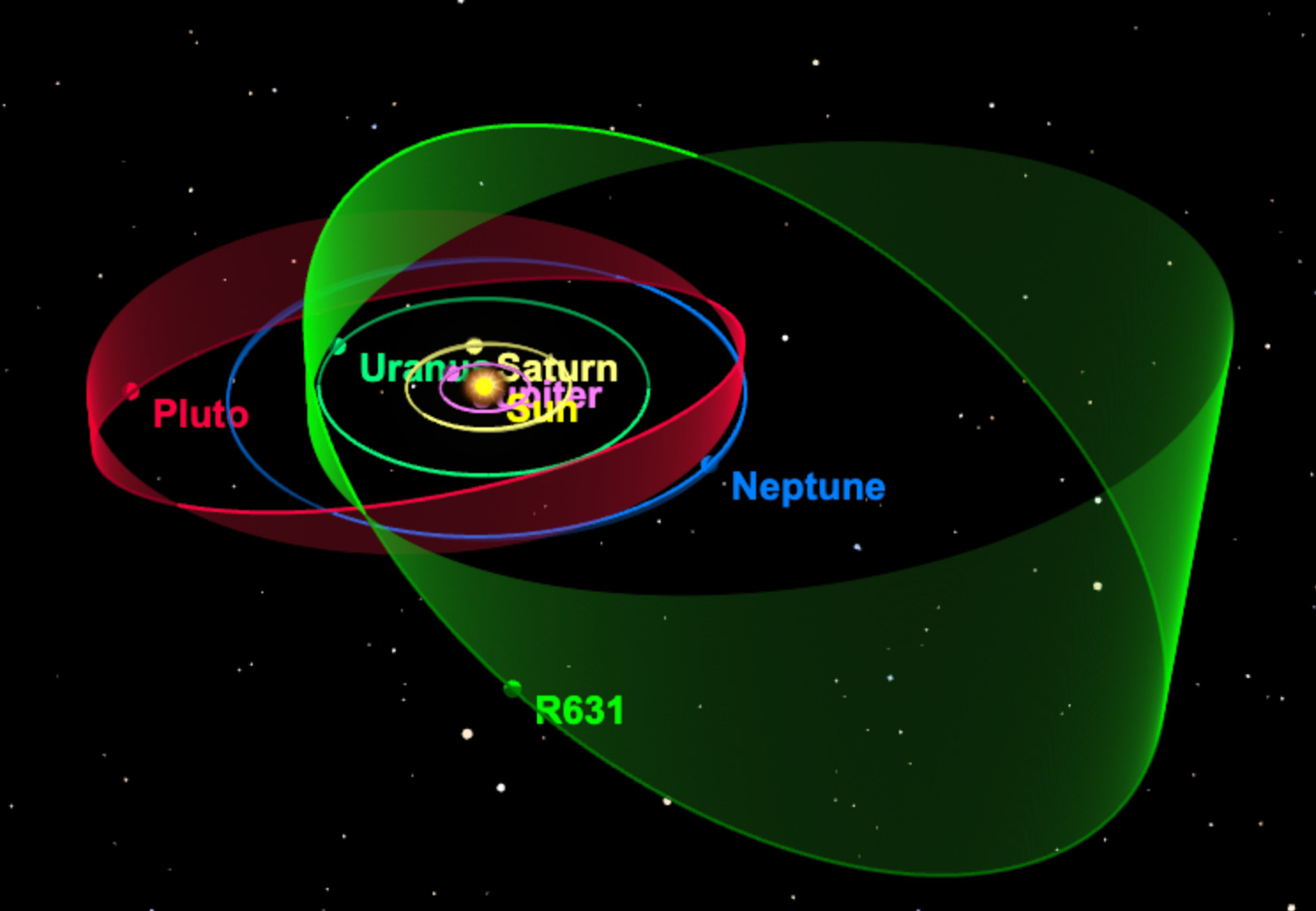
According to EarthSky, the orbital inclination of the object is 142 degrees relative to the plane of the solar system. In astronomy, an inclination above 90 degrees means retrograde, or backward, motion. A simulation by astronomer Tony Dunn shows the path of R631 clearly, with the object slicing through the orbital plane at a sharp angle.
Retrograde orbits do exist in the solar system, but they're rare. The best-known example is Halley's Comet, with an inclination of about 162 degrees. Among large objects beyond Neptune, such trajectories are even rarer, which makes R631 an appealing target for observation.
The object first showed up in Rubin data from observations made between December 2025 and March 2026. Astronomers and citizen scientists combing through the observatory's public alert stream took notice. The system automatically reports every change in the sky that the telescope picks up during its survey.
R631 currently sits about 32 astronomical units from the Sun, or 32 times farther out than Earth. One trip around the star takes roughly 547.84 years. The object will reach perihelion, the closest point of its orbit to the Sun, on October 31, 2047, coming within about 24 astronomical units.
Preliminary estimates suggest R631 may be a comet about 100 kilometers across. If so, the body will start warming up and showing activity as it nears the Sun. Volatile materials would evaporate from its surface, offering a better look at its composition.
Scientists have two competing explanations for the retrograde orbit. The first holds that R631 formed in another star system that once passed too close to ours. The object may have been ejected from its home system and then captured by the gravity of the Sun.
In that case, R631 would join the short list of known interstellar objects alongside 'Oumuamua and comet 3I/ATLAS, with one key difference. 'Oumuamua and 3I/ATLAS merely flew through the solar system on open trajectories, while R631 would have been caught in a stable orbit around the Sun.
The second explanation says the object was born right here in the solar system. A close encounter with a massive planet like Jupiter or Neptune could have flung it into a retrograde orbit. Such gravitational maneuvers can sharply change the inclination and shape of small-body orbits.
The Minor Planet Center will soon assign R631 an official designation. Astronomers will keep tracking the object as it approaches the Sun, hoping to collect data on its composition and activity. Those observations should help determine which of the two origin stories is closer to the truth.
- Hubble sees for the first time in visible light a 150-billion-kilometer "cat's tail" in a neighboring star system
- No Man's Sky players built a memorial to Patrick Stewart and held a mass farewell to the legendary actor
- On November 18, Voyager 1 will become the first human-made spacecraft to move one light-day away from Earth