On November 18, Voyager 1 will become the first human-made spacecraft to move one light-day away from Earth

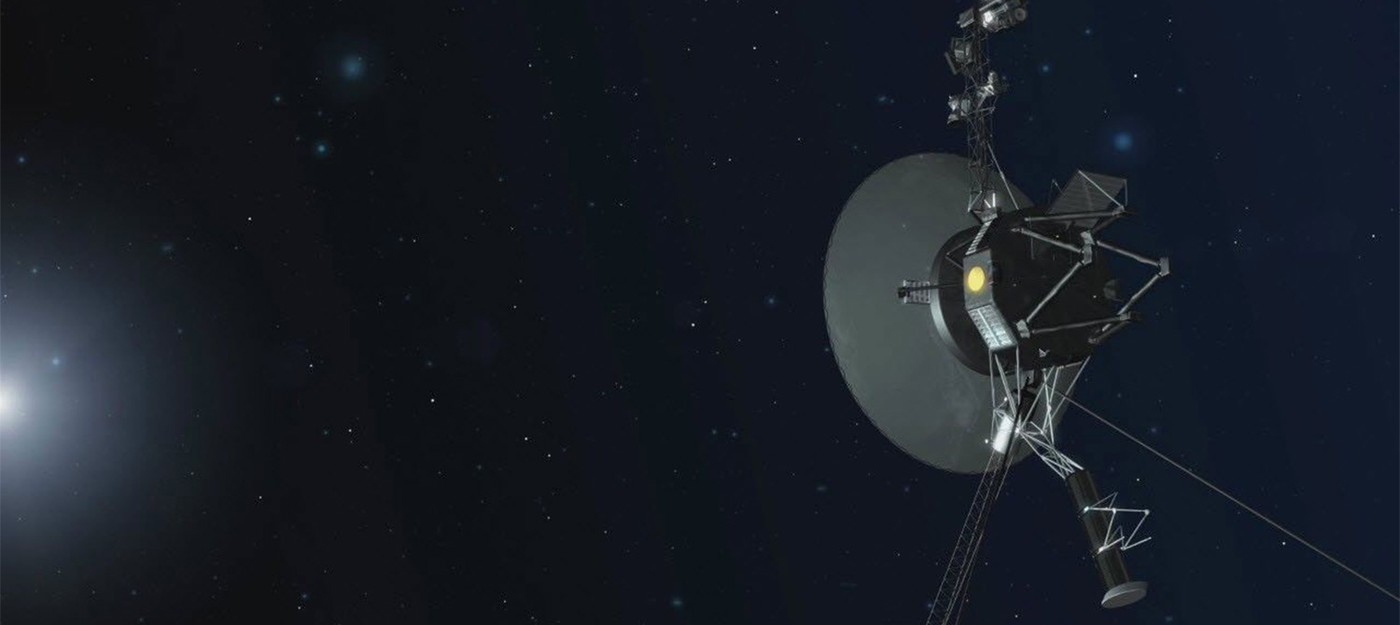
Voyager 1 has been flying for almost 50 years, and a new milestone is coming up. According to NASA calculations, the probe will be one light-day from Earth on November 18, 2026, at 5:16:07 a.m. EST (10:16:07 UTC).
It will be the first human-made object to cover that distance, and the agency has already put a countdown to the moment on its website.
A light-day measures distance, not time. It is the path light travels in 24 hours, and at roughly 300,000 kilometers per second, that works out to about 26 billion kilometers.
For comparison, the Moon sits 384,400 kilometers from Earth, and the average distance from our planet to the Sun is 149.6 million kilometers. Voyager 1 is currently about 174 times farther from us than the Sun is.
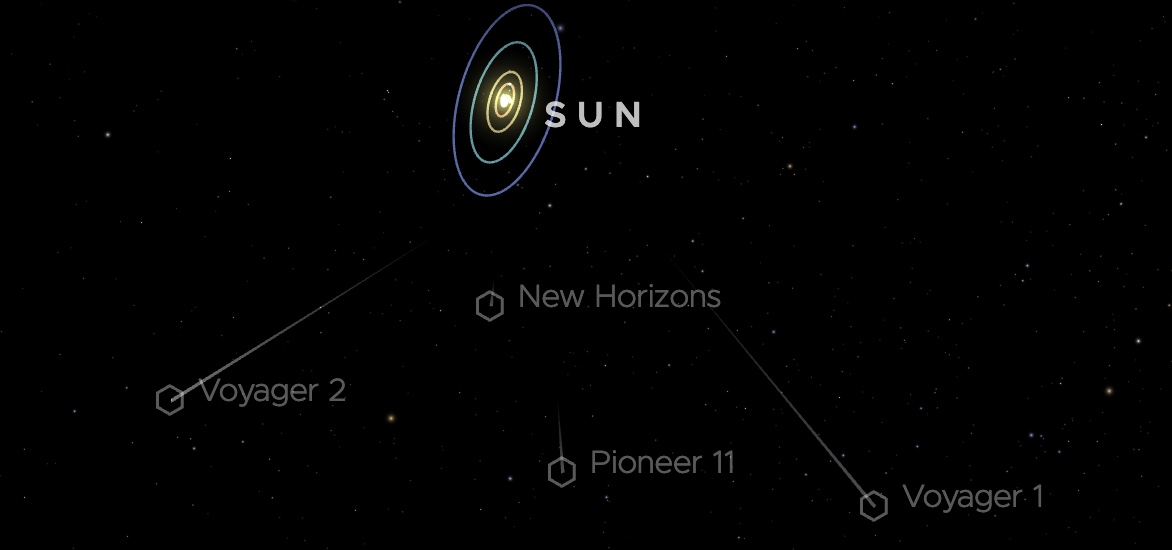
The probe moves at about 60,900 kilometers per hour relative to the Sun, or almost 17 kilometers per second. That is quick, but another spacecraft holds the speed record for human-made objects. Parker Solar Probe reaches roughly 635,000 kilometers per hour at perihelion.
Voyager 1 launched on September 5, 1977, and will need 49 years, 2 months, and 13 days to reach the one light-day mark. The mission was originally planned for five years, during which the probe was supposed to study Jupiter and Saturn.
NASA engineers have since stretched its working life almost tenfold. In 2012, Voyager 1 crossed the heliopause, the edge of the bubble of solar wind, and has been sending back data from interstellar space ever since.
Keeping it running is getting harder. In 2024, the onboard computer suffered a critical memory failure, and specialists needed weeks of diagnostics to find and fix the fault. Distance made the job even tougher: a signal already took more than 22 hours to reach the probe one way, and sending a command and getting a reply back took at least 45 hours.
Early in 2026, Voyager 1 suddenly lost power. NASA had to trigger an emergency procedure and switch off some of the science instruments to keep the spacecraft alive.
Power comes from three radioisotope thermoelectric generators (RTGs), which turn heat from the decay of plutonium-238 into electricity. Their output drops every year. Specialists estimate there is enough energy for Voyager 1 to keep operating into the 2030s, as long as no serious problems pop up.
After the final shutdown, the probe will keep coasting. Its course points toward the star AC +79 3888, also known as Gliese 445. This red dwarf lies in the constellation Camelopardalis, roughly 17 light-years from the Sun.
Voyager 1 travels at about 0.0056% of the speed of light. At that pace, covering 17 light-years would take more than 300,000 years. But Gliese 445 is itself approaching the Solar System, so in roughly 40,000 years the probe will pass within about 1.6–1.7 light-years of the star.
- Object found beyond Neptune orbiting the Sun in the opposite direction
- Hubble sees for the first time in visible light a 150-billion-kilometer "cat's tail" in a neighboring star system
- No Man's Sky players built a memorial to Patrick Stewart and held a mass farewell to the legendary actor