Engineer releases Ink Studio for free, a tool for pixel-style 3D graphics using Gaussian splats

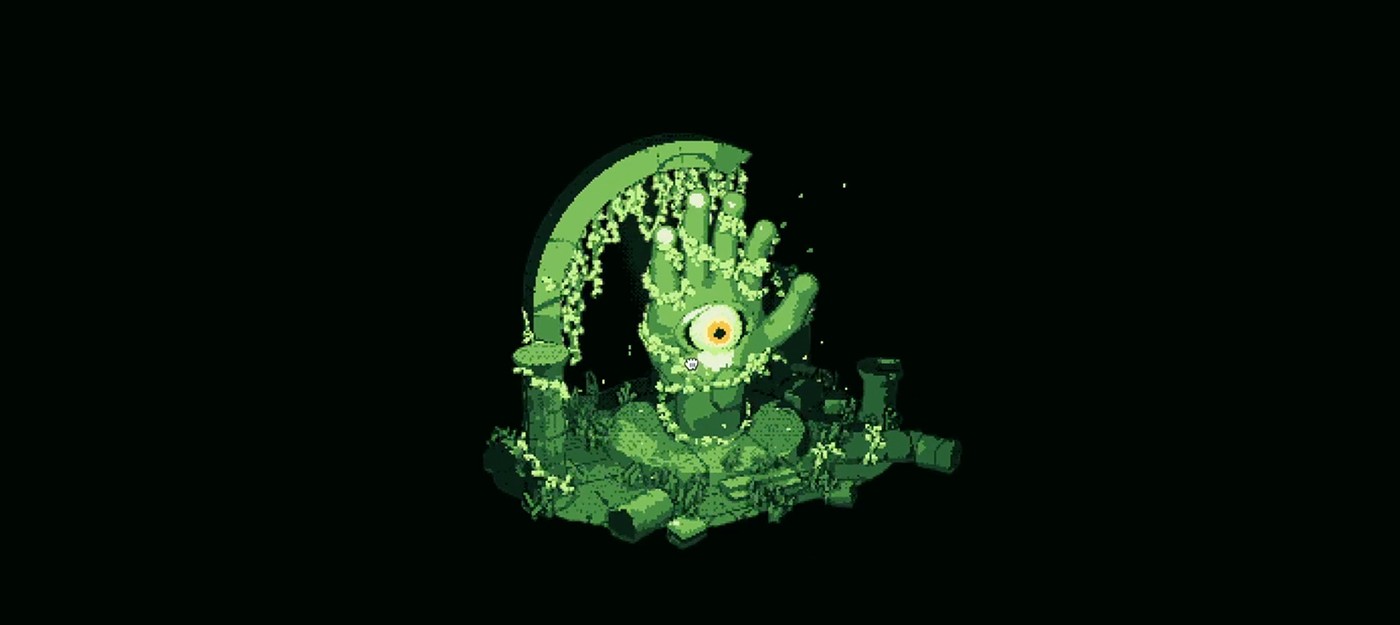
A developer going by Silicon Jungle has released a free toolkit called Ink Studio on GitHub. It lets users sculpt 3D scenes and turn them into pixel art built on Gaussian splats.
Silicon Jungle is lead AI engineer at Latitude Games, the studio known for the text adventure AI Dungeon. Before that, he worked at GitHub Next, Replit, and tldraw. He has been posting his pixel splat demos for the past few weeks, noting they were made in Claude Fable 5.2.
Gaussian splats describe a scene with a multitude of semi-transparent, blurry ellipsoids instead of polygons, each with its own position, shape, and color. The method is usually used for photorealistic 3D scans, but Ink Studio applies it to stylized graphics. Objects are first defined as signed distance fields (SDFs), then "baked" into splats with a limited palette and dithering.
Ink Studio is written in JavaScript and runs on Node.js 18 and newer with no external dependencies. Scenes can be described in code or JSON and rendered on the CPU through the command line. A WebGL 2 renderer is available for the browser, while some individual tools work with WebGPU.
According to the developer, the toolkit includes:
sculpting from spheres, boxes, tori, tubes, and other primitives, with boolean operations, bevels, and deformations
a full animation toolset with rigs, puppets, inverse kinematics, facial expressions, and ready-made action clips
particles, cloth, hair, ropes, and simulation of sand, jelly, clay, and water
destruction, plus fire, frost, and plant growth that leave lasting marks on the world
procedural generation of terrain, rivers, roads, buildings, vegetation, and caves
import of OBJ, glTF, and GLB files, depth maps, and splats in PLY and SPZ formats, along with export to GLB
adaptive sound, spatial audio, and sync with MIDI and Ableton Link
A separate module keeps the pixel art clean. The command line can measure stray single pixels, flicker between frames, banding, and pillow shading, and it can also compare a render against a reference. Hand-drawn touch-ups painted over a frame can be projected back onto the object surface, so they stay visible from different angles.
The engineer says there has never been a game where simulation, story, sound, and visuals procedurally feed into each other. The sound of jumping on a mushroom, for example, could become a motif in the music, which in turn would affect gameplay and visuals.
In his view, such complexity used to be out of reach because of limited resources, but with AI it is entirely doable.
- Photoshop's Rotate Object feature turns a photo of your hand into a 3D drawing reference
- Creator of Task Manager is training an AI to beat one of the most punishing arcade games ever made
- Krafton CEO used ChatGPT to plot the Unknown Worlds takeover, court documents reveal