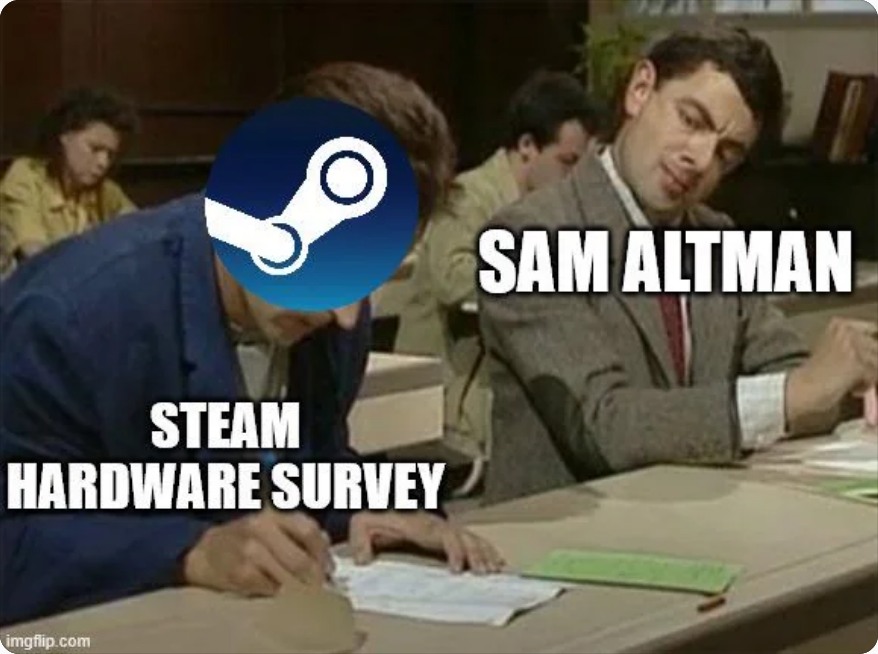
Users think Sam Altman looked at Steam statistics and then decided there is too much free RAM in the world

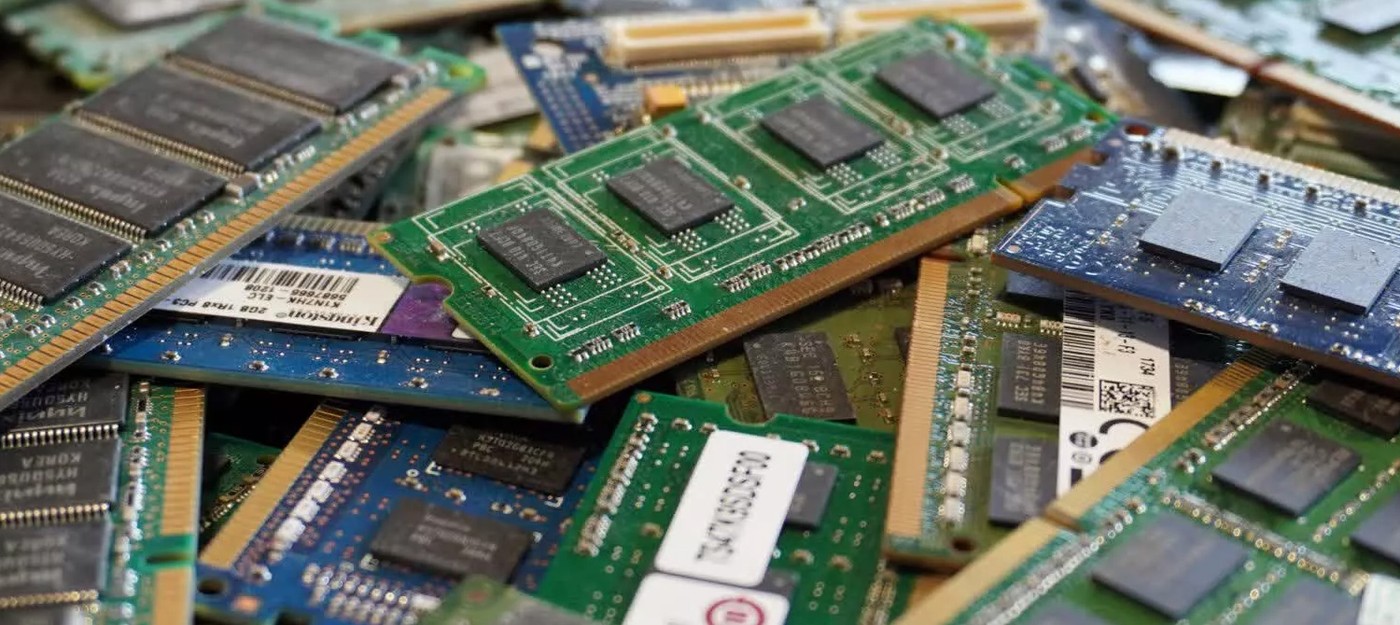
Sam Altman, head of OpenAI, turned home PCs into an object of data center envy with a single sentence. According to him, RAM in an ordinary computer is in use about 5% of the time, while in AI servers it runs at 100%.
The remark landed right as another round of the Steam Hardware Survey rolled out, and many players filling out Valve's questionnaire about their setups couldn't help picturing Altman poring over the statistics with a pencil in hand.
Jokes aside, the backdrop to this story is very real. In October 2025, OpenAI signed preliminary agreements with Samsung and SK Hynix under the Stargate infrastructure initiative for up to 900,000 DRAM wafers per month, which analysts estimate at around 40% of global production.
Things escalated from there. DDR5 prices jumped several times over within months, and Micron announced it was shutting down its consumer brand Crucial to focus on memory for AI.
The "idle resource" logic quickly backfired on Altman. A car sits in a parking lot for most of the day, an apartment stands empty while its owner is at work, and billions in a bank account are just dead weight.
One commenter took the argument to its logical conclusion:
He's got two kidneys, he should give one since he clearly isn't using it.
The complaint has a technical side too. AI servers don't use ordinary gaming sticks. They need registered RDIMM modules with error correction and HBM memory, which is soldered right next to the GPU accelerators. Your 32 GB of DDR5 is physically useless for Stargate.
The real problem is elsewhere: manufacturers are shifting capacity to server memory and HBM, so there are simply fewer new consumer modules. One player put it bluntly:
I don't think he wants our ram guys, he just wants to make sure we can never buy anymore.
Commenters also pointed to another motive. Local neural networks that enthusiasts run on their own PCs need plenty of RAM, and every such user means one lost subscription to a cloud service. Amid all this madness, DDR3 owners suddenly feel like far-sighted strategists, and the sharpest snapshot of the era turned out to be a comparison of two periods.
From 1980 to 2010, everyone marveled at hardware doubling in power nearly every year, while in 2026 the dream is more modest – affording a five-year-old PC to run 15-year-old games at full settings.