iPhone Duo hands-on impressions – 7.6-inch screen, under-display camera, and a fold in the center

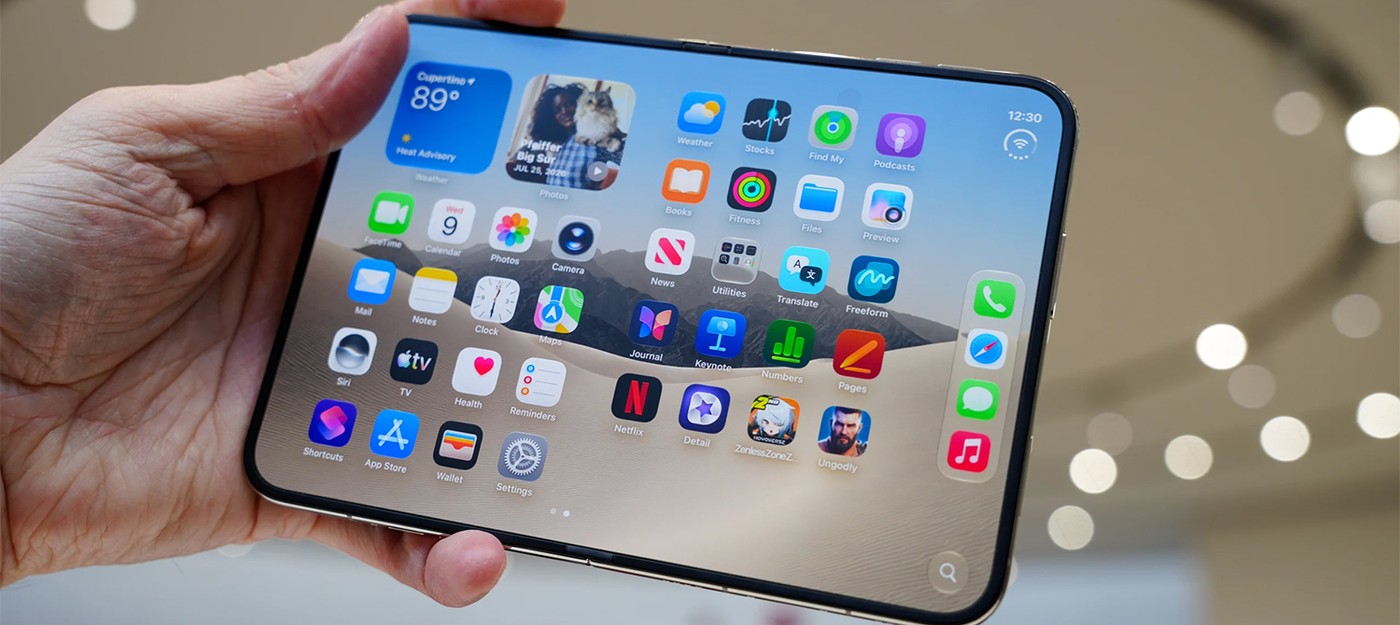
It's been almost 10 years since the iPhone X set the design language for Apple's flagships, and the company hasn't released such an unconventional gadget since. The iPhone Duo is Apple's first foldable smartphone, and based on first impressions, it looks like Apple's most interesting release in years.
The first hands-on session took place in a closed demo area, where journalists were given a chance to hold the real device.
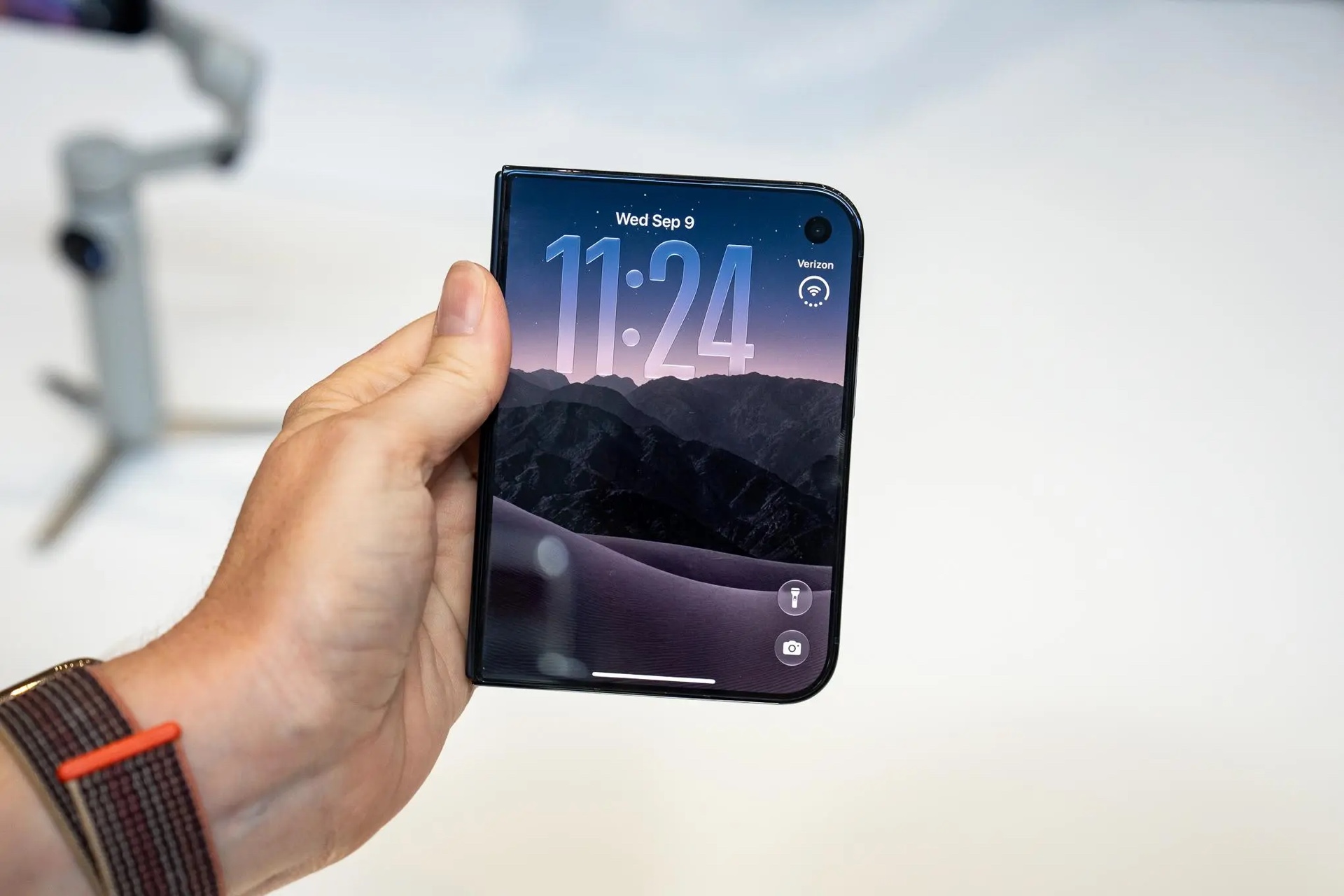
The design is built around two OLED panels – a 5.4-inch external display and a 7.6-inch flexible internal one. Layout-wise, the Duo resembles the original Pixel Fold, but with a noticeably refined chassis. The side edges feature a rounded profile, letting the device open with almost no effort.
The transition animation between the outer and inner displays deserves special mention. The interface flows from one panel to the other almost seamlessly, while subtle gradients and depth-of-field effects reinforce the sense of continuity. These are exactly the kind of details Apple traditionally polishes to a level that's hard to replicate.
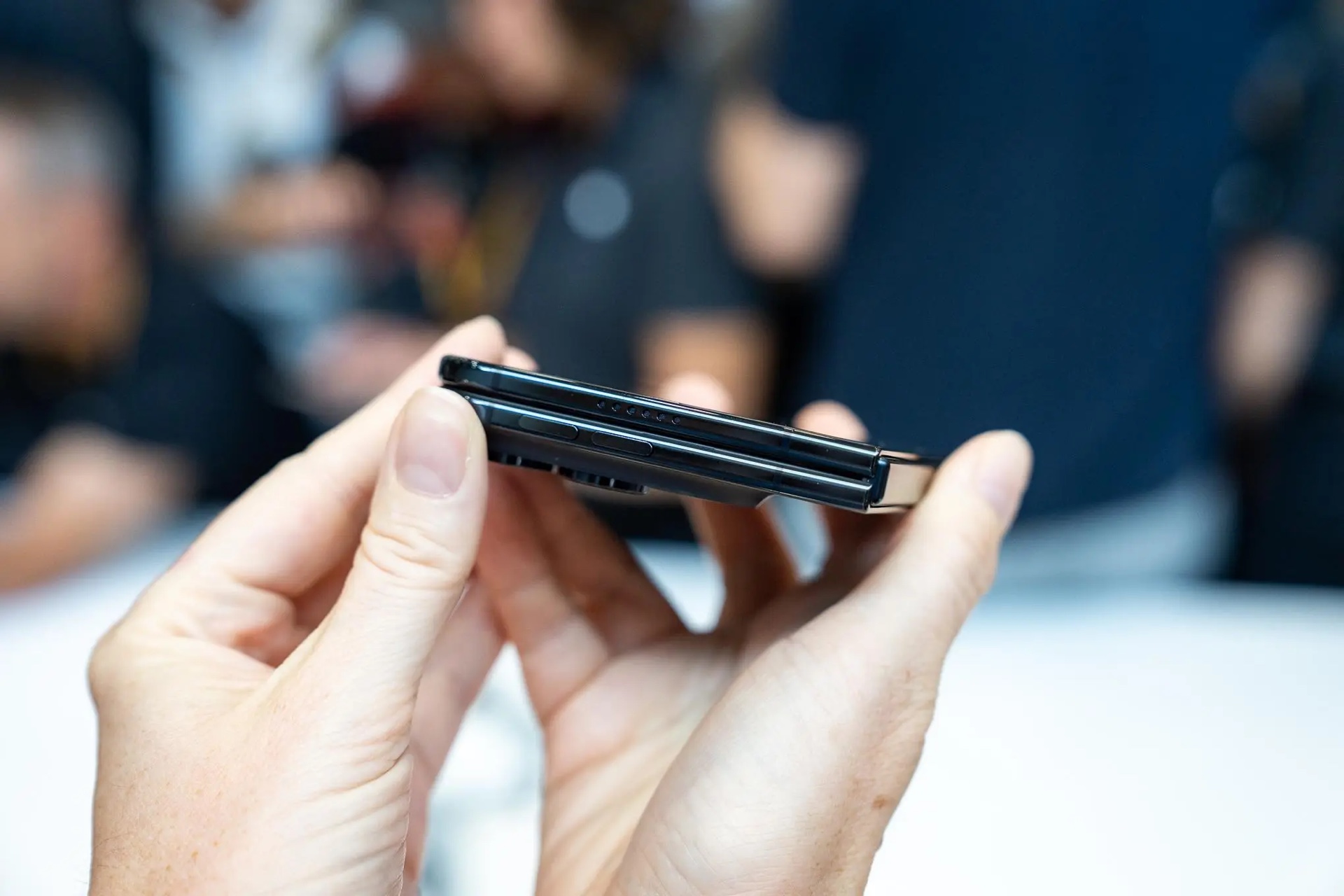
That said, the foldable iPhone can't be called light. It measures 11.3mm thick when closed and weighs 254 grams, while the Samsung Galaxy Z Fold 8 weighs 201 grams and measures 9.7mm thick. The frame is made of titanium and carries an IP68 rating for dust and water resistance.
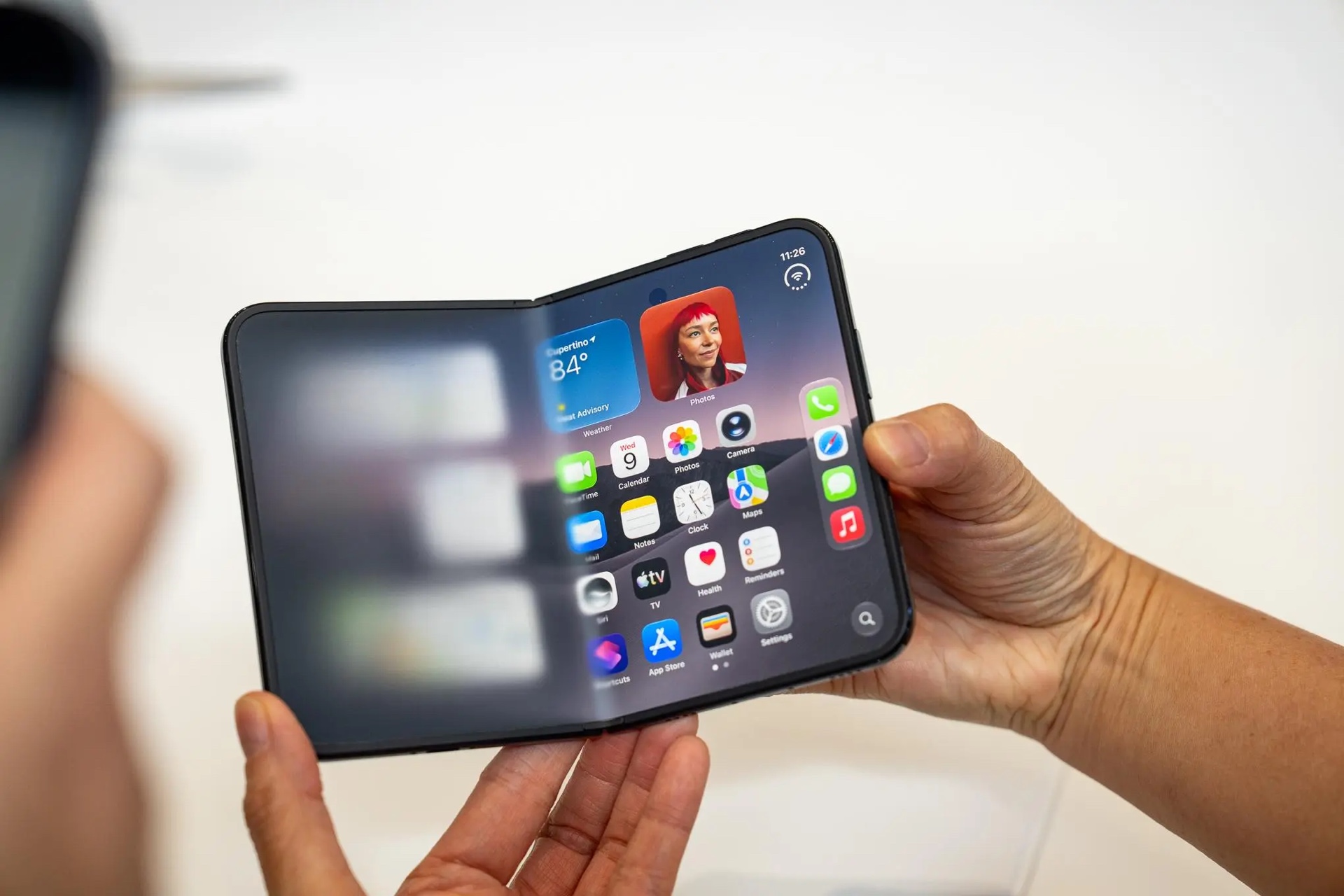
Side-by-side photos of the Duo next to the Z Fold 8 and the original Pixel Fold weren't possible – Apple representatives asked that this not be done. Still, the differences in size and design approach between the three foldables are obvious to the naked eye in person.
The set of physical controls is complete – a lock button with a built-in Touch ID sensor, a dedicated camera control key, and a volume rocker. The volume rocker sits on the top edge, and when the phone is closed, this placement turns out to be convenient, especially when switching frequently between portrait and landscape orientation. Going back to Touch ID from Face ID feels like a logical choice for a foldable form factor – unlocking and confirming purchases happen faster.
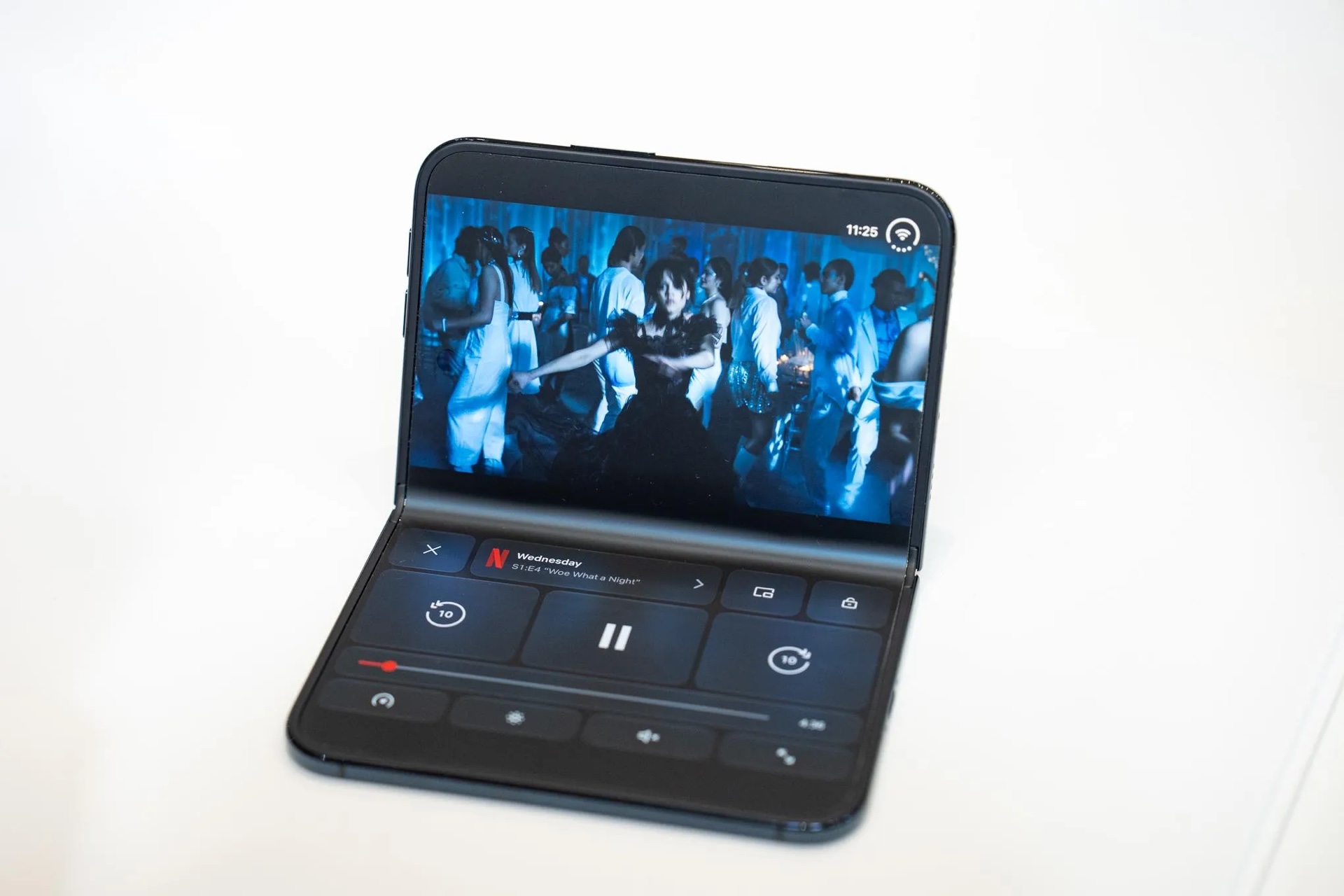
The Duo reliably detects its opening angle and supports several usage modes at once. These include a tent mode that turns the screen into a desk clock or calendar, a tabletop mode that locks one half of the body in place, and a free partial bend that's handy for reading ebooks.
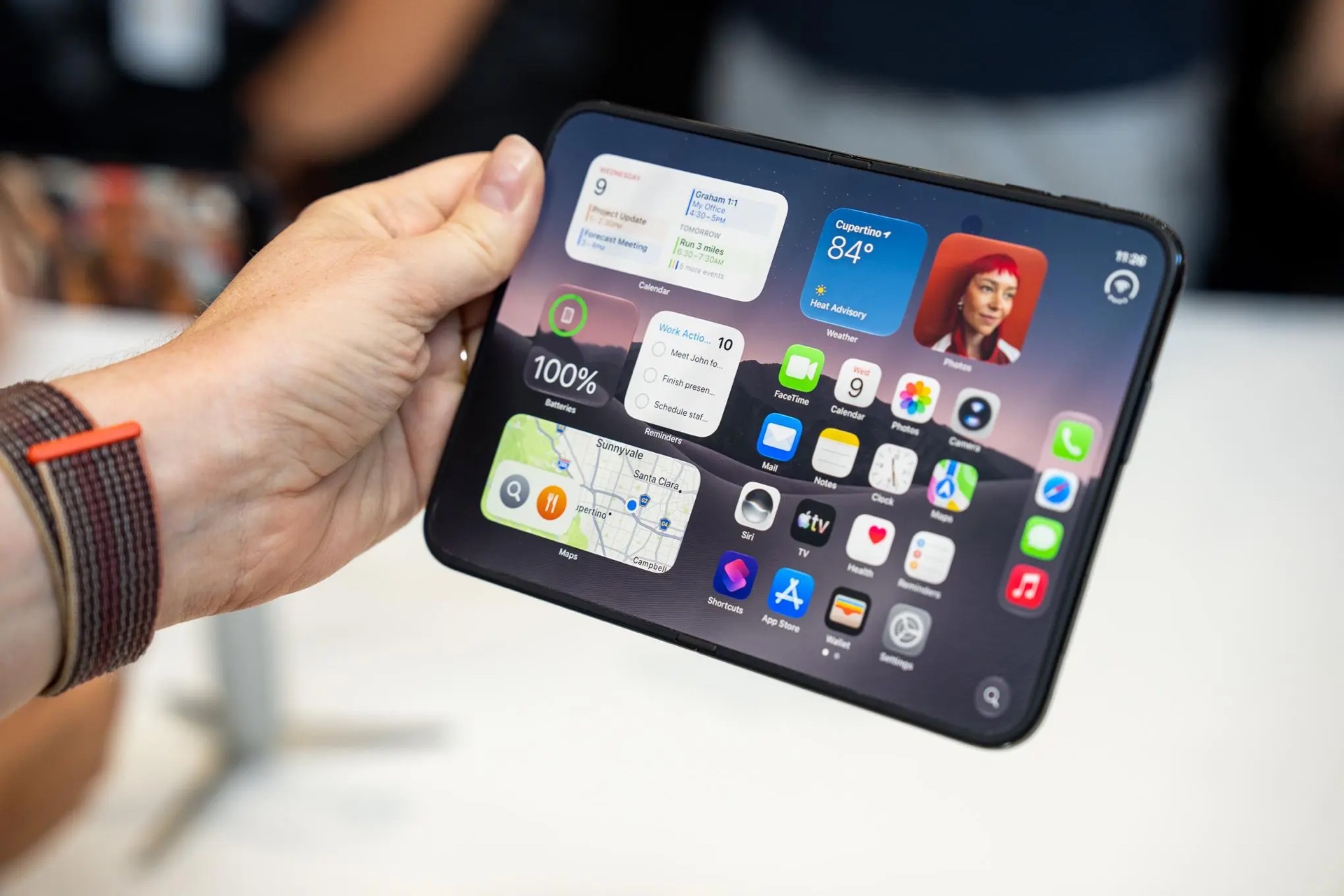
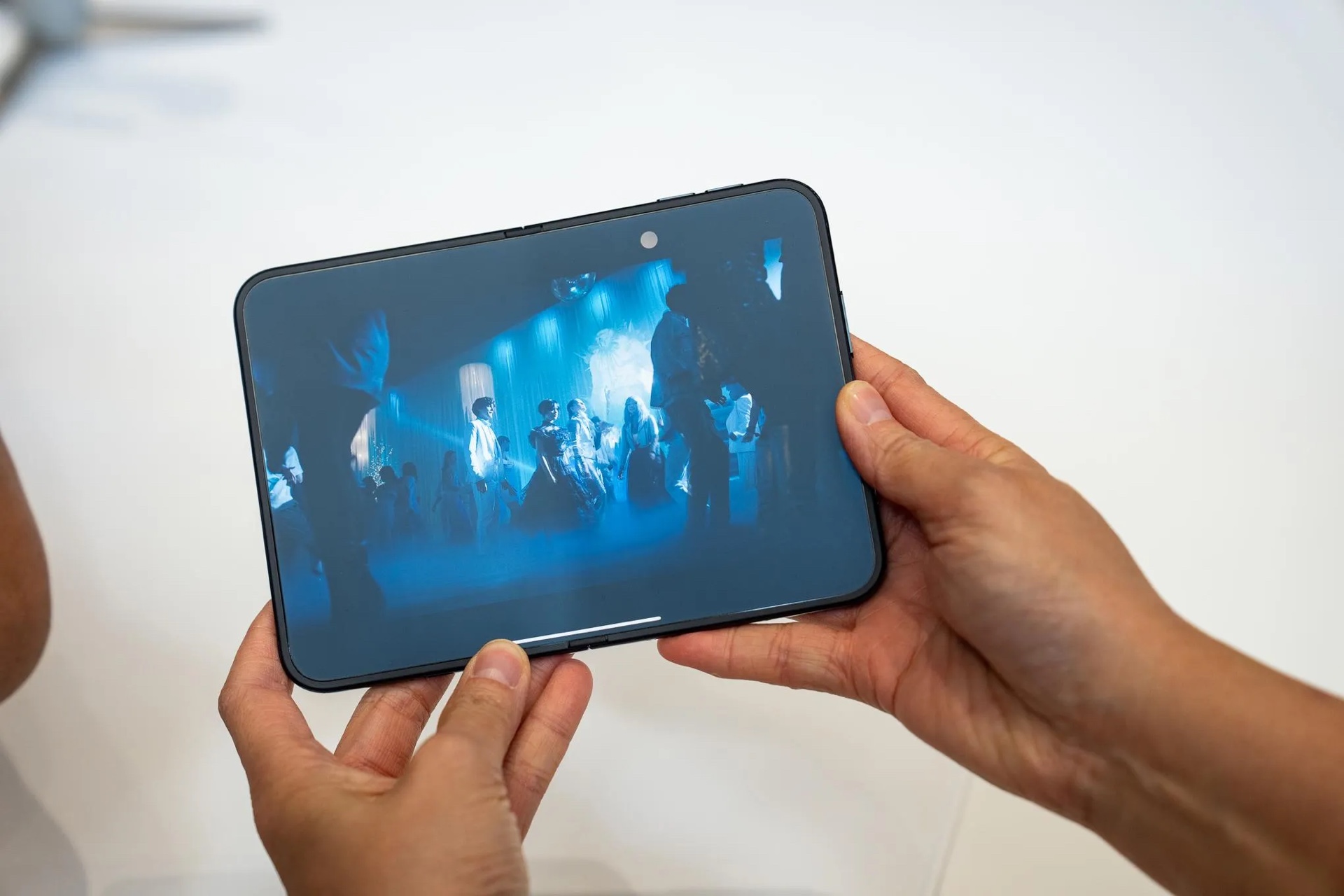
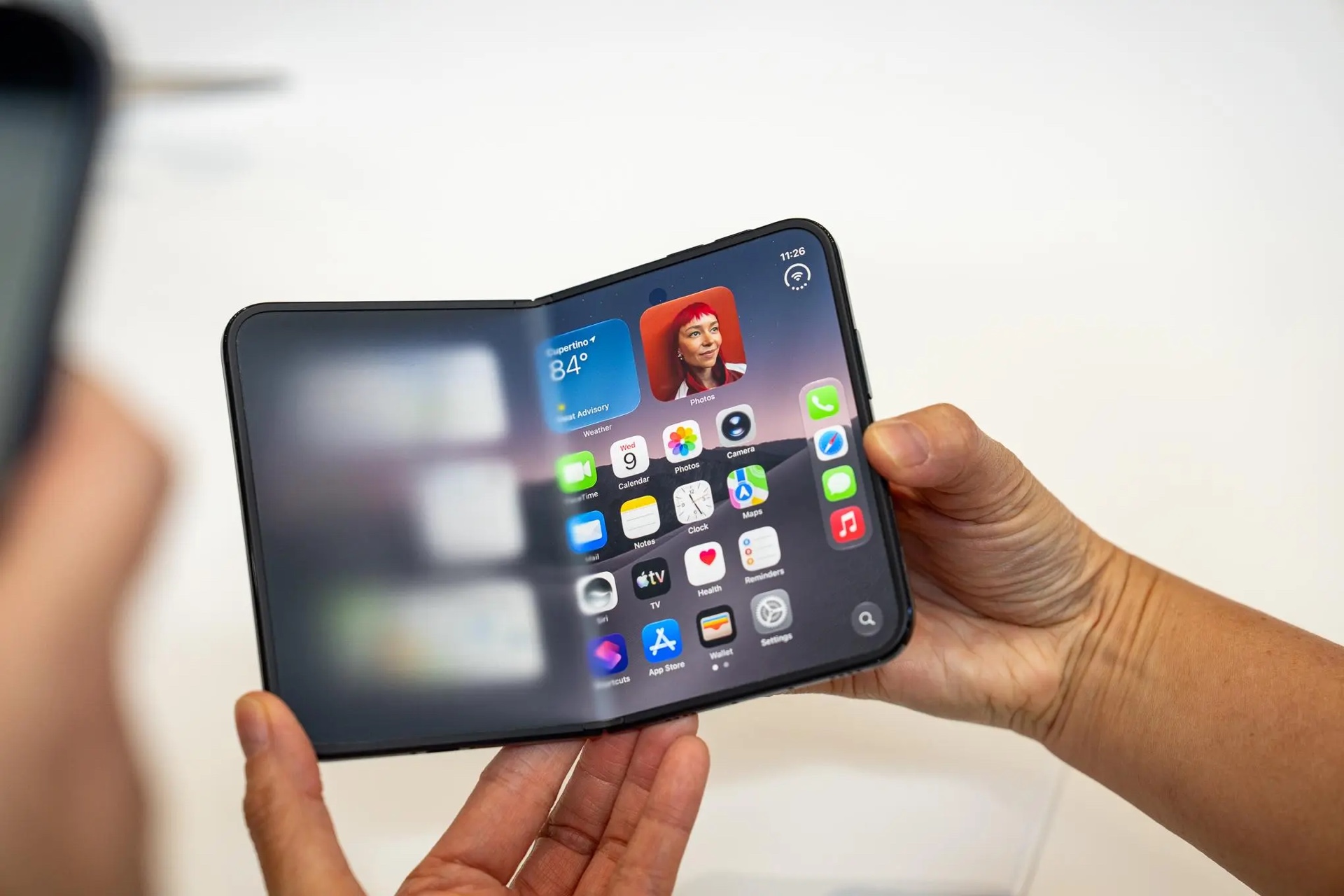
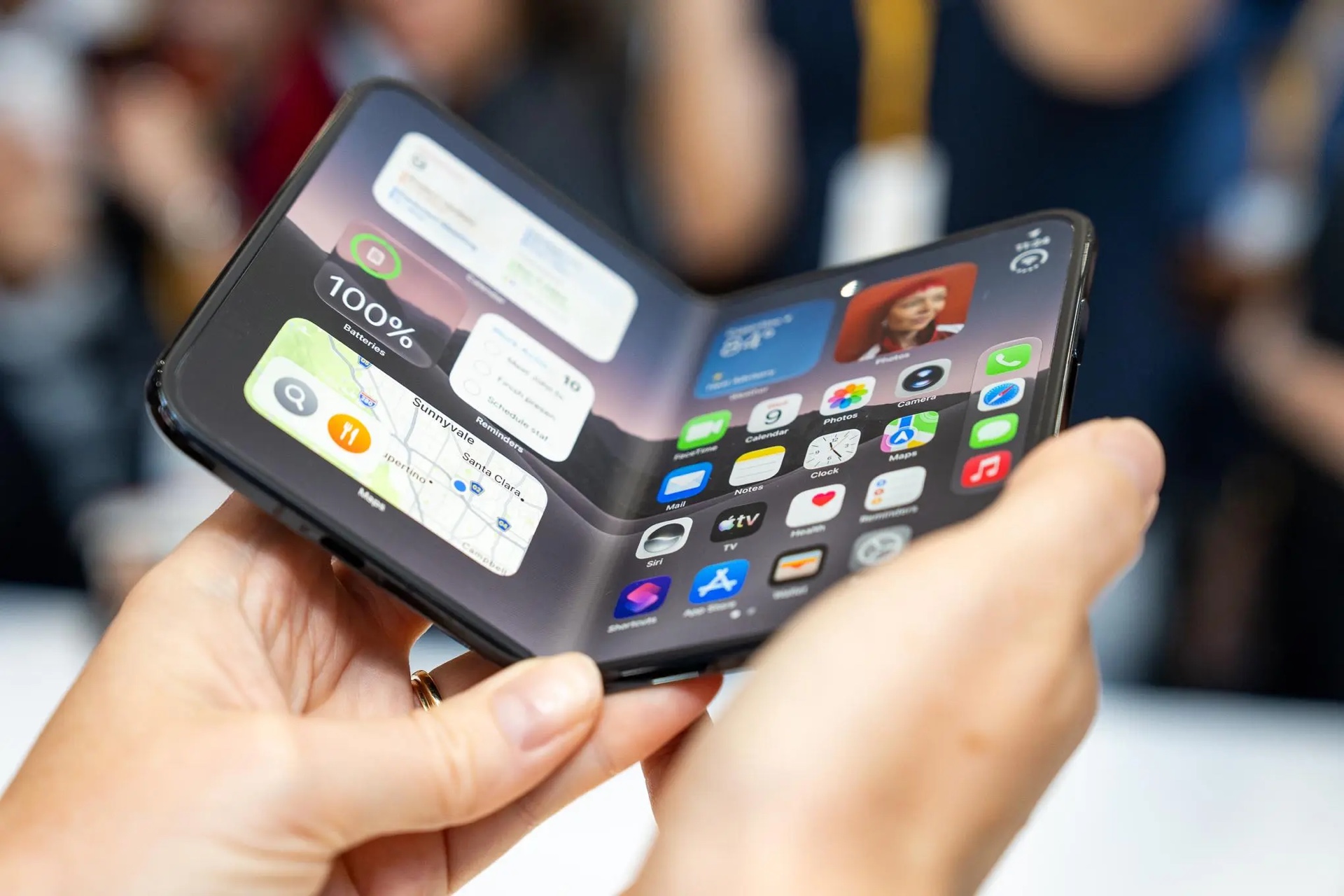
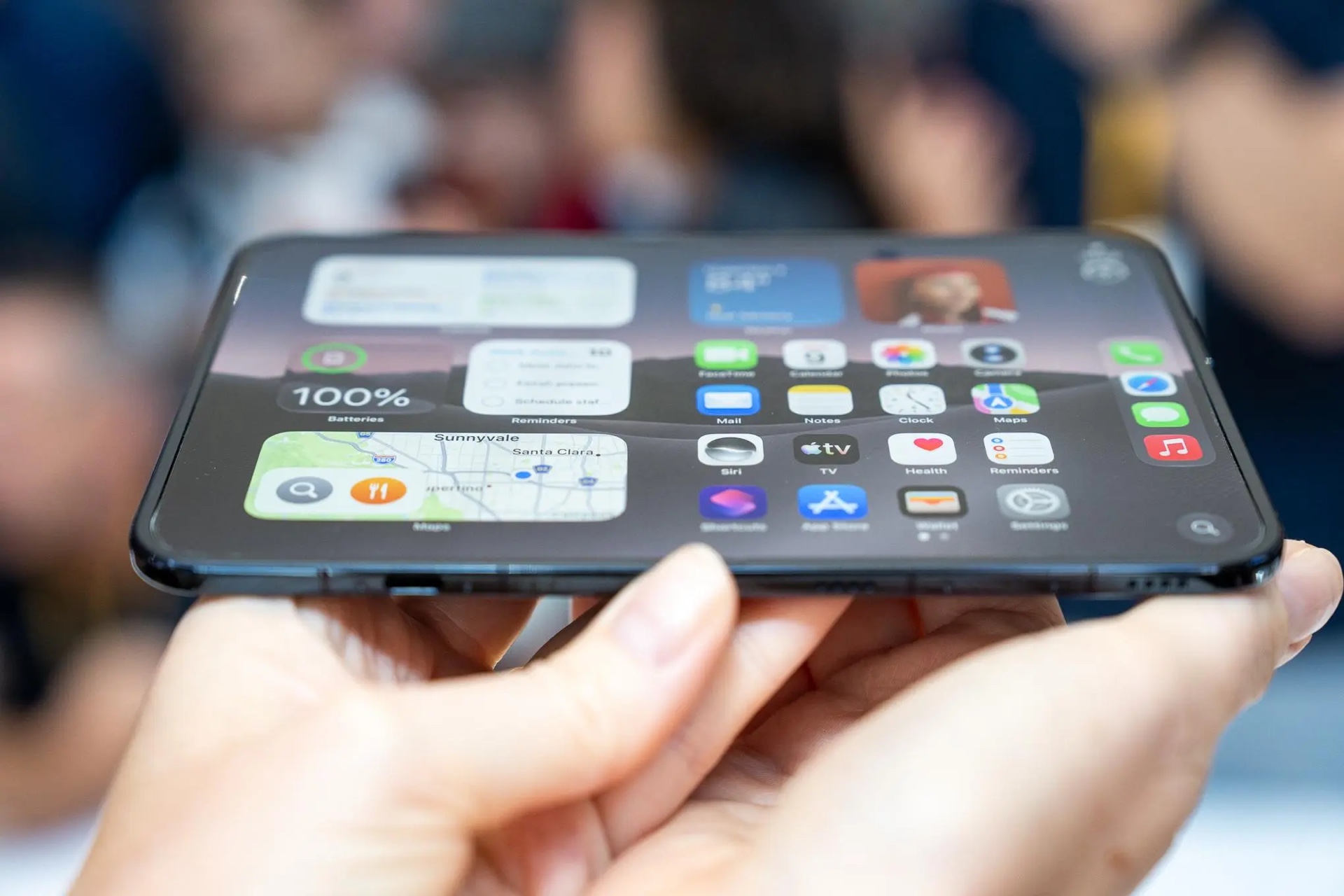
The inner panel is covered with a thick matte nanotexture coating, and it serves several purposes at once. The coating nearly eliminates reflections and also disguises the crease running down the center of the display. The fold is still there, but the dip is subtle enough that it's easier to feel with a finger than to see.
The biggest technical highlight of the inner screen is the FaceTime camera hidden beneath the display. When inactive, it nearly disappears entirely, giving itself away only through a glossy circle of pixels amid the matte surface. Samsung experimented with under-display cameras back in the 2021 Galaxy Z Fold 3, but has effectively abandoned the technology in recent generations.
Both screens work with the Apple Pencil, and the matte texture of the inner panel should provide a more natural feel when writing. That wasn't something we could test in person, though – there were no styluses available in the demo area.
The rear camera setup looks more modest than what rivals offer:
a 48MP main Fusion camera with a 2x telephoto mode at 12MP
a 48MP ultrawide camera
an under-display front-facing camera on the inner screen
Photos come out sharp across different lighting conditions, but there's no variable aperture like on the iPhone 18 Pro lineup. A proper periscope zoom, like the one on the Galaxy Z Fold 8 Ultra, is also missing. On the plus side, the camera module stretches across the full width of the body, so the phone sits flat on a table without wobbling.
The strongest side of the Duo is its software. Multitasking can be triggered in several ways: with a long press on an app icon followed by selecting split-screen mode, or with a swipe up from the bottom and dragging apps left or right. Photos and files can be moved between windows with a simple drag-and-drop.
There are also app pairs – holding down the tab in the middle of the split-screen view creates a ready-made pair for quick launching. Essentially, Apple has brought a large part of iPadOS productivity features to a foldable phone, but in a body that's easier to carry around.
Taken together, Apple's first foldable phone gathers the best ideas from its competitors and packages them into a recognizable design. The IP68 rating matches the Pixel 11 Pro Fold, the matte coating on the inner panel reflects less light than the Z Fold 8, and the level of interface polish remains out of reach for Samsung, Google, and Motorola on Android.
The price of the iPhone Duo sits $100 lower than the Z Fold Ultra and $100 higher than the Z Fold 8.
Pre-orders start October 16, with sales beginning October 23.