In China, a 148-meter tower stores wind energy in 35-ton concrete blocks

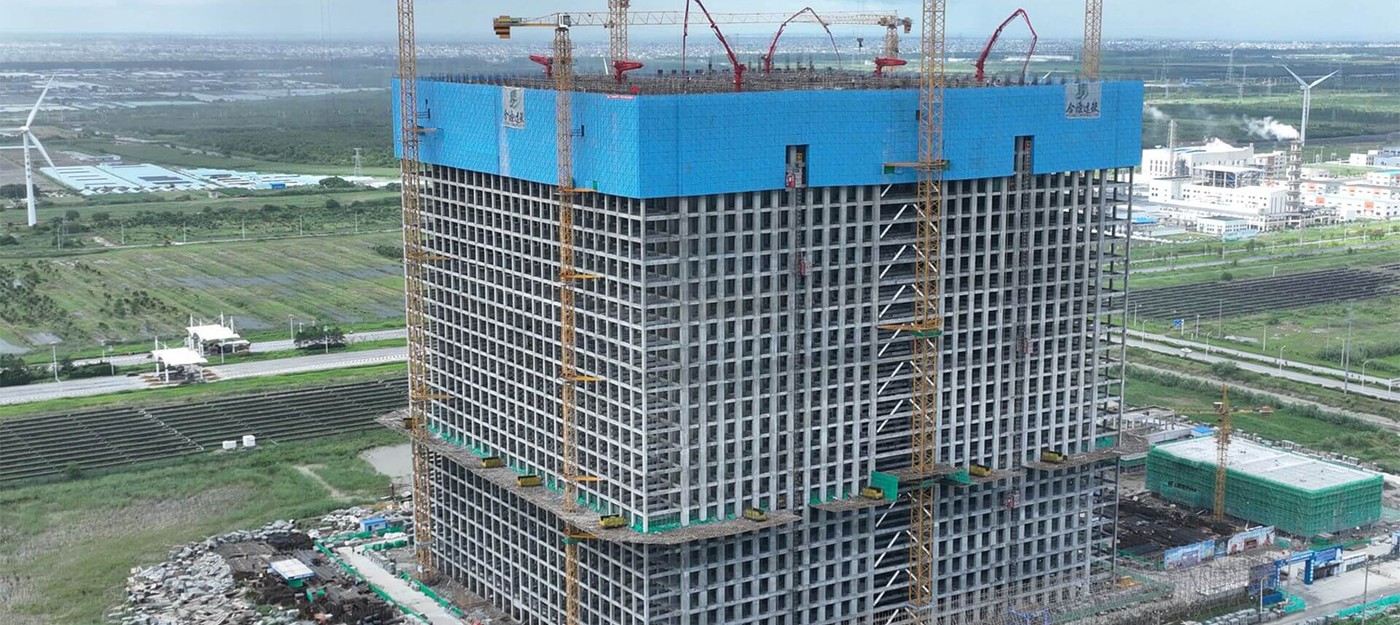
On the Yellow Sea coast in Rudong County, Jiangsu Province, a gravity energy storage tower stands that looks a lot like an unfinished residential skyscraper.
The 148-meter tower, roughly 35 to 40 stories tall, stores surplus electricity from a nearby wind farm by lifting massive blocks into the air.
The principle is simple. When the turbines generate more power than the grid needs, electric motors inside the tower hoist 35-ton blocks made of recycled concrete and industrial aggregate. When the grid needs energy again, the blocks descend along internal guides, and the motors spin in reverse, working as generators.
Key system specs:
power output of 25 MW and capacity of 100 MWh, enough for about four hours at full power
target round-trip efficiency of over 80%
expected service life of 35 years with no chemical degradation
construction cost of around $100 million
The EVx technology comes from Swiss company Energy Vault, founded in 2017. Its first 5 MW demonstration tower, EV1, was connected to the grid in Switzerland back in mid-2020 and showed an efficiency above 75%. The Chinese version uses a refined energy conversion chain, which should push efficiency higher.
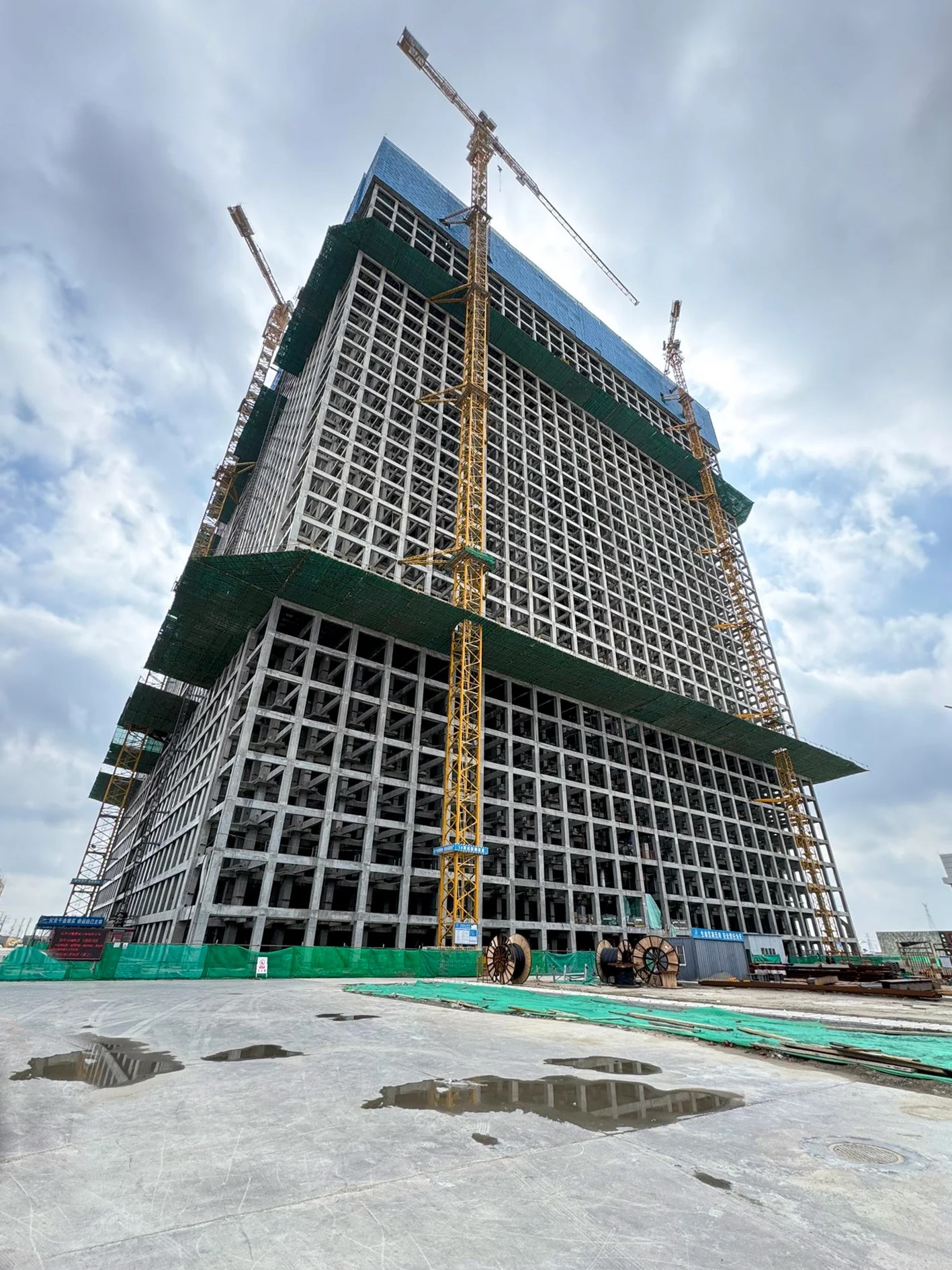
Mechanical work wrapped up in September 2023, and the facility was connected to the state grid that December. Charge and discharge cycle tests took place on May 4, 2024. Back in January 2024, China National Energy Administration added the project to its list of pilot demonstration projects for new-type energy storage.
Gravity storage is nothing new. Pumped-storage hydropower plants have worked on the same principle for decades and account for around 90% of global energy storage capacity. The difference is that solid weights get lifted instead of water. The tower only needs a flat site rather than a height difference and a reservoir, so it can be built next to a wind or solar farm or beside a substation.
The block composition is also designed around cheap local materials. Along with construction waste, the blocks can include soil, coal plant ash, and shredded blades from decommissioned wind turbines.
Rudong is meant to be just the first in a series. China Tianying announced plans for several more towers across different Chinese provinces, with a combined capacity of more than 3.7 GWh.
The economic viability of the technology is not yet proven, since it depends on how often the cycles run and how cheaply future towers can be built. Still, it beats doing nothing with the excess energy.
- Analysts link Jensen Huang's departure from Nvidia to smuggling of 1.5 GW of AI chips into China
- Tencent releases AI companion that watches you play and gives advice
- Scientists find way to nearly double solar panel efficiency