Scientists find way to nearly double solar panel efficiency

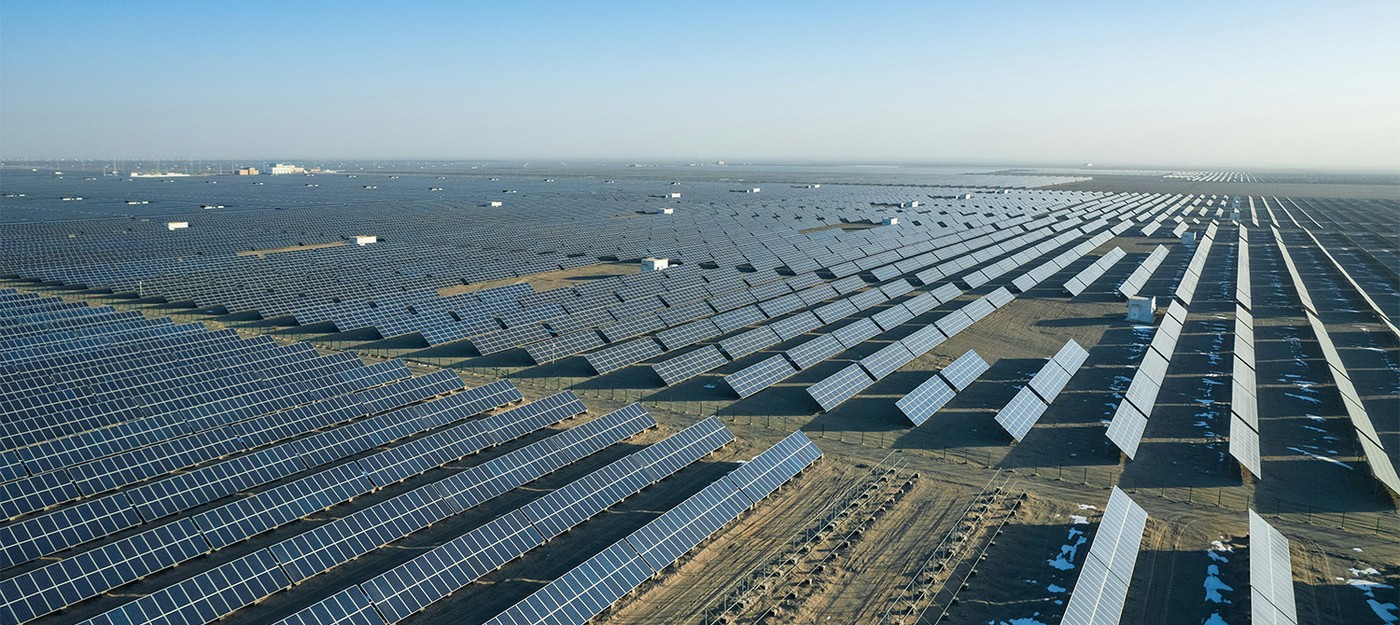
Researchers at the Institut de Ciències Fotòniques (ICFO) in Spain have come up with a new way to design solar cells that could dramatically boost their efficiency, at least in theory.
Most work in this area focuses on cutting heat losses. The ICFO team went after a different limiting factor: Boltzmann loss, or the energy a solar panel wastes through the light it emits.
According to the authors' calculations, the method could push photovoltaic efficiency to roughly 43%. For comparison, the Shockley-Queisser limit, the theoretical ceiling for a single-junction solar cell, sits at 33.16%. Consumer panels that go on rooftops and balconies today typically run at 20–23% efficiency.
None of this means more capable panels will show up in stores anytime soon. Still, improving the basic principles behind solar cells could eventually reach the mass market.
To understand the finding, it helps to know how a solar panel works. At its core is a semiconducting material, most often crystalline silicon, that releases electrons when hit by sunlight and creates an electric current. Some of the absorbed energy, however, turns into heat or gets re-emitted as light.
Scientists have been fighting heat loss for a long time, including by experimenting with different semiconductors. The light side of the equation has proven a much tougher obstacle. A solar cell absorbs light from a narrow cone, since the Sun takes up only a small patch of the sky, but emits light in nearly every direction.
That mismatch is exactly what causes Boltzmann loss. The classic Shockley-Queisser limit assumes a cell emits light evenly across an entire hemisphere. Narrow the emission angle, and the theoretical efficiency ceiling moves noticeably higher.
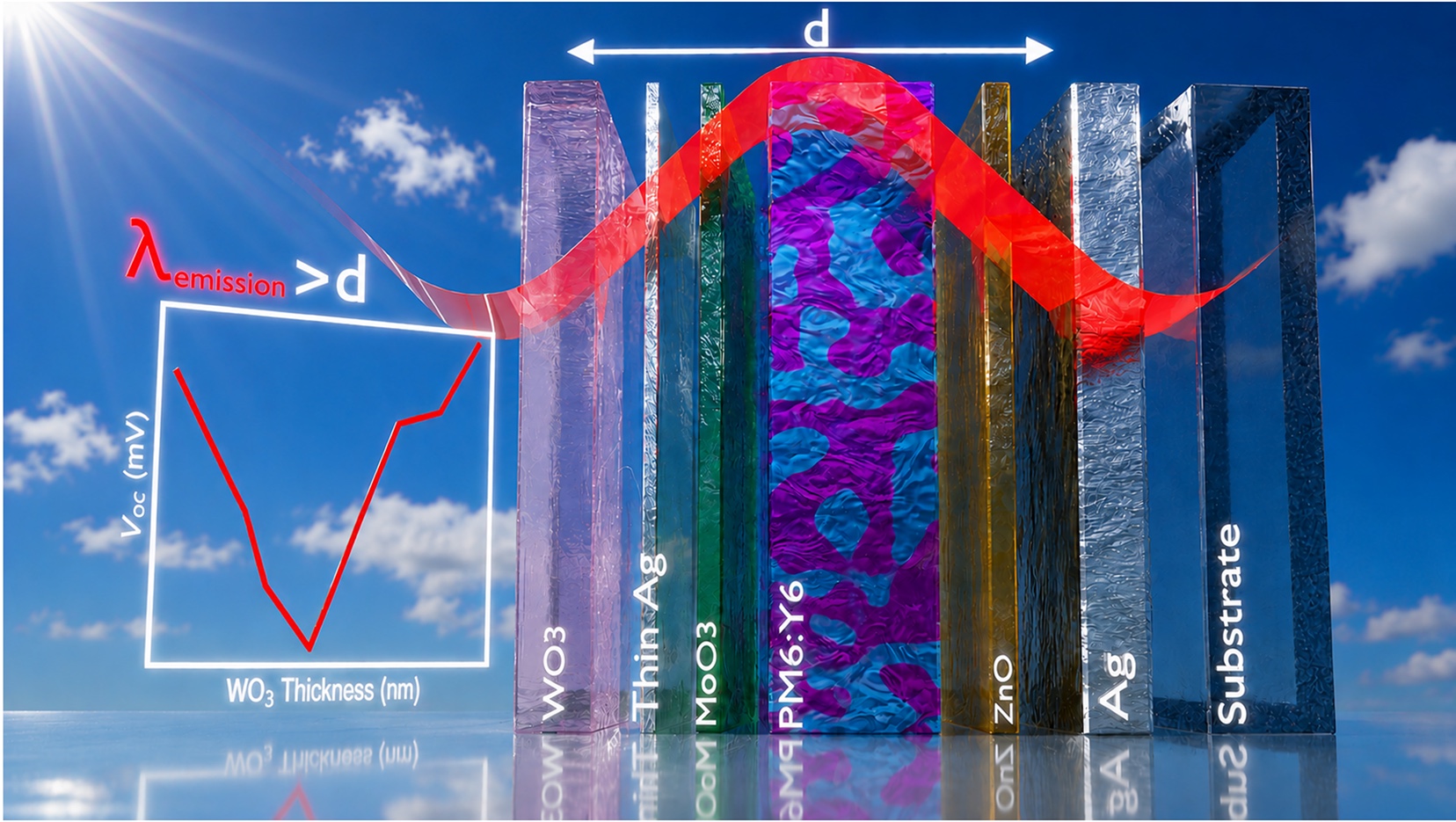
In a paper published in Energy & Environmental Science, the ICFO team described an attempt to solve "the mismatch between the narrow sunlight absorption and the wider emission cones." The researchers started with an organic solar cell rather than a silicon one. They replaced the indium tin oxide front electrode with a thin silver layer, turning the cell into an optical cavity.
The resulting design still let sunlight in but emitted far less light at wide angles. Cell efficiency rose by around 0.85%. That's a modest gain, but the experiment offers clear evidence that the Shockley-Queisser limit can, in principle, be beaten.
Dr. Francisco Bernal Texca, the first author of the study, commented on the results in the institute press release:
"If the emission cone can be narrowed to more closely match the absorption cone of incoming sunlight, which is exactly what our work demonstrates experimentally, solar cells will, in principle, be able to approach efficiencies close to 43 percent."
The researchers say the underlying principle applies to all types of photovoltaic cells, not just experimental lab materials. That leaves a chance for the technology to reach mass-produced panels, including those installed in private homes.
The ICFO work is far from the only solar breakthrough of 2026. In July, China-based LONGi unveiled a solar cell with 35.5% efficiency and claimed the technology it uses is theoretically capable of hitting that same 43%. Several independent research directions now point to the same target for the next generation of solar panels.
- In China, a 148-meter tower stores wind energy in 35-ton concrete blocks
- China launched a 582-ton magnet for a nuclear fusion reactor "artificial Sun"