Russian AI enthusiast buys mining farm for $35 and gets 54 GB of video memory to run 35-billion-parameter AI model

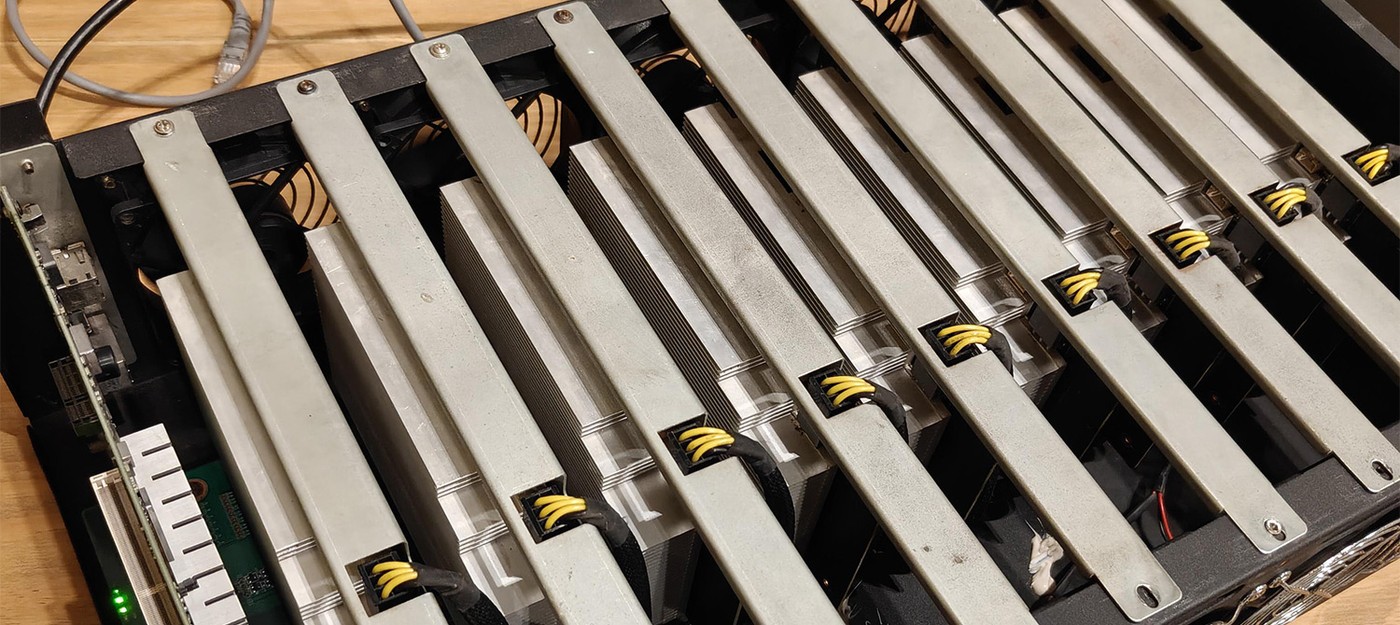
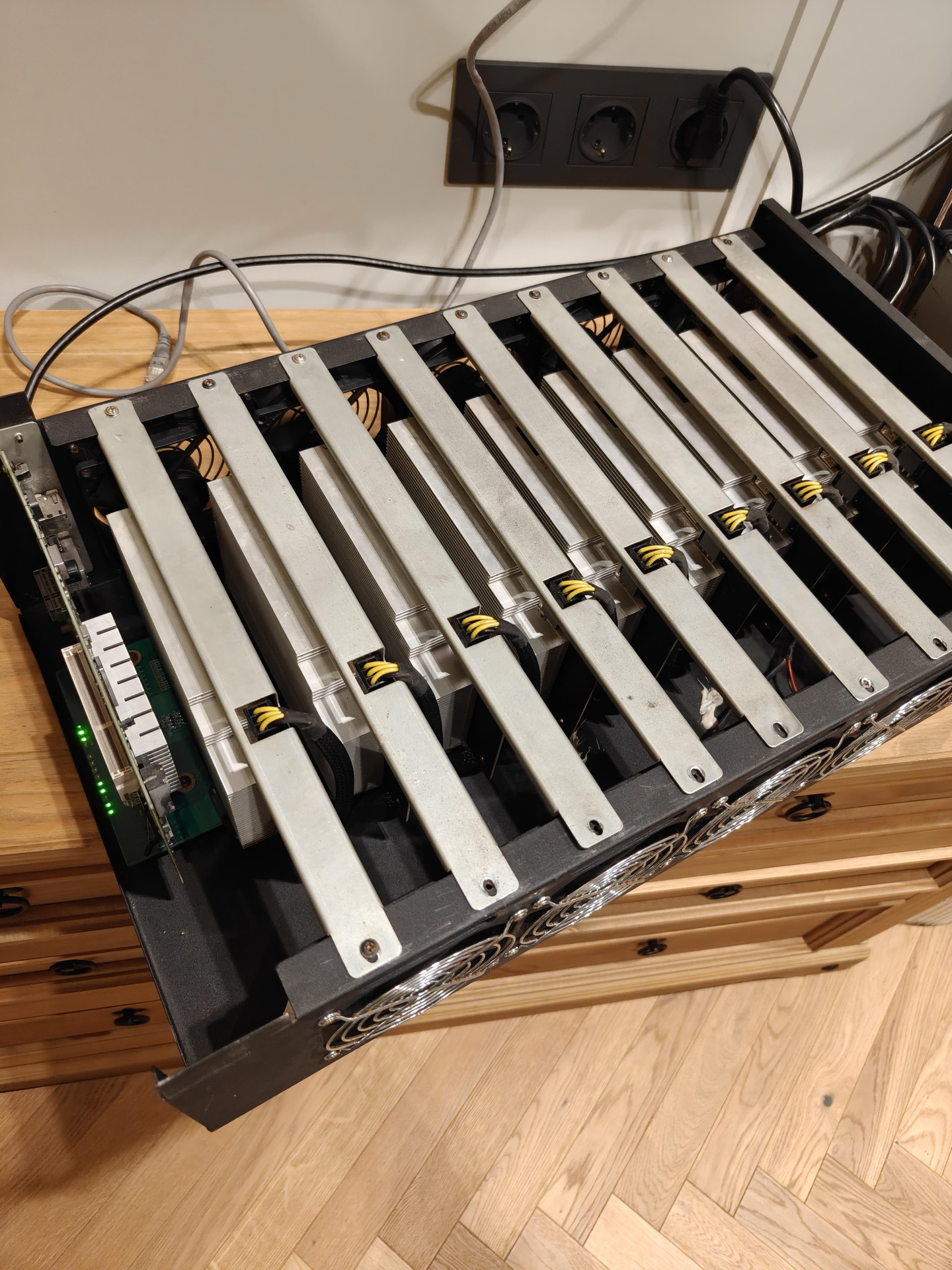
A Russian AI enthusiast going by markpronkin shared the story of an unusual purchase. For just 3,000 rubles (about $35), the user bought an old crypto mining rig that had sat in a damp garage for years. Inside were nine Nvidia P106-100 GPUs with 54GB of VRAM between them, and every one of them worked on the first power-up.
The first test was a local run of Alibaba's Qwen3.6-35B-A3B in Ollama. The 35-billion-parameter model hit over 30 tokens per second. The post, aptly titled "54gb vram for 35$," quickly caught the attention of local AI enthusiasts.
The rig turned up in a garage the seller had purchased years earlier, and was then listed on Avito. It was covered in rust, and testing it before purchase wasn't an option. The buyer "had zero idea if it works, so did the seller."
The buyer offered to test the rig and pay more if it worked, but the seller refused. The two settled on a lower price without any check. The cost was low enough to take the risk.
Even in working order, the configuration is lopsided. The main system runs on a weak Celeron CPU with very little system memory. The GPUs also connect through PCIe 2.0 x1 slots, which noticeably limits data exchange between them.
The Nvidia P106-100 was built specifically for crypto mining and launched around the middle of 2017. These are Pascal-generation cards with 6GB of GDDR5 each, which the buyer calls "basically gtx 1060 6gb." For reference, Gigabyte's P106-100 has 8,008 MHz memory on a 192-bit bus, good for about 192 GB/s per card.
Software support for these cards is limited. CUDA 13.0 removed offline compilation for GPUs below compute capability 7.5, a cutoff that covers the entire Pascal generation. Nvidia said on its developer blog that driver branch 580 is "the final [one] that supports GPUs before CC 7.5," though security updates will keep coming through October 2028.
The choice of test model played a key role. Qwen3.6-35B-A3B is a mixture-of-experts (MoE) model with "35B [parameters] in total and 3B activated" for each generated token. It's roughly a 24GB download, so it fits entirely in the rig's VRAM.
According to markpronkin, the 30-plus tokens per second came without any tweaks. Speed could climb "with mtp and some optimizations," a reference to multi-token prediction (MTP).
Dense models, where all parameters work at once during generation, are a tougher case. The buyer admits that Qwen3.8-27B is unlikely to run as well, but "It should run any MoE model that fits entirely into VRAM decently well." Memory bandwidth and the slow PCIe bus are the main limiting factors.
The 54GB pool leaves room for several popular models:
Qwen3.6-35B-A3B at 8-bit – about 36.9GB
Llama 3.3 70B at 4-bit – about 42.5GB
Llama 3.3 70B at 5-bit – just under 50GB, but with very little room left for context
Larger models probably won't fit. Even the 4-bit Llama 3.3 70B would hit a ceiling of around 4.5 tokens per second before running into other bottlenecks, since a dense model reads all 42.5GB of weights for every token, card by card, at about 192 GB/s.
On price, the purchase is still a great deal at about 65 cents per GB of VRAM. For comparison, the RTX 5090 with 32GB of VRAM and 1,792 GB/s of memory bandwidth launched in early 2025 at $1,999. The rig offers 1.7 times the VRAM for less than 2% of that price, although each of its cards has about a ninth of the flagship's bandwidth.
According to markpronkin, P106-100 cards, which have no video outputs and are meant almost exclusively for compute, sell on the secondary market for about 50% of their GTX counterparts. That makes them an affordable option for building a local AI system.
Power is a separate question. One commenter estimated the combined TDP of the nine GPUs at 1,080W. The buyer replied that electricity is free for them, and generally inexpensive across Russia.
The owner's next steps are already planned. The cards will move to a better case that supports up to an Intel Core i7-7700K and 32GB of RAM. The new case holds 12 GPUs, so buying three more P106-100 cards would bring the total to 72GB of VRAM.
- RTX 5080 owner burns out graphics card after launching GTA 5 with DLSS 5 – replacement issued anyway
- The Samsara wheel of PC Gamers – new technologies slow down old powerful graphics cards
- Replacing thermal paste boosted FPS on RTX 2080 Ti almost twofold and lowered hotspot temperature by 10 degrees