Billionaire Gabe Newell formulated a universal rule three years ago about what makes games interesting – and realism has nothing to do with it

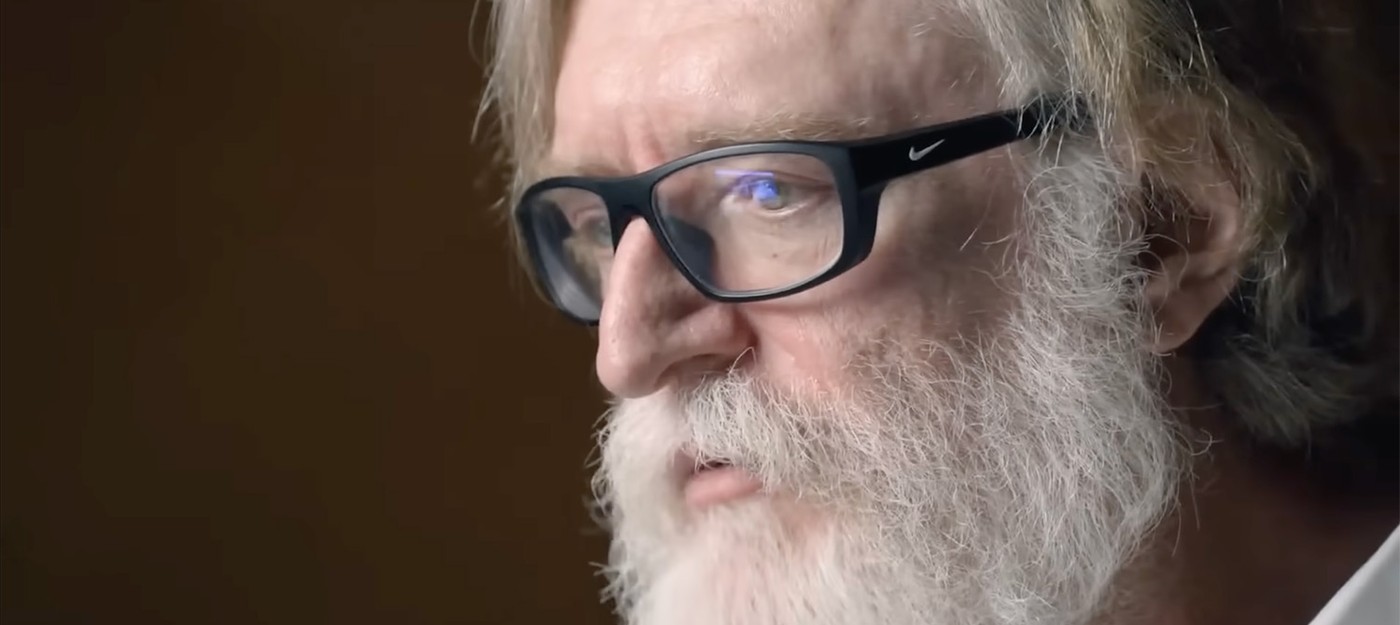
A clip from the Half-Life 25th anniversary documentary is making the rounds online again, with Valve boss Gabe Newell breaking down the role of realism in games.
Newell opens with a familiar scene from design discussions – someone objects that a proposed solution isn't realistic. His counter boils down to one question: explain why it's fun.
His tone shifts noticeably in this segment, like someone who has dealt with people missing the point of what makes games engaging one too many times.
His argument against realism as a goal in itself comes from everyday life. He mentions making shopping lists for grocery runs (in reality he probably has people for that, being a billionaire, but the point stands), and says the idea that realism alone brings enjoyment never occurred to him.
What makes this clip worth revisiting isn't the rejection of realism, but what comes after. Valve had to come up with a working definition of fun, and it turned out to be surprisingly technical:
We had to come up with some notion of what fun was. We knew it as an ad hoc definition, and it was the degrees to which the game recognizes and responded to the player's choices and actions. In behavioral science you would say we were explicitly talking about what were reinforcers and what the reinforcement schedules were.
The terminology isn't there for show. In behavioral science, reinforcement refers to a consequence of an action that increases the likelihood of that action happening again, while a reinforcement schedule describes how often and under what pattern that consequence occurs.
An example makes this clearer than any definition:
The point I would make is if I go up to a wall and shoot it, to me it feels like the wall is ignoring me. I'm getting a narcissistic injury when the world is ignoring me.
From this comes a practical checklist for any mechanic:
shooting a wall should leave bullet marks
killing enemies should make the rest scatter
player progress should be reflected in the world itself, not just a counter
every action needs a response, or it loses all weight
This is exactly where the advice becomes relevant for the current wave of developers building games with AI, often without any game design background beyond "personal instinct."
AI models can spit out a working prototype with movement, shooting, and menus, but a feedback loop doesn't just appear on its own.
The gap between a technically functional build and an actually playable one comes down to those small moments of response. Decals, NPC reactions, satisfying sound design, cues, effects for gaining experience or picking up ammo – changes to the world state after player actions look like optional polish right up until the moment their absence makes the game feel like a mannequin in a store window. It looks human, you can even dress it up, but nobody wants to spend more than a couple minutes with it.
This same clip came up before in discussions around the GTA 6 leaks, specifically the debate over vehicle refueling systems. The logic cuts both ways here – the more realistic a game gets, the more questions it has to answer and the more exceptions it has to invent, sometimes at the expense of the gameplay itself.
- Billionaire and Valve founder Gabe Newell confirmed the story about five months of throat singing in the office
- Gabe Newell decided to make Steam after telling the original Half-Life publisher to get lost
- The Witcher 3 Songs of the Past scriptwriter wrote her thesis on Hearts of Stone – is the story in good hands?