Memory-less DDR5 modules go on sale from $43 – V-Color asks $300 for a kit with one real module

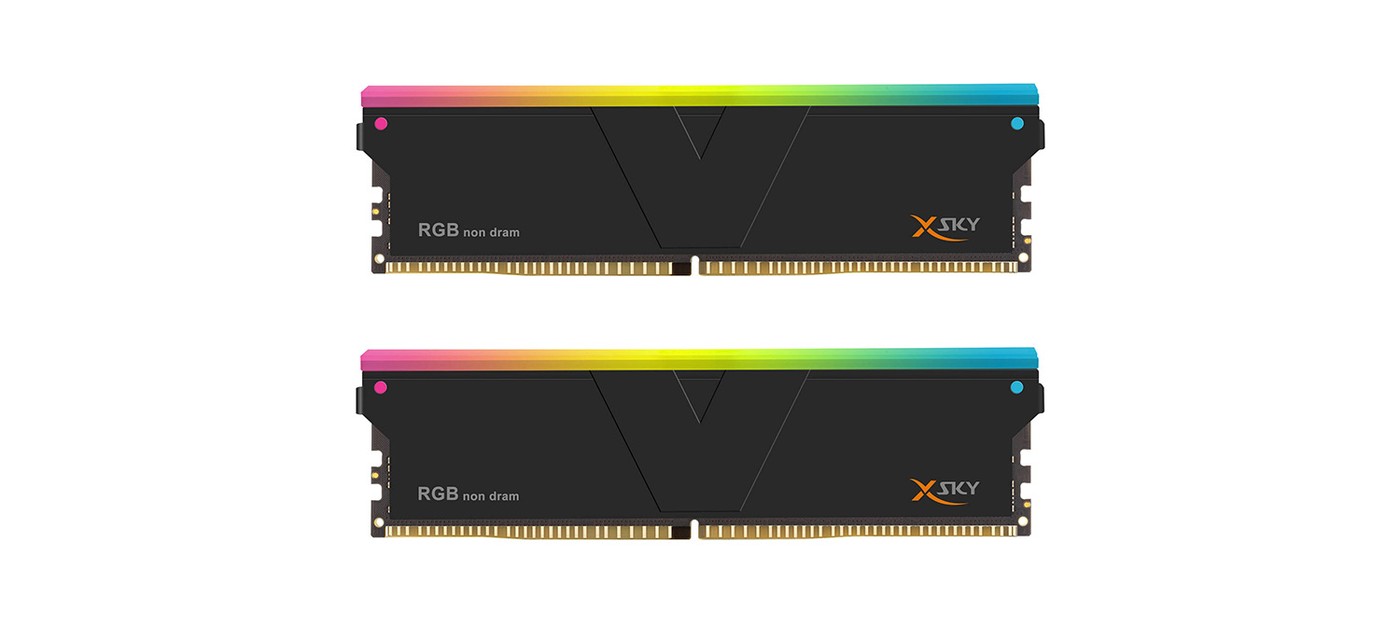
V-Color has finally launched what it teased earlier this year – 1+1 DDR5 kits pairing a real memory stick with a dummy filler module. The second stick has no actual memory chips inside, just RGB lighting. The whole point is visual: it makes every slot on your motherboard look occupied.
These kits are now hitting retail, and the standalone dummy modules are also available in North America. V-Color splits its lineup into two families – Manta XSky and the pricier Manta XFinity. The 1+1 kits only come in the XSky version and haven't launched in the US yet.
UK retailer Overclockers has a kit with one 16GB stick running at 6,000 MT/s with CL30 timings for 210 GBP, or about $285. That gets you one working module and one decorative filler, available in black or white. Overclockers also lists a slightly pricier 16GB 6,000 MT/s CL28 kit for 219 GBP, or roughly $297, in the same two colorways.
Separately, there are 0GB kits where both sticks are dummies. These only make sense if you already have working RAM installed and just want to fill two empty slots. Amazon sells the Manta XFinity version for $57 in black or white, while Newegg has the white Manta XSky for $44.
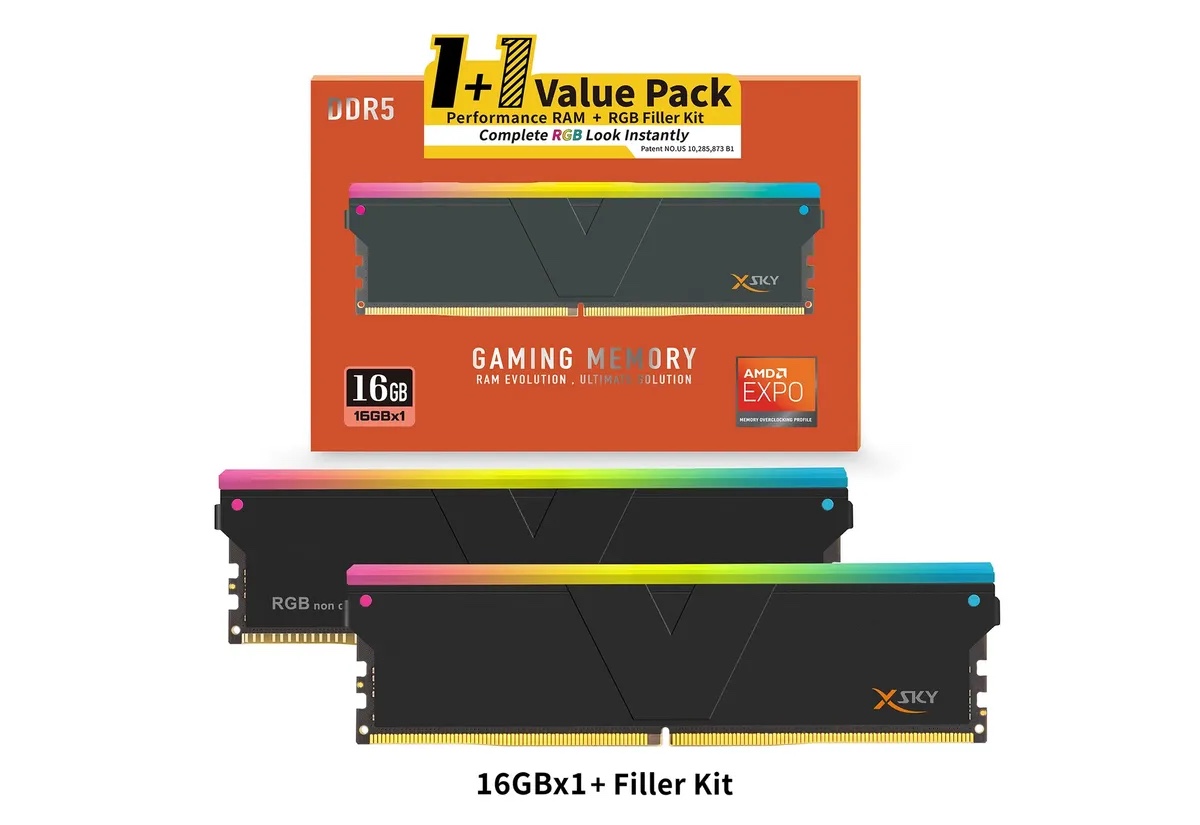
Over in Germany, CaseKing sells the Manta XSky filler kit for 50 Euros, around $58. That's about the only listing we could find across Europe so far.
The oddest part is how small the price gap actually is between these fake-RAM kits and the real, fully-populated versions. That's down to DRAM prices climbing so much that a decorative dummy module doesn't look like an absurd purchase anymore. V-Color is pitching these kits as a way to ride out the shortage without paying full price for a second real stick.
The main technical catch is bandwidth. With a 1+1 kit, your system runs in single-channel mode since the second slot holds an empty board with no chips. That stings less with DDR5 than it did with older RAM generations, since each DDR5 module already splits into two 32-bit subchannels internally.
The performance hit shows up most in memory-bandwidth-sensitive tasks, though AMD's X3D chips with their large 3D V-Cache tend to shrug it off better thanks to their sizable L3 cache. Keep a few limitations in mind before buying one of these kits:
single-channel operation when running just one real stick
no way to add capacity later without buying a second real module
purely cosmetic benefit, including RGB sync with the rest of your build
If you've already got a matched pair of real sticks installed, the dual-dummy option makes more sense – it fills the empty slots and adds lighting without touching your memory subsystem at all.