On day two, an AI-created clone of Cities Skylines already lets you build cities in the browser

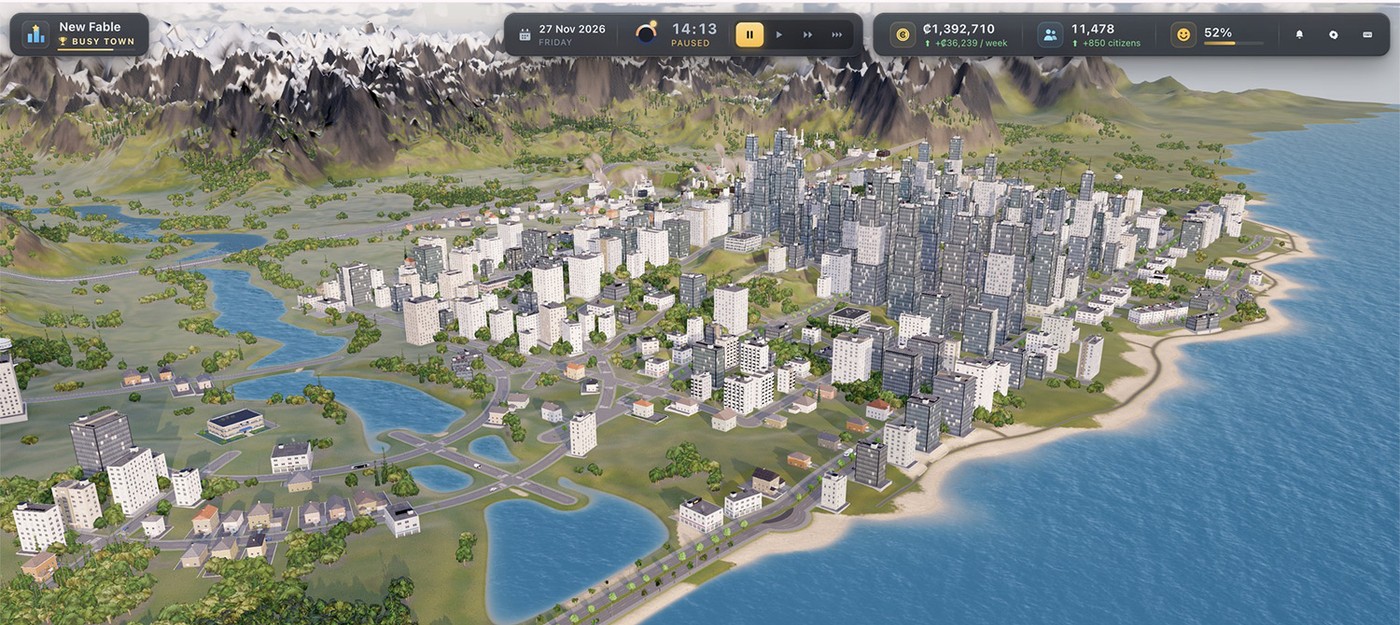
A developer going by raw pushed a city-building simulator to a genuinely playable state after Claude Fable 5.1 built it from a single prompt.
An early demo stopped at an empty landscape, and the main complaint from commenters was the lack of an actual city. Now Fable Cities loads right in a browser tab at fablecities.rawscollections.com.
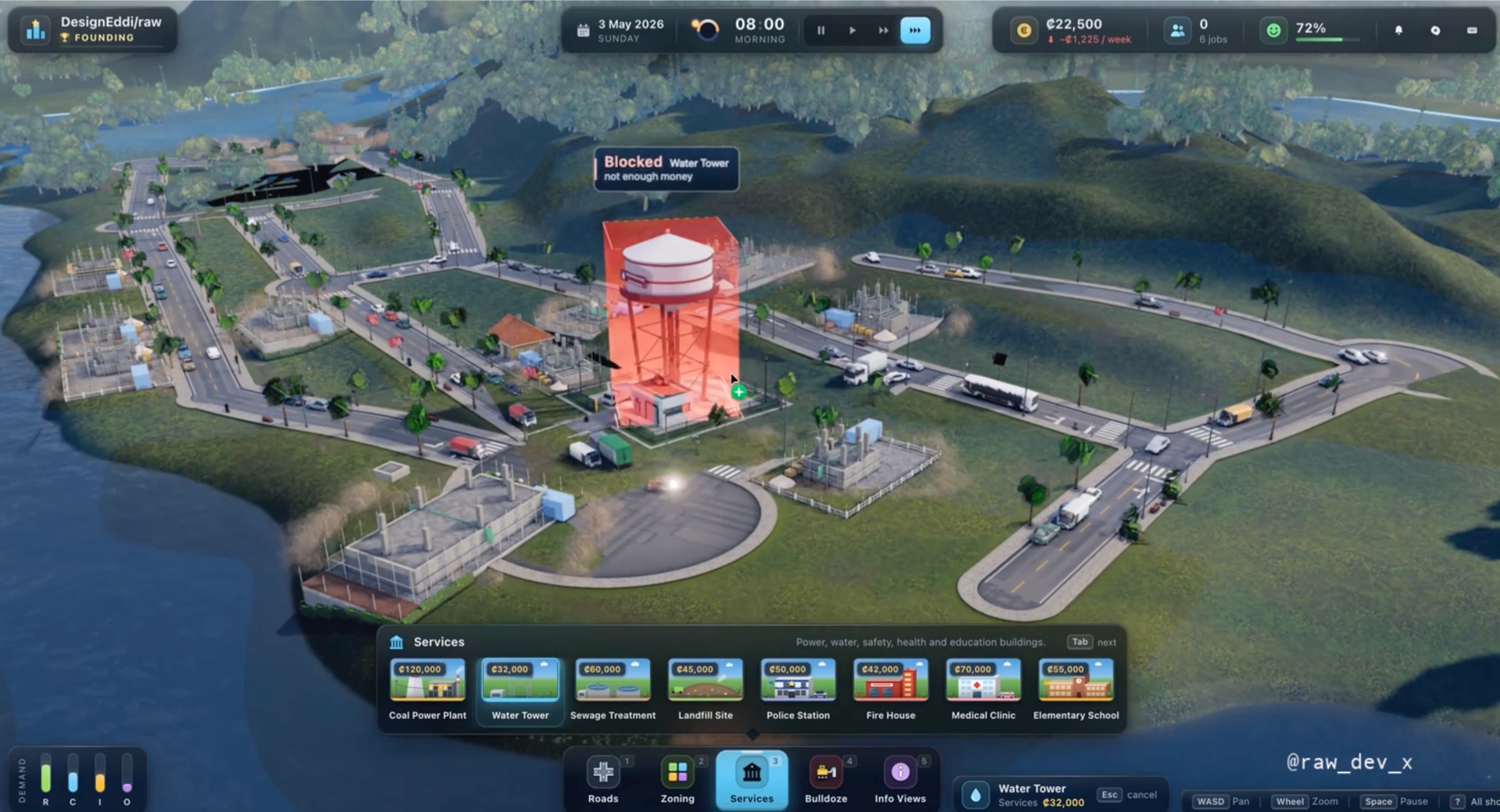
The second and third of three planned waves are done. The roadmap has already covered the engine with its module system and testing tools, terrain, sky and weather, roads, simulation, interface and sound, plus zoning, buildings, props, traffic, and construction tools.
There is no game engine underneath any of this. The stack is limited to Three.js r185 on top of WebGL2, built with Vite and plain JavaScript modules, without a single framework.
The terrain runs on a heightmap with rivers, coastlines, and cliffs, using PBR materials blended by mask, triplanar texture mapping on rocks, instanced forests that sway in the wind, and water with planar reflections.
The sky is calculated physically, with its state depending on time of day and day of year, including sun and moon paths, stars, high-altitude fog, drifting cloud shadows, rain, and snow. The road network is a real graph with local streets, avenues, highways, and paths, complete with markings, curbs, sidewalks, crosswalks, and rounded corner turns.
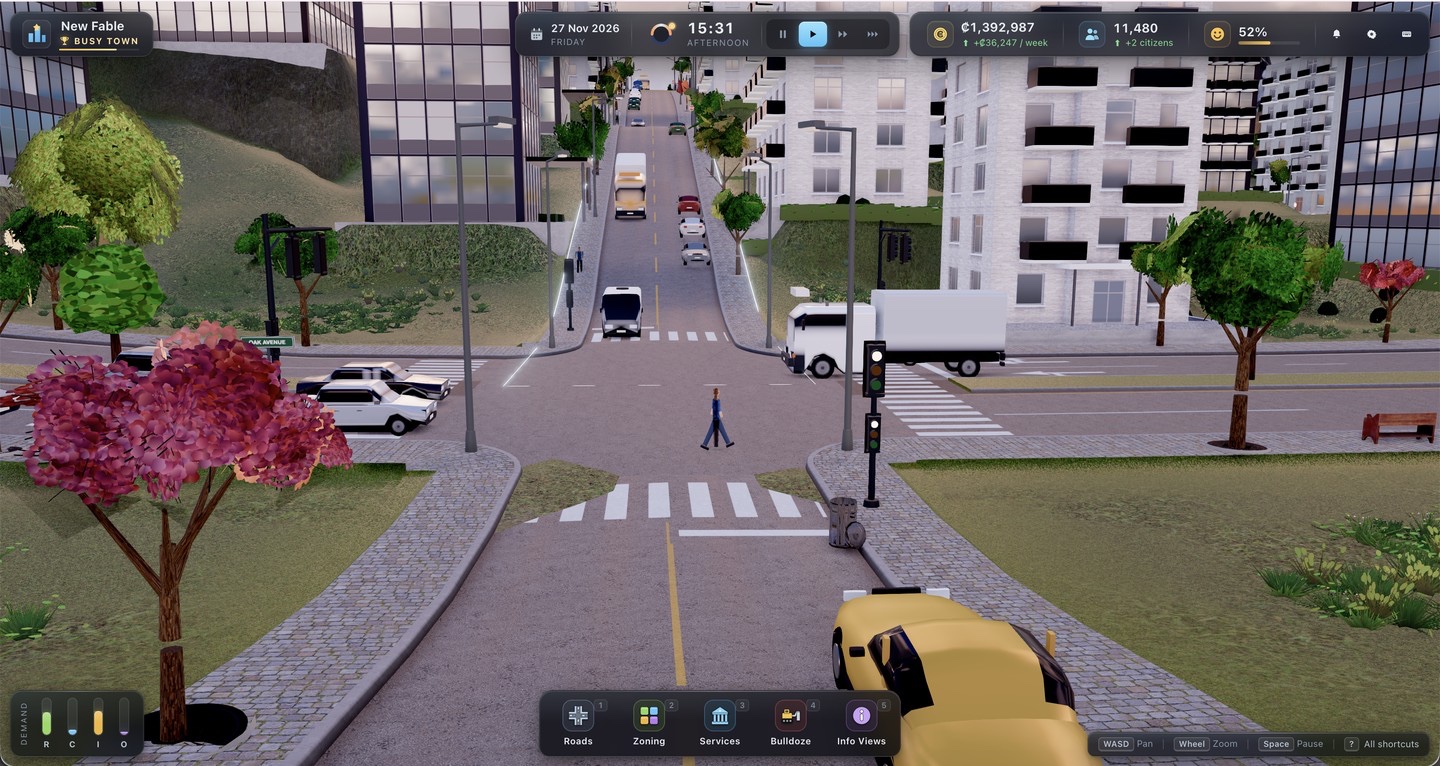
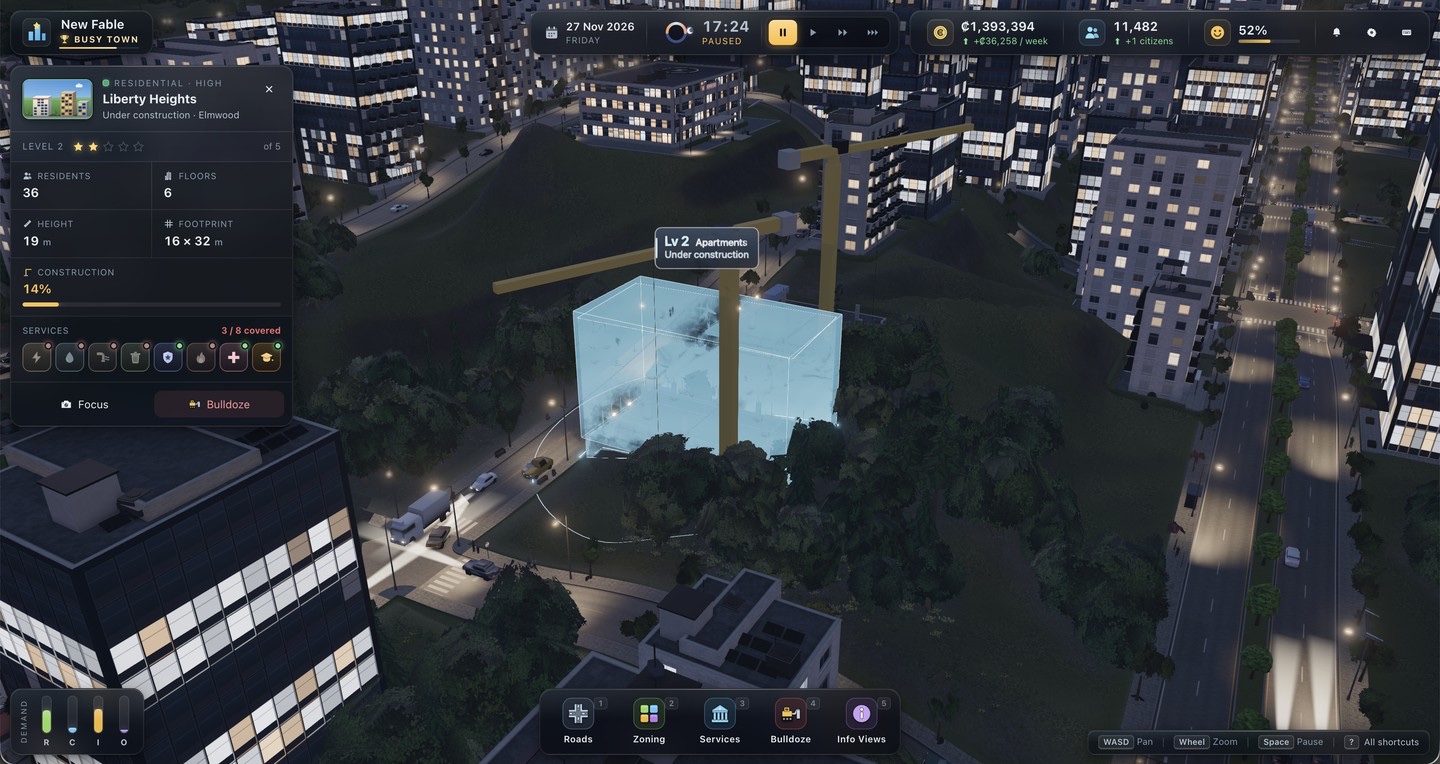
Traffic moves along a lane graph with car-following behavior and yielding at intersections. Buildings are generated procedurally across four types and five levels, with rooftop details, glowing windows at night, and construction stages.
The simulation tracks time, economy, population and jobs, RCI-style demand, happiness levels, and city services with coverage zones. Cascaded shadow maps, ambient occlusion, bloom, SMAA anti-aliasing, and cinematic tone mapping handle the visuals.
All the audio is synthesized in real time through the Web Audio API, with no samples involved.
Actual tester impressions came out mixed. The game stutters at certain points, and on an RTX 5090 paired with a Ryzen 7 9800X3D, max settings show noticeable frame drops that vanish completely once you switch to low.
People familiar with Three.js immediately asked whether LODs, octahedral impostors, and instancing were tuned to cut draw calls, since the original prompt required staying under fifteen hundred of them.
One question that got a laugh asked whether the browser version might already be in better shape than Cities: Skylines II was at launch.
Check out the details and grab the prompt on github.
- Developer built a Cities: Skylines prototype on Three.js using AI and a single prompt, spending $203
- Developer from Turkey used Claude Code to clean junk off Android TV and got a speed boost
- Skyrim player launched DLSS 5 with 4000 mods on RTX 4080 Super