Developer built a Cities: Skylines prototype on Three.js using AI and a single prompt, spending $203

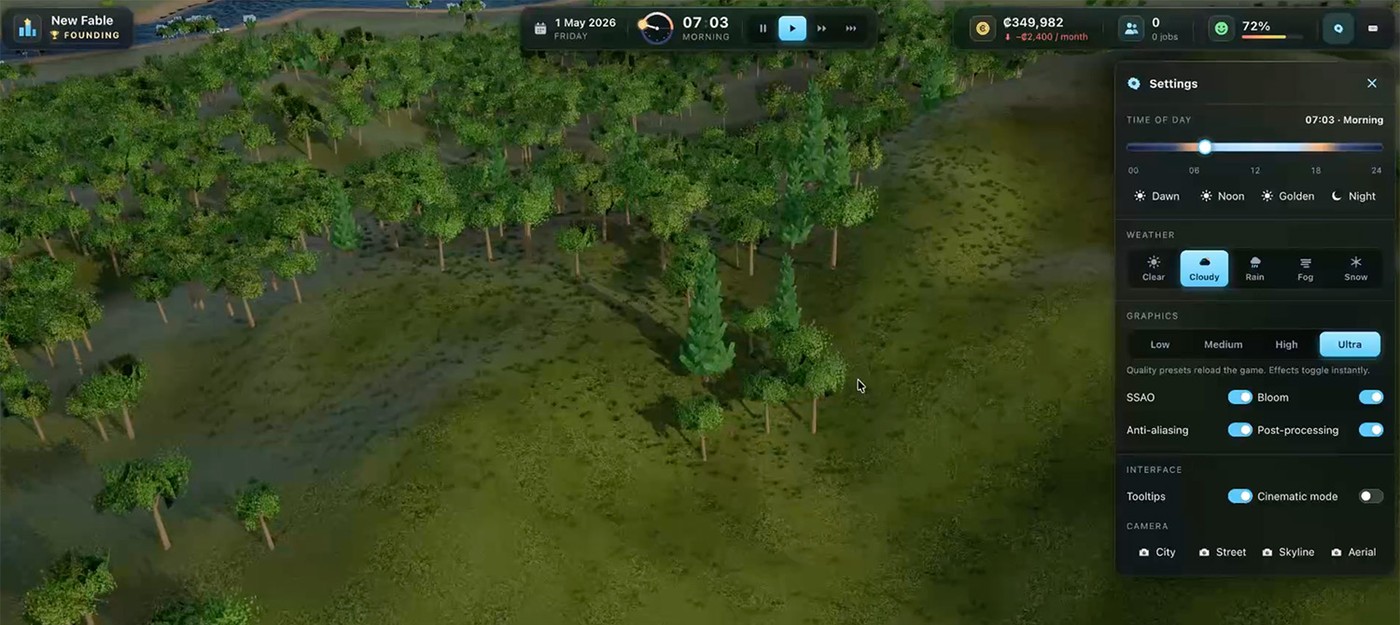
A day after Claude Fable 5.1 launched, a Reddit user posted the results of an experiment that boiled down to a single prompt and an hour and a half of waiting.
The model got an empty folder and a task to build a city-building simulator on the level of Cities: Skylines II using Three.js. From there, it worked entirely on its own, without asking a single clarifying question.
There was no prior setup involved. The test ran in a clean, isolated Claude Code CLI install with no CLAUDE.md file, no MCP servers, and no third-party tools. The model ran at maximum reasoning level, and every sub-agent it spawned did too.
What makes this story worth talking about isn't the demo itself, but the structure of the prompt. Instead of describing the desired outcome, the developer described a way of organizing the work and a way of checking it – and that's what sets this experiment apart from a typical "build me a game" request.
Here's what the prompt laid out:
architecture first, defined in an ARCHITECTURE.md file with a dedicated folder per subsystem, a shared world data model, a public API for each module, defined units of measurement, and determinism via a seeded random number generator
a performance budget of at least 50 fps at 1080p with no more than 1500 draw calls
a CC0-only asset policy – Poly Haven, ambientCG, or procedural generation
a headless Chrome screenshot tool that outputs PNG files and a JSON log with console errors, frame rate, and draw calls
a ban on declaring anything "done" that the agent hasn't screenshotted and inspected itself
a separate critic agent acting as a strict art director, one that writes no code and scores results from 0 to 10 against Cities: Skylines II screenshots
a ban on inflating scores or touching other agents' folders, with core changes only allowed through an integrator agent
A passing score meant 8.5 with zero bugs, with a perfect 10 reserved for results indistinguishable from the original. Any module that failed got a ranked list of complaints and went back for revisions, up to four rounds. The final check was a blind comparison of screenshot pairs labeled only A and B.
The model split the work into dependency-based waves on its own and ran roughly fourteen agents in parallel, one per subsystem plus critics. It never saw a single file from the actual game. The only input tied to Cities: Skylines was a dozen public screenshots from its Steam page, which the critic agents used as a reference for scoring.
The model sourced its own assets too. It tracked down free PBR textures and HDRIs, wrote its own loader for Poly Haven and ambientCG, and built some materials in Blender itself. The terrain shader blends textures based on slope and elevation, while water, sky, clouds, and particles are all generated procedurally through code.
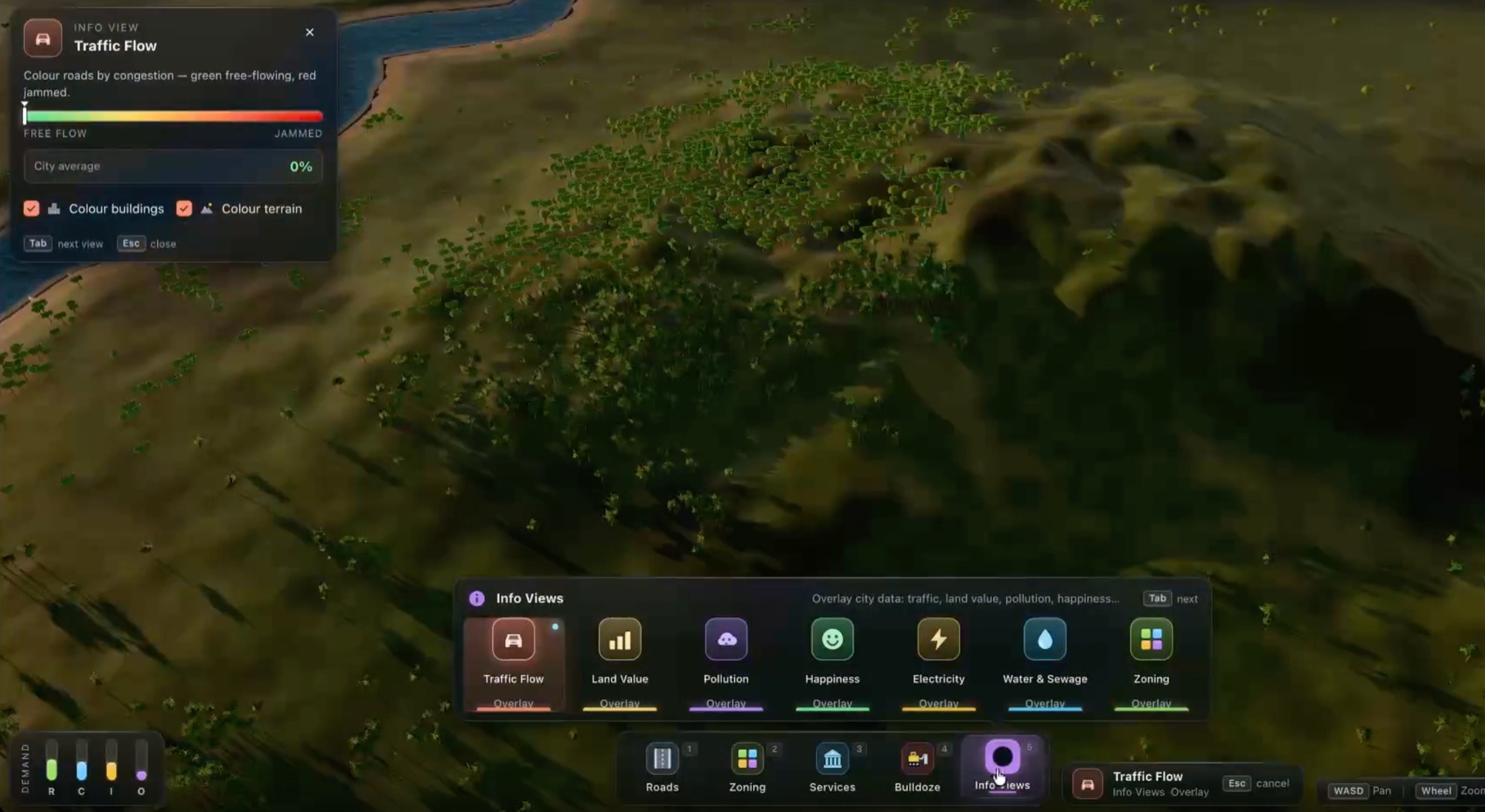
Sound followed the same approach. Wind, city ambiance, rain, and UI clicks all came from Web Audio API synthesis without a single sample. The one exception was a bird call pulled from the internet, around which the model built a small audio engine with layering and randomization so it wouldn't sound repetitive.
The usage numbers break down like this:
297.7 thousand input tokens
1.9 million output tokens
118.2 million cache reads
6 million cache writes
According to Claude Code own usage counter, the whole run cost $203 and took about an hour and a half. On a Max 20x subscription, the five-hour usage limit got burned through in about an hour, and the weekly limit dropped by 18%.
The main catch here is simple – there's no actual city in this city-building simulator yet. What's been shown covers the first of three planned waves, including terrain, sky, roads, economy, UI, and sound, while zoning, buildings, props, traffic, and building tools are all planned for wave two.
People familiar with Three.js pointed out that the code mixes beginner-level mistakes with some fairly advanced touches, like puddle rendering. Others brought up the gap between a one-off demo and an actual product that needs ongoing support and polish to become playable – which is where the real work begins.
Fable 5.1 launched on September 1, 2026, as part of the Mythos lineup. Pricing stayed the same at $10 per million input tokens and $50 per million output tokens, while cache reads dropped 75% to 25 cents per million – which explains how 118 million cached tokens still added up to a final bill of just $203.
The developer said they plan to release the resulting code publicly.