Blogger showed DLSS 5 using Death Stranding 2 as an example, and characters instantly aged 20 years

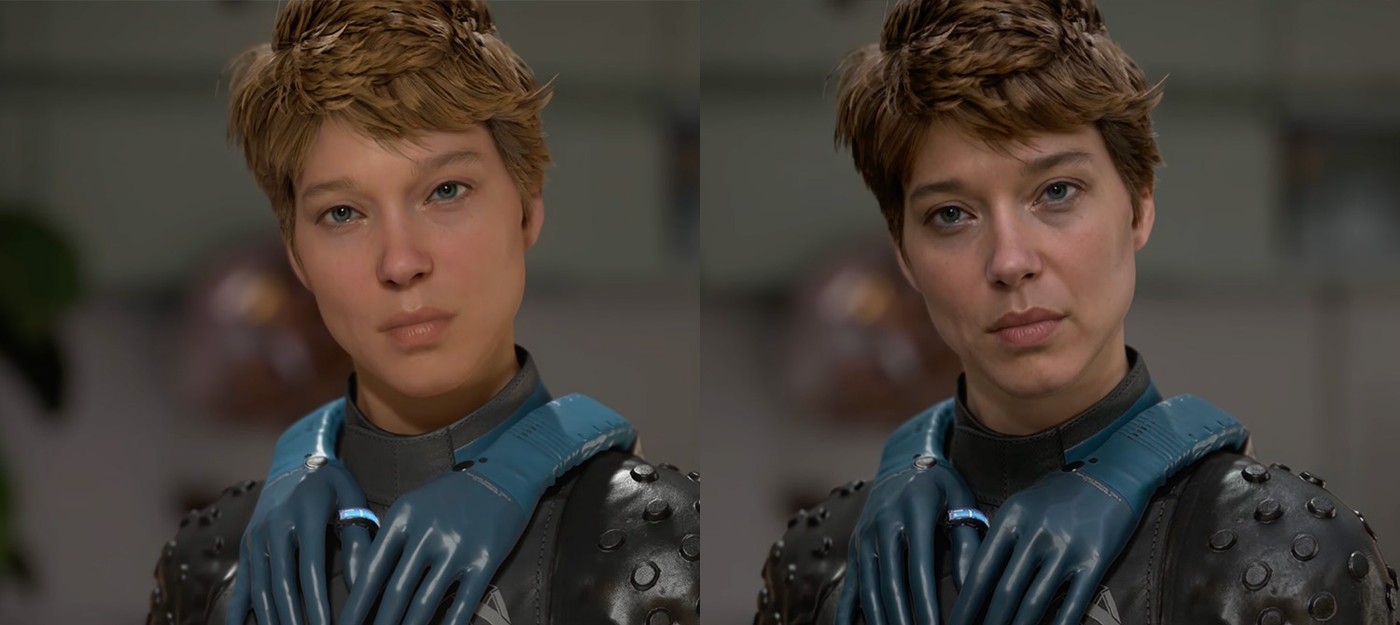
GamerInVoid posted a comparison of five games running DLSS 5 neural rendering, building the defense of the technology around Death Stranding 2. The logic seemed simple enough: Kojima chased photorealism, so processing that pushes the image closer to a photograph should support his vision rather than undermine it.
That argument turned out to be one of the worst possible choices.
Reactions boiled down to a single observation. Character faces after enabling neural rendering ended up looking ten, and by some estimates twenty, years older than they appear in the game or in reality. Dark circles showed up under the eyes, every line on the face got exaggerated, and skin picked up an oily sheen.
Viewers pointed out wrinkles even showed up on a baby face, and every model lost expressiveness in the eyes. In motion, several viewers described a grid of artifacts creeping over the frame.
The comparison that came up most often went something like this – it's like cranking sharpness up to 200% on an already well-shot frame. The image doesn't get more detailed, it just gets worse.
Nvidia position on this has been consistent for a while now. The company maintains DLSS 5 isn't a filter but a system that takes frame color and motion vectors as input, which keeps the result tied to the original 3D scene. The SDK reportedly includes intensity controls, color correction, and masks for areas where the effect shouldn't apply.
The GamerInVoid video covers five games: The Witcher 3: Wild Hunt, Death Stranding 2, Shadow of the Tomb Raider, Star Wars Jedi: Survivor, and Star Wars Outlaws. The footage was captured on an RTX 4070 Super, made possible after the community bypassed the architecture lock tying the leaked library to Blackwell.
So far, the only genuinely solid DLSS 5 implementation has been No Man's Sky.