Developer wrote his own engine in 8 months and showed a photorealistic forest – 130 FPS on RTX 3080 without ray tracing

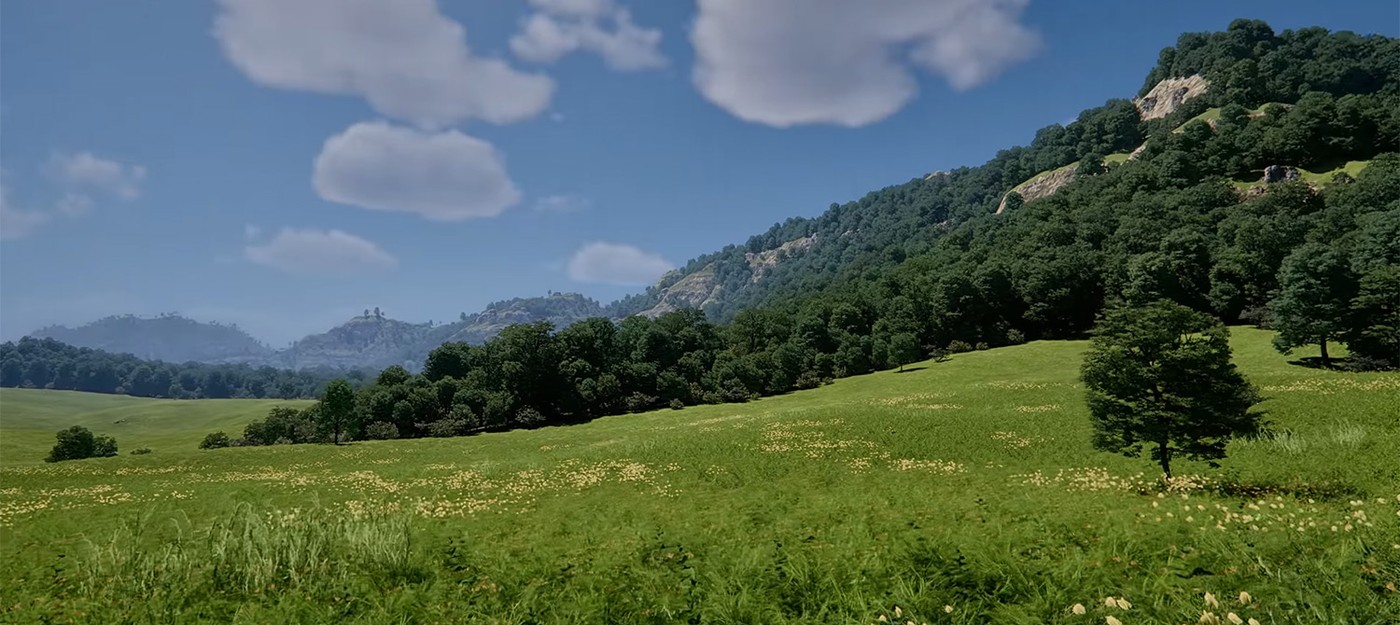
Indie developer Tony Macaroni showed off a demo of his custom game engine, which he has been working on for about eight months. A video of a walk through a forest and meadows unexpectedly pulled in more than 1.2 million YouTube views within a few days.
According to the developer, the engine is almost entirely hand-written. He spent a long time experimenting in Godot, where he built global illumination, virtual textures, and other tech, but eventually decided to create his own architecture for specific tasks instead of building on top of a general-purpose engine.
Tony admitted the engine can't do all that much, but it handles its main job – rendering a huge number of highly detailed objects – very well. The architecture rests on three solutions:
virtual geometry based on clustered levels of detail, where distant objects are represented by voxels
hybrid global illumination that combines screen space and voxels without ray tracing
simplified proxy models without per-instance data for the most distant objects
To build levels of detail, the developer uses the meshoptimizer library, but he modified it so that it generates voxels at the same time. Compared to Godot, the performance gain turned out to be large, with smoother frames and no micro-stutters. Tony did add that comparing such different architectures directly isn't entirely fair.
The demo was recorded on an RTX 3080 at 1440p. With the frame rate uncapped, the engine averages 130 FPS – up to 200 when viewed from above, and down to 80 in the densest thicket.
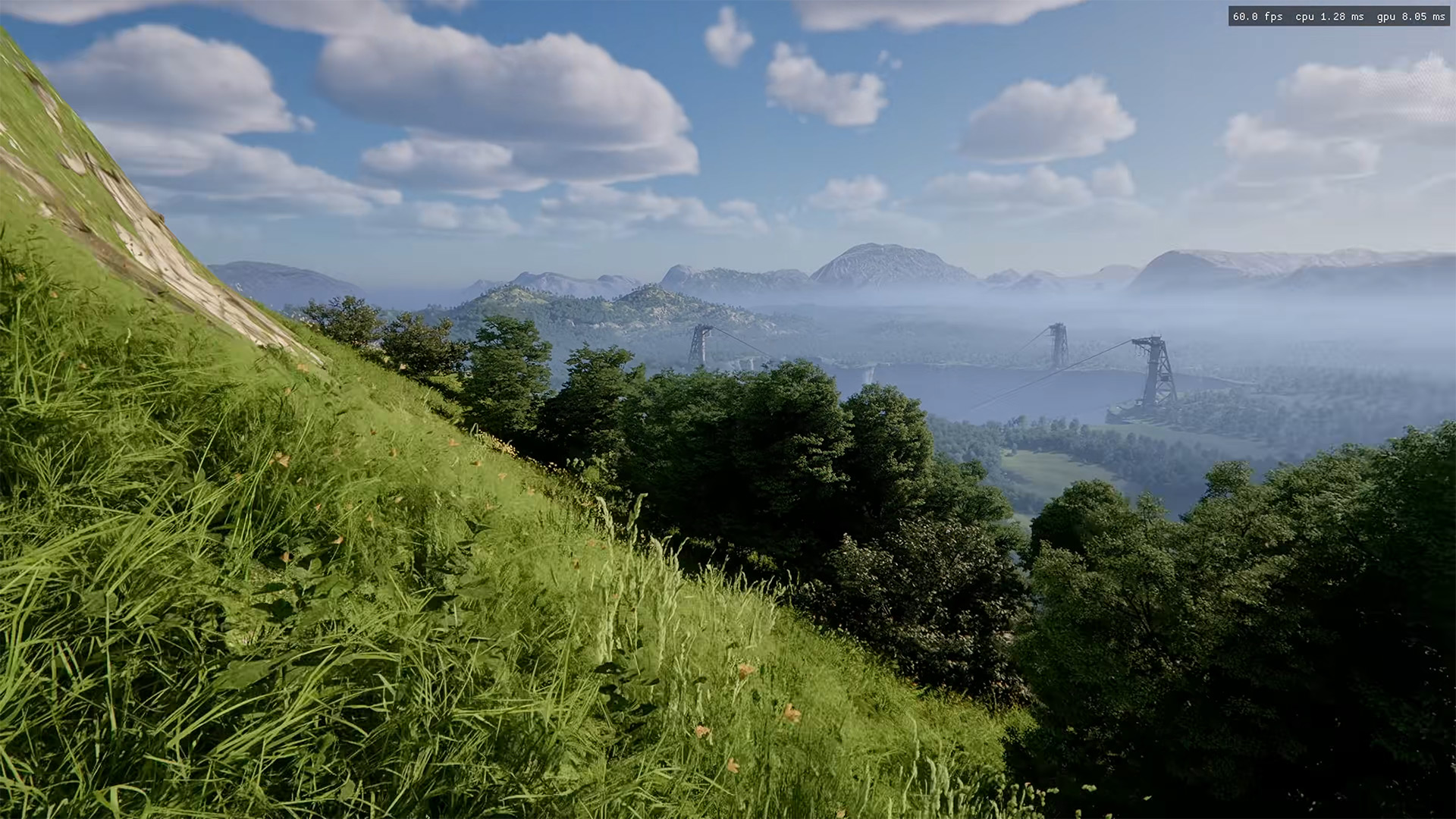
On a laptop with a mobile RTX 3070, the engine holds 60 FPS in most scenes. With some effects turned off, weaker systems should handle it too, and the developer named the RTX 2060 and RX 6400 as the theoretical minimum because of the GPU features the engine relies on.
Tony gave special attention to weather, which he built into the engine architecture from the start, since it will be an important part of his future game. He said the weather effects don't yet reach the level of realism he wants, and he plans to keep improving them.
Viewers compared the forest to Kingdom Come: Deliverance 2 and recalled how Crysis blew everyone away in its day. Many pointed out the absence of the temporal artifacts, smearing, and halos usually seen with dense vegetation, along with skilled work on color and tone mapping, which does a lot to create the sense of photorealism.
No joke, you rarely come across games that correctly convey the different density of undergrowth, changes in elevation, and all the little details on the forest floor. Plus the huge number of shades of green in nature. As a hiker, I say: great work!
Suggestions included smoother transitions between levels of detail, less swaying grass, and a delay between a lightning flash and the sound of thunder.
Jokes were inevitable. Commenters called the technology Real Engine, suggested building a data center in the forest, and one user wrote that you can now skip going outside altogether. Many were also intrigued by a mysterious black sphere hanging over a deep gorge, which the developer didn't explain.
- GTA 6 recreated a street video from Miami, and the clip was mistaken for real footage
- Gamers with weak PCs criticized all the guides that promise a FPS boost in games
- Skyrim players and modders raise money for lawyers after complaint from ENBSeries developer