Skyrim players and modders raise money for lawyers after complaint from ENBSeries developer

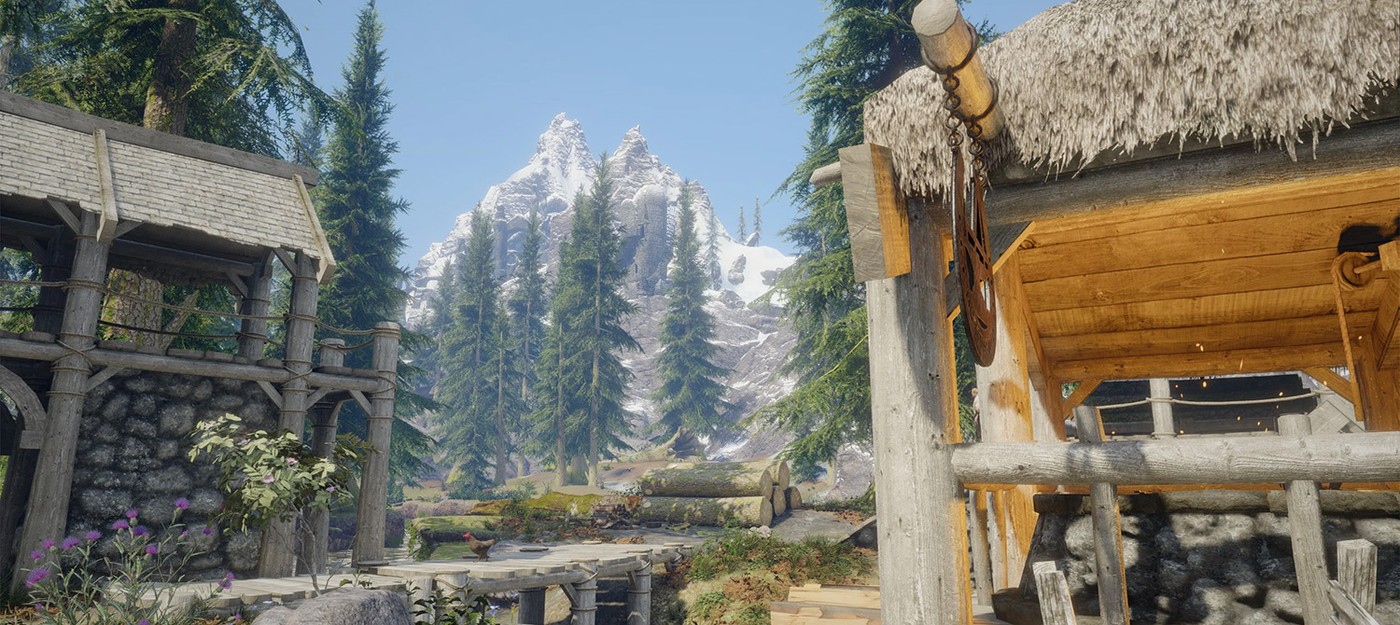
In early August 2026, the Community Shaders team released an update that turned the open-source graphics framework for Skyrim into a direct competitor to ENBSeries.
A few weeks later, ENBSeries developer Boris Vorontsov filed a DMCA complaint against Community Shaders. The complaint documents were published in the mod Discord channel by Doodlum, one of the team's core contributors.
Community Shaders is a free, open-source rendering framework distributed under the GPL-3.0 license. Unlike ENB, which replaces the entire post-processing pipeline, Community Shaders hooks into the game through SKSE and builds on top of the existing Skyrim shaders, adding bug fixes and modern rendering techniques. That approach gives it more predictable performance than an external wrapper.
The centerpiece of the August release is Effects 11, part of the 1.8.0 update. It runs on the current version of Effects for Direct3D 11 and adds support for nearly every ENB preset available on Nexus Mods, along with built-in equivalents of ENB Helper and ENB Extender. Incompatible effects like letterboxing, blur, and sharpening get disabled automatically.
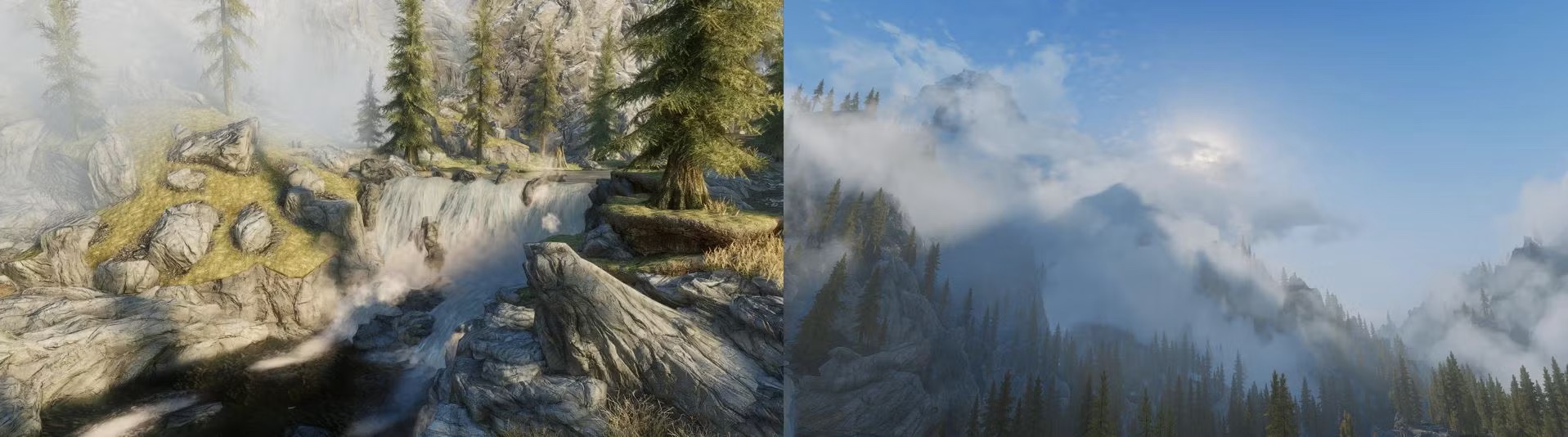
Beyond compatibility with existing presets, the update brought several new technologies of its own:
particle shaders that react to nearby light sources and can be tuned in-game through the ENB weather system
rain shaders built on a physically accurate shadowing model
a reworked volumetric ray implementation with no measurable frame rate hit
a procedural sun that replaces the standard sun texture with a fully shader-based effect
HDR support through integration with Pumbo's Auto HDR
The gap in hardware requirements became the main selling point for the new option. ENB has stood as the standard for graphical mods for years, but since it works on top of the game rather than at the engine level, getting a great-looking result meant needing top-tier hardware. Community Shaders delivers comparable results on mid-range machines.
Vorontsov reacted to the release before filing the complaint. On August 5, an updated ENBSeries license agreement appeared on enbdev.com, citing US and UK intellectual property law. The wording bans malicious technical extraction, unfair competition, and unauthorized use of the brand.
The complaint leans specifically on this license, which was added after the disputed update had already shipped. It claims Community Shaders uses Patreon to fund and distribute software that infringes on ENB rights.
As evidence, the complaint includes a screenshot of a conversation in which the creator of another ENB-related mod states they never gave permission for reverse engineering of their code.
One section of the document has nothing to do with technical claims at all. It states that the complaint was partly motivated by a harassment campaign against the ENBSeries developer, with some participants urging him to take his own life. At the same time, the complaint text itself hints that ENBSeries code uses a library requiring attribution that the mod doesn't provide.
The dispute has spread beyond the Skyrim community. A developer working on Luma said he had previously tried to get the source code for the GTA 4 version of ENB in order to update the mod for game version 1.7 himself.
Instead of a simple refusal, he was accused of trying to steal someone else's work and got kicked off the ENB Discord server. He said ENBSeries used to be a groundbreaking tool for modding, but keeping the source code closed turned out to be one of its biggest mistakes.
After the complaint was filed, Patreon notified the Community Shaders team about restrictions on distributing the disputed materials. The page still works, but the team was told that another DMCA complaint could get it taken down entirely.
Community Shaders developers believe the complaint is unlikely to hold up in court, but responding to it formally requires legal help. The team has opened a fundraiser to cover the cost of preparing a response.
As of publication, the mod Patreon brings in just over $500 a month.