Someone has posted 1.4 million free 16x16 pixel sprites, all created by AI

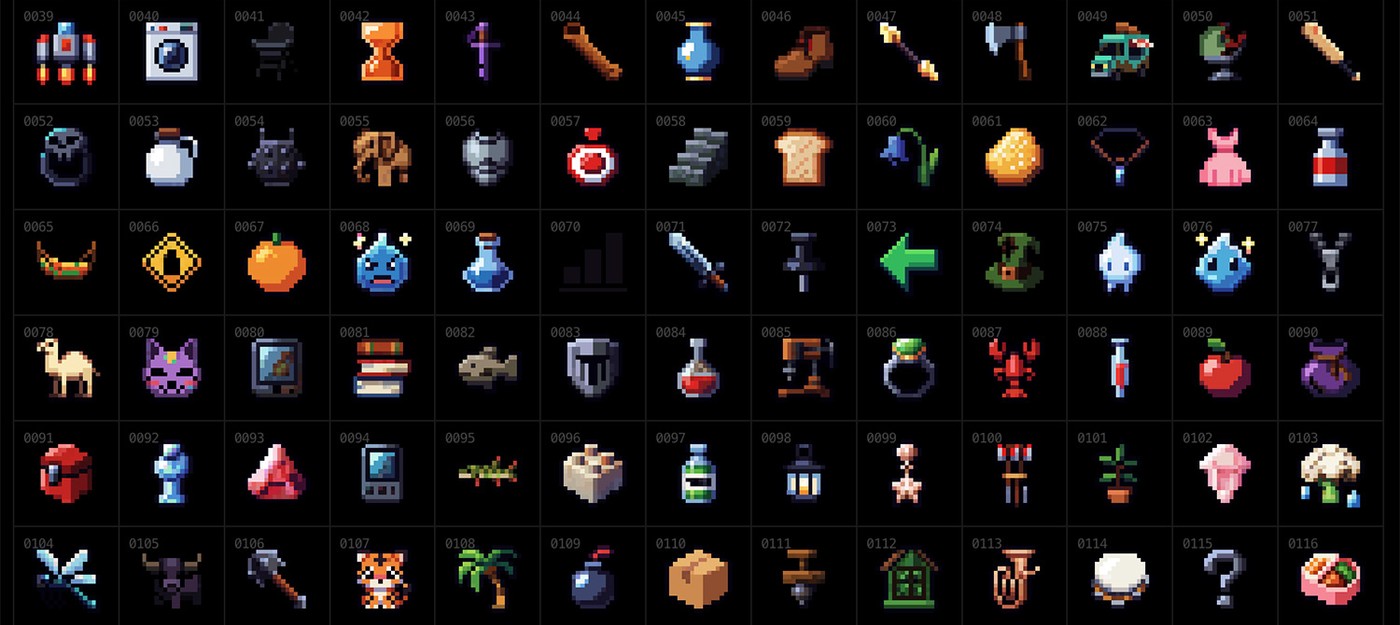
Hugging Face user Angais has published Pixel Art Atlas, a large dataset of pixel art game sprites. It contains 1,409,404 images covering 6,194 different objects, and each one comes with an English caption.
All sprites have a native resolution of 16x16 pixels and a transparent background. The images were generated from text prompts by the Krea 2 Turbo model with an additional pixel art LoRA, which makes the dataset entirely synthetic.
The collection originally held 1,412,908 sprites. Filtering removed 3,504 images from the training split, leaving 1,405,308 sprites, while another 4,096 went to the validation split. Angais noted that the split is inherited from the original training run, so objects from the validation set may also appear in the training set.
The captions call for some caution. They describe what the model was asked to draw, but nobody systematically checked whether the images match the text. A sprite might show a lit candle under the caption "unlit candle," and colors, materials, and item counts can also differ.
The creator advises treating the captions as approximate labels and checking the images manually before using them to evaluate how accurately a model follows instructions. According to Angais, some captions were still corrected during filtering.
The dataset comes in two formats:
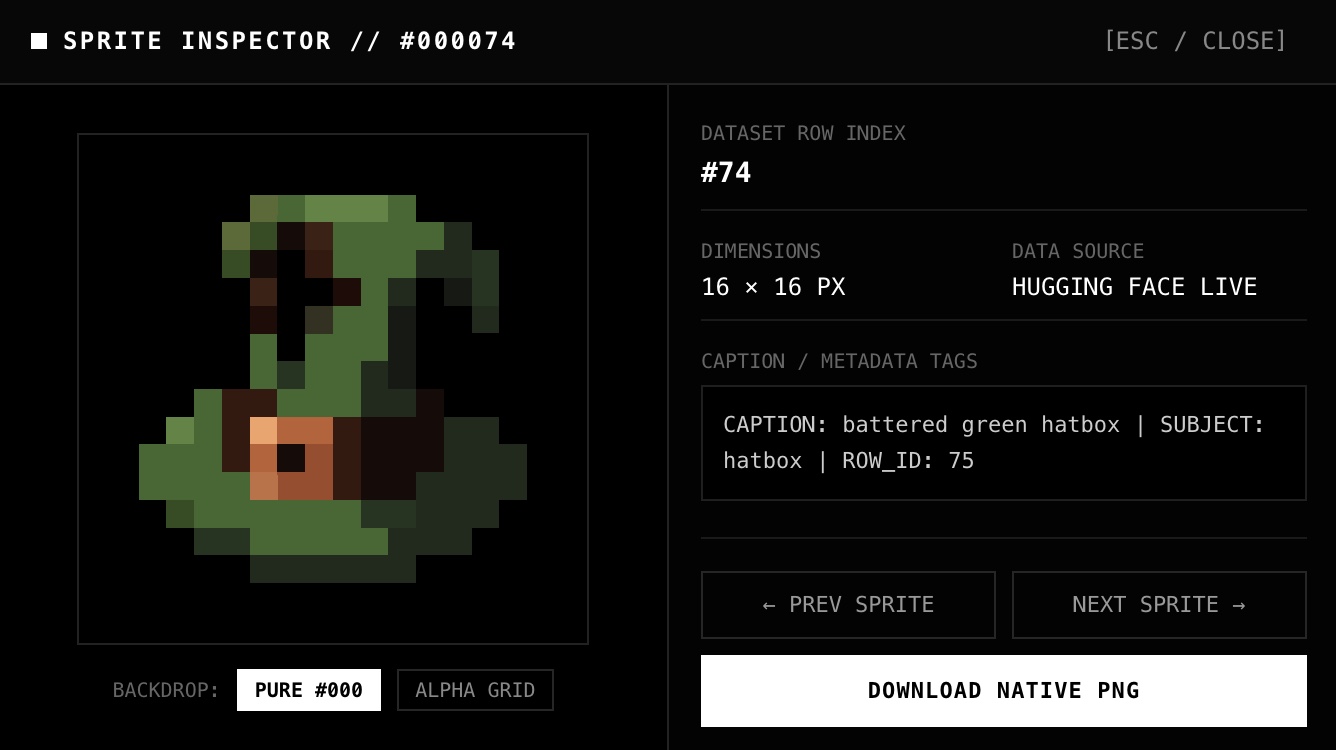
Parquet files, where each sprite is stored as an RGBA image with the fields `image`, `caption`, `subject`, and `row_id`
A ZIP archive with a `tokens.npy` array, where each sprite is recorded as 256 palette indices, a `palette.npy` palette file, caption and subject lists in JSON, and a file defining the splits
In the compact format, index zero marks transparency, while the remaining indices pick RGB colors from a shared palette. This representation suits training generative models that treat images as a sequence of tokens.
The sprites, captions, and the collection itself are released under the CC0 1.0 license, effectively placing them in the public domain to the extent Angais is able to waive those rights. The license does not cover third-party materials, trademarks, or the Krea models themselves.
Model weights and LoRA parameters are not part of the dataset. Under the Krea 2 Community license, Krea does not claim rights to generated images, but its commercial use terms and acceptable use policy still apply. Angais also clarified that the dataset is independent and has no official affiliation with Krea.
- The artist who turned Whiterun into a city of 15,000 residents has drawn Oblivion's Imperial City for 1.5 million people
- An artist spent 60 hours turning Whiterun from a village of 74 into a realistic city of 15,000
- An artist is recreating Fallout TV show scenes in the style of the classic games, and the results are uncanny