An artist spent 60 hours turning Whiterun from a village of 74 into a realistic city of 15,000

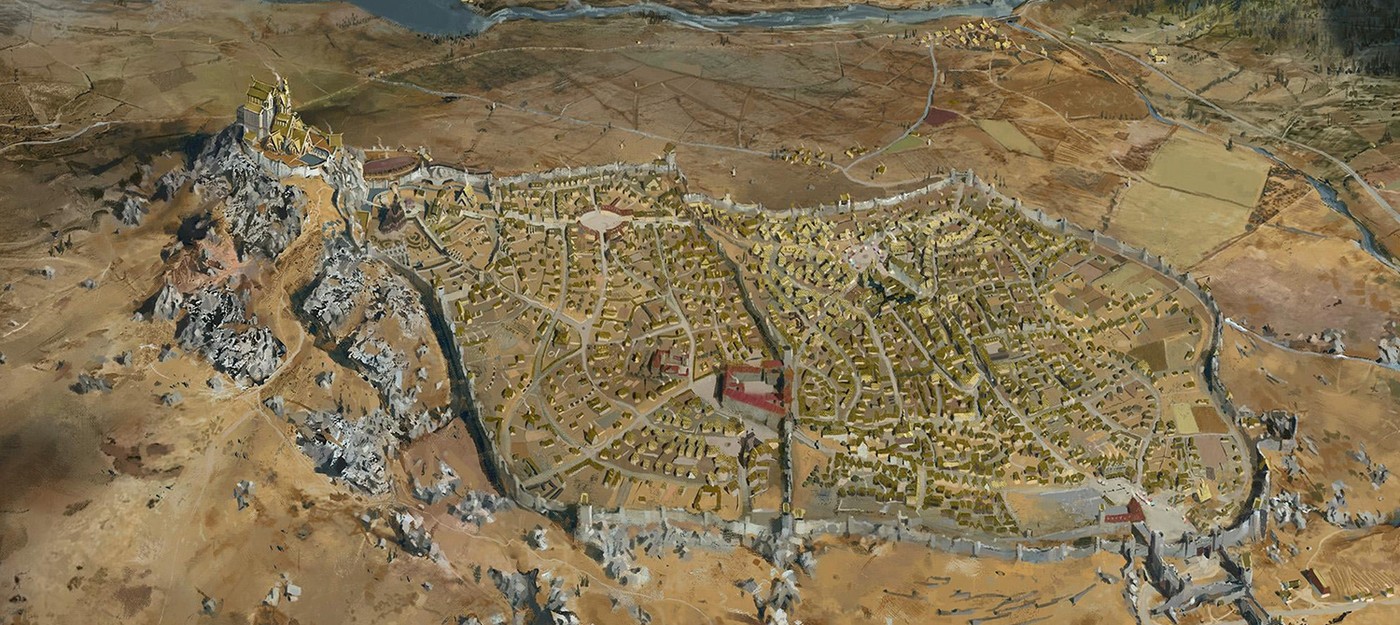
Whiterun in The Elder Scrolls V: Skyrim is the largest city in the province – home to exactly 74 people. One artist decided to fix that injustice and spent over 60 hours creating a detailed illustration of the city at a lore-accurate scale. The original artwork was covered back in late January, and now the creator has shared a video walking through the entire process – which turned out to be just as fascinating as the final result.
The premise was simple enough: draw Whiterun as it might actually look in reality. Keep the recognizable silhouette, the style, the design language of the original, but transform a handful of buildings into a believable medieval city. Same shape, same surroundings – just a lot more than 15 structures.
The first order of business was figuring out the population. 74 NPCs representing the capital of an entire province clearly doesn't hold up as a major trade hub of a continental empire. The artist turned to real history, starting with the Nordic countries – the direct inspiration for Skyrim – and used around 1200 AD, the High Middle Ages before the Black Death, as a reference point.
The problem became apparent quickly: the largest Scandinavian cities of that era had somewhere between one and three thousand residents. Not exactly fitting for an imperial capital. The biggest cities of Western Europe at the same time ranged from 40,000 to 150,000, but Skyrim is a harsh, rural province after all. The compromise landed at 10,000–15,000 inhabitants.
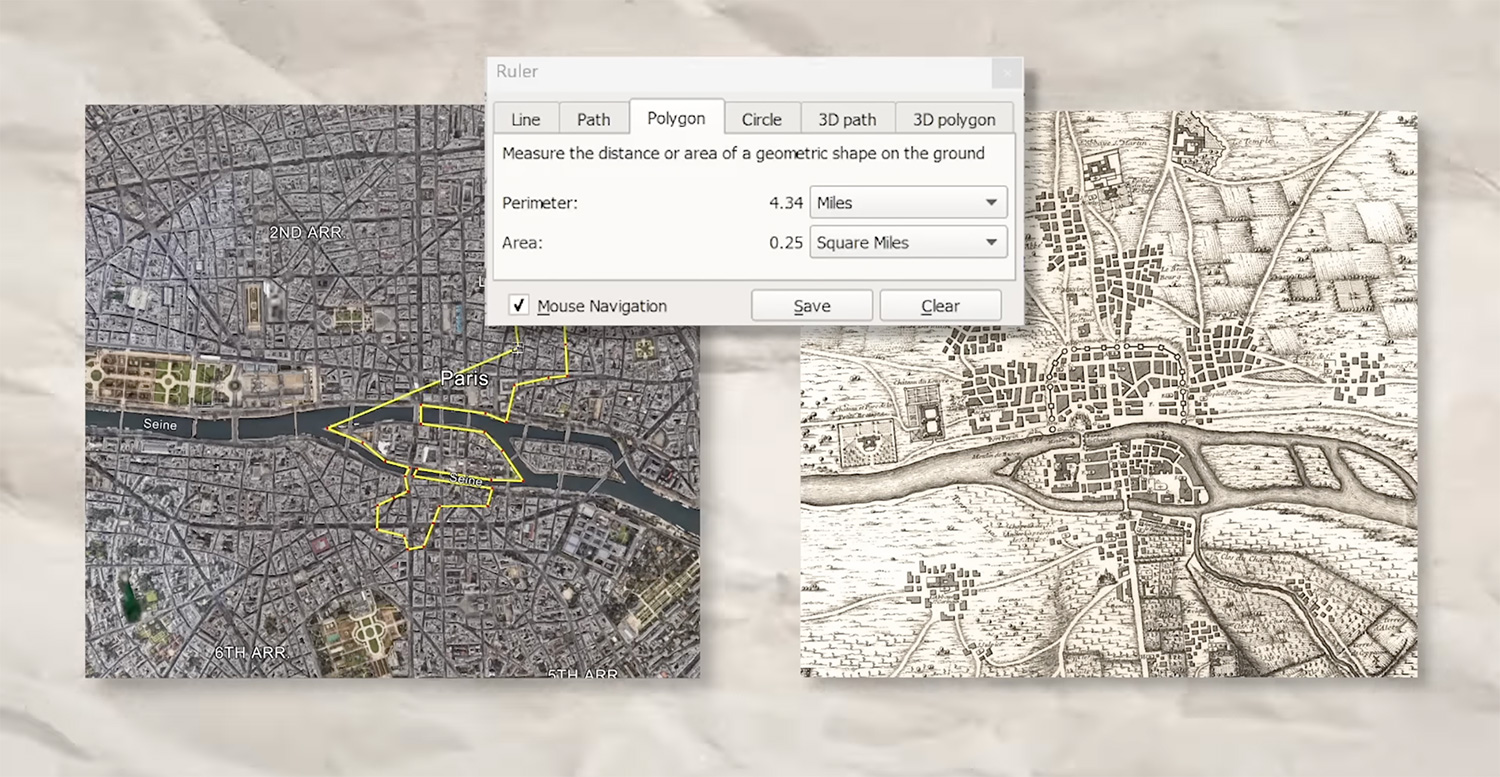
The next question was what 15,000 people actually look like on a map. Using historical maps, the artist estimated the footprint of real medieval cities, with Paris as the upper bound and a small Dutch town as the lower. Unlike most medieval settlements, Whiterun isn't tightly packed – buildings aren't wall-to-wall, and there's plenty of agricultural land within the city walls. It's more reminiscent of small Viking settlements or, obviously, Rohan from Lord of the Rings, which served as a direct inspiration. The target area within the city walls landed at 1.036 square kilometers.
Then came the most chaotic phase. The artist set out to find a real location on Earth that resembled the Whiterun Hold – a rocky outcrop rising above rolling plains. The search took a huge amount of time. Denmark was too flat, Norway too forested. A few hills in Sweden looked promising but didn't quite work. The Badlands of South Dakota briefly became the top candidate, then New Zealand – which also didn't pan out.
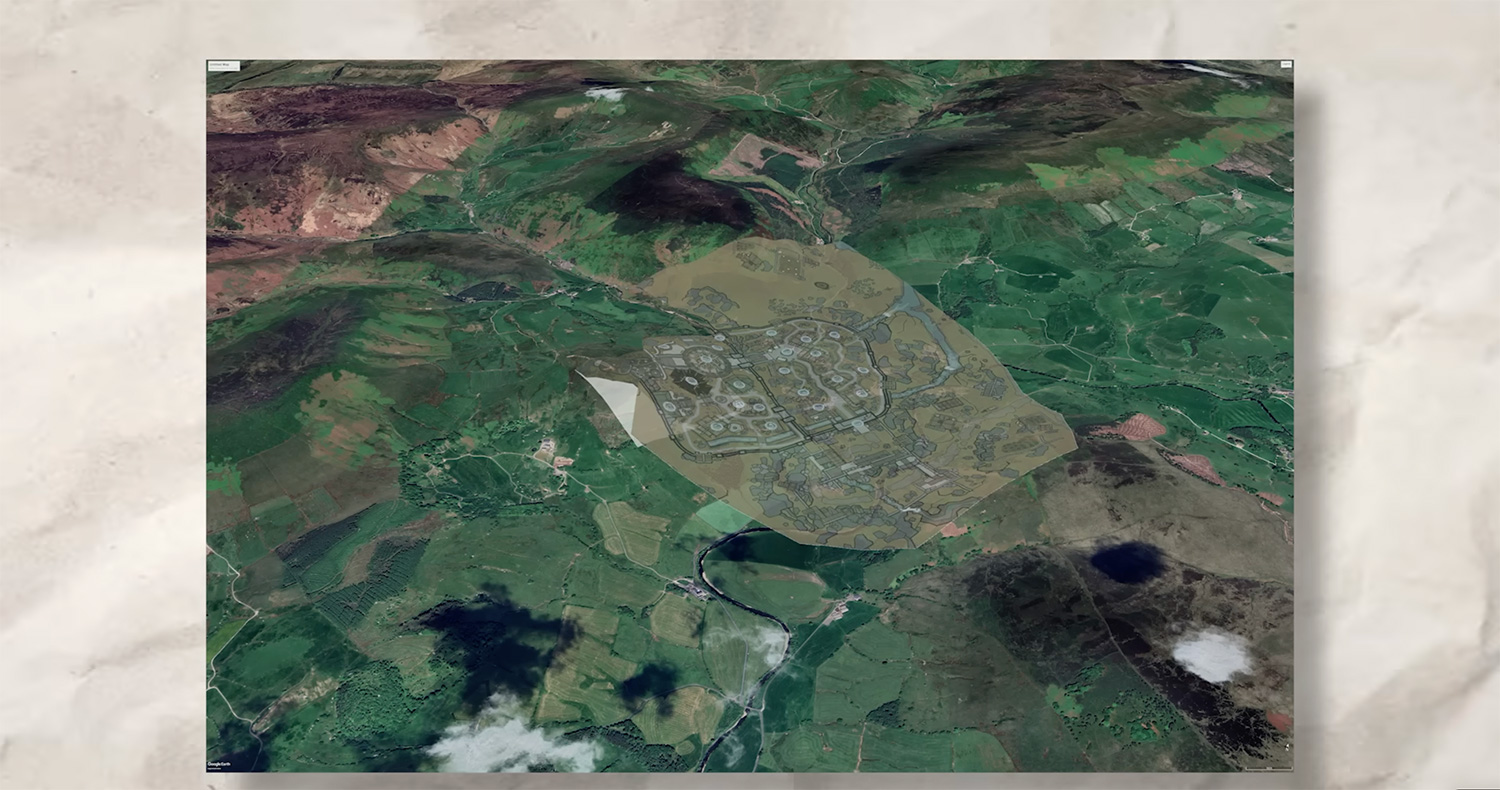
Eventually, the choice landed on a hill near the village of Dunnottar Bridge in the UK. The elevation was roughly right, and the local buildings provided a useful scale reference. The artist overlaid a Whiterun map with a circle of the target diameter onto that hill, cut out Dragonsreach, and scaled the castle against the real village buildings. The in-game size of the castle turned out to be not too far off from reality, though it needed a slight upscale.
Using a 3D map model found online, the artist chose a viewing angle and tried to recreate it in Google Earth. Then came layering the topography and building positions from the 3D model, cutting ground textures from Google Earth and warping them to fit as a base layer. Rocks came from New Zealand, the mountain from Switzerland. As the artist admitted, it all looked terrible up close – but 90% of that base eventually got painted over anyway. The point was just to feel the landscape.
One early win was cloud shadows – they immediately gave the scene a sense of scale. According to the artist, the piece is as much about the city's surroundings as the city itself. Whiterun, set against a vast landscape, looks small and vulnerable, clinging to its rocky hill – exactly how medieval cities actually appeared, what the artist called "fragile wonders."
Originally, the plan was to avoid drawing every building by hand and find some way to copy or simplify. That didn't work out – each roof had to be drawn individually. And then redrawn from scratch, because the math showed that at the current building density, the city would only hold 2,000–3,000 people. The scale had to be reworked with roughly 10 people per building as the new target.
The upper city – wealthier and older – got larger, more spread-out buildings. The artist initially wanted to keep all structures freestanding, but eventually added dense wall-to-wall blocks near the commercial center. The logic: standalone houses reflect traditional Nordic building culture, while the dense urban blocks represent Imperial commercial and cultural influence, more Western European in character.
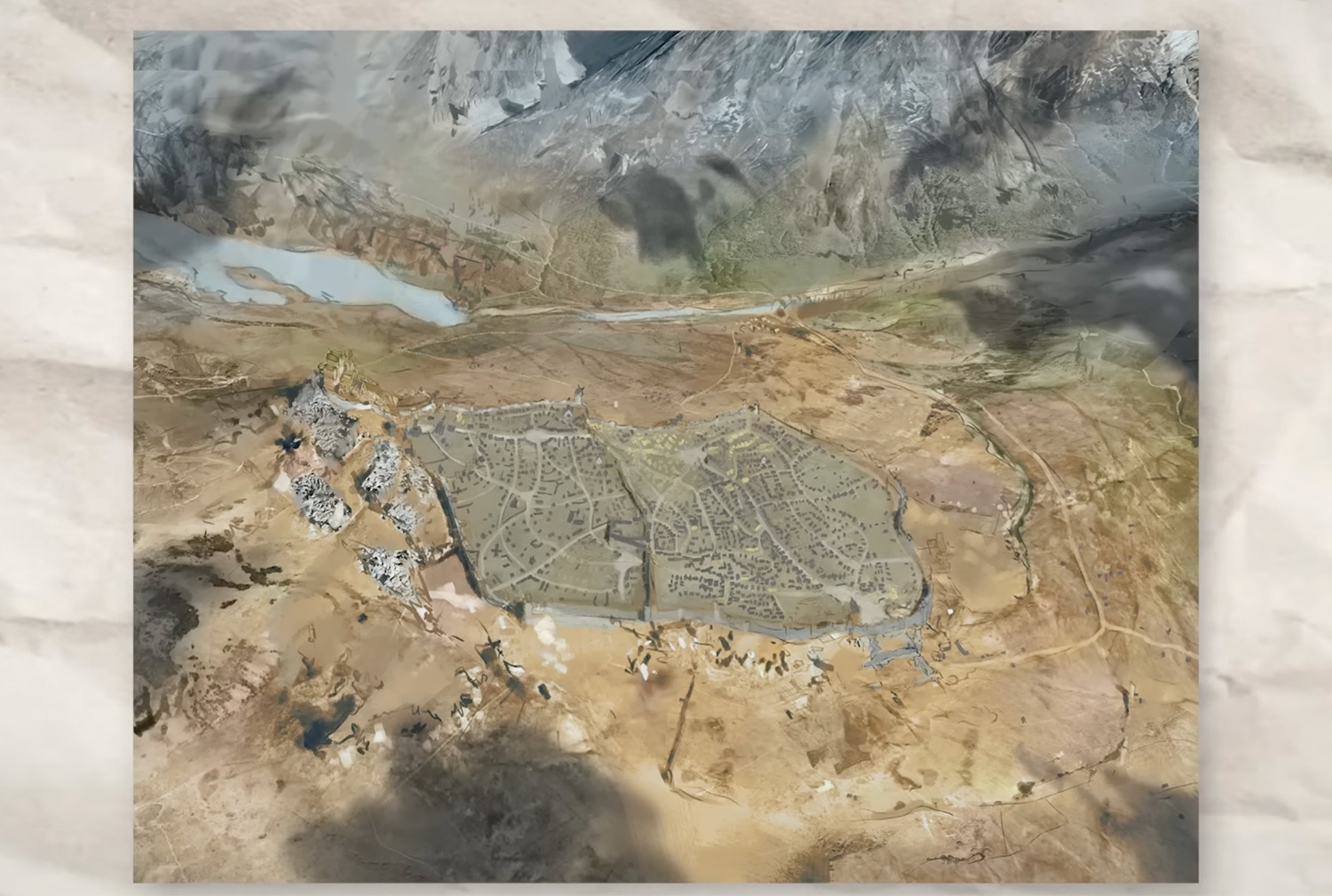
Red roofs mark buildings constructed or commissioned by the Imperial government – including a castle inspired by a Teutonic fortress in Poland and a garrison temple in Cyrodilic style based on churches in Vilnius. A new plaza and updated city barracks also made an appearance.
Outside the main walls, the artist placed ruins of older city fortifications, hinting that the ancient city was once considerably larger. The idea is that in the past, the city sprawled further out, with much of its agriculture happening inside the walls. The area beyond the old walls was left farmless – basements and ruins of an abandoned district would make plowing the land nearly impossible.
Small villages dot the landscape, and gradually, detail by detail, the base layer disappeared beneath new content. Nearly a week went into adding houses, trees, textures, paths, caravans, waterfalls, and tombs. The temple district – absent from the original game – was designed around ancient Nordic ruins, using stave churches (the red ones) and scaled-up longhouses as architectural anchors.
The background mountains got gentler, grassier slopes to keep the terrain transition from feeling too abrupt. And of course, no Skyrim piece would be complete without a dragon – its silhouette casting a shadow on the ground below became the final touch. After 60-plus hours of work: a few wisps of chimney smoke, a careful signature, and the illustration was done.
- Skyrim player accidentally drives hawks to extinction and can't bring them back
- Fan-made Oblivion remake on Skyrim engine showcased in new screenshots following release delay
- Skyrim players share stories about the strangest guests at their virtual weddings