Former CS:GO commentator creates a case generator for gaming mice that works without AI

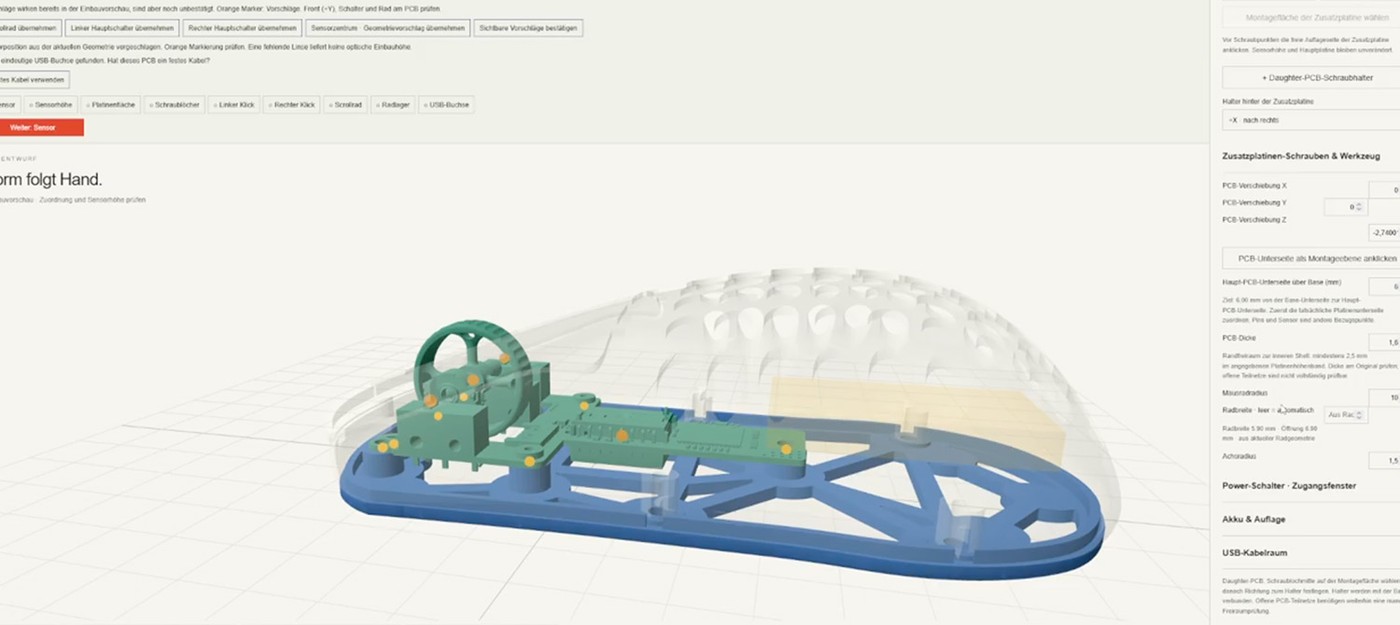
Bastian Recha, known online as Unskilledcast, showed off Mausstudio, software for designing custom mouse shells for 3D printing. The former CS:GO commentator, tech reviewer, and 3D printing enthusiast posted the demo on X on October 28. The main selling point is that all geometry is calculated locally, with no generative AI involved.
The post came after six days of silence on social media. Recha explained that he had been busy building Mausstudio, and attached a video in which he runs through the ways a shell can be customized.
This is why I’ve been a little quiet on social media lately.
Meet mausstudio.
Import your mouse PCB as an STL and start designing your own mouse shape.
The tool runs locally, using maths and algorithms. No AI involved in generating the geometry.
Still a work in progress.
Everything starts with importing a 3D model of a mouse PCB as an STL file. In the demo, Recha used boards from the Razer Viper V2 Pro and the Zaunkoenig M2K. From the uploaded model, Mausstudio detects the key components on its own:
main button switches
optical sensor
scroll wheel
screw holes
The program then builds a shell around those elements. It adds stems that reach the switches, a cutout for the scroll wheel, buttons for the side switches, and a base cutout for the sensor.
The shape of the mouse is adjustable. Users can change the width, length, and height of the shell, and move the position of the hump, which has a big effect on grip. To cut weight, perforated cutouts are available for the upper and lower shell, though a fully enclosed shell is an option too.
Recha also showed off a battery shelf feature separately. Enter the battery dimensions, and the program creates a seat of the right size at the chosen spot in the shell. According to Recha, many DIY 3D-printed mice treat battery placement as an afterthought, with the cell simply stuck in place using hot glue or double-sided tape.
No release date for Mausstudio has been announced, and it is unclear whether the software will be paid or free. Recha has, however, listed changes made since the first demo:
manual editing of automatically detected components
expanded side button controls
saving shell designs for use with other PCBs
cleaner model geometry
It is also unclear whether the tool can handle mice with a PCB split into several parts, like the Logitech G Pro X Superlight. Support for such designs may arrive in future versions.
Interest in tools like this comes down to the cost of experimenting with shape. Good gaming mice are expensive, and buying several models just to find a comfortable grip adds up fast. Mausstudio could let users find a shape they like based on a mouse they already own, with no CAD skills needed and no hunt for a ready-made shell that someone designed for a specific PCB.
- Cyanide, first League of Legends world champion with Fnatic, has died
- Apple is exploring 3D-printed aluminum for iPhone and Apple Watch casings