Some gamers are glad they've learned not to buy games on Steam sales that will just gather dust in their library

For more than a decade, Steam sales trained players into a simple reflex: see a red price tag, hit "buy," and figure out when to play later. Lately the script has flipped, and the flex is no longer a game grabbed for pennies but an empty cart.
Skipping two seasonal discount marathons in a row is practically asceticism, the kind that deserves its own achievement.
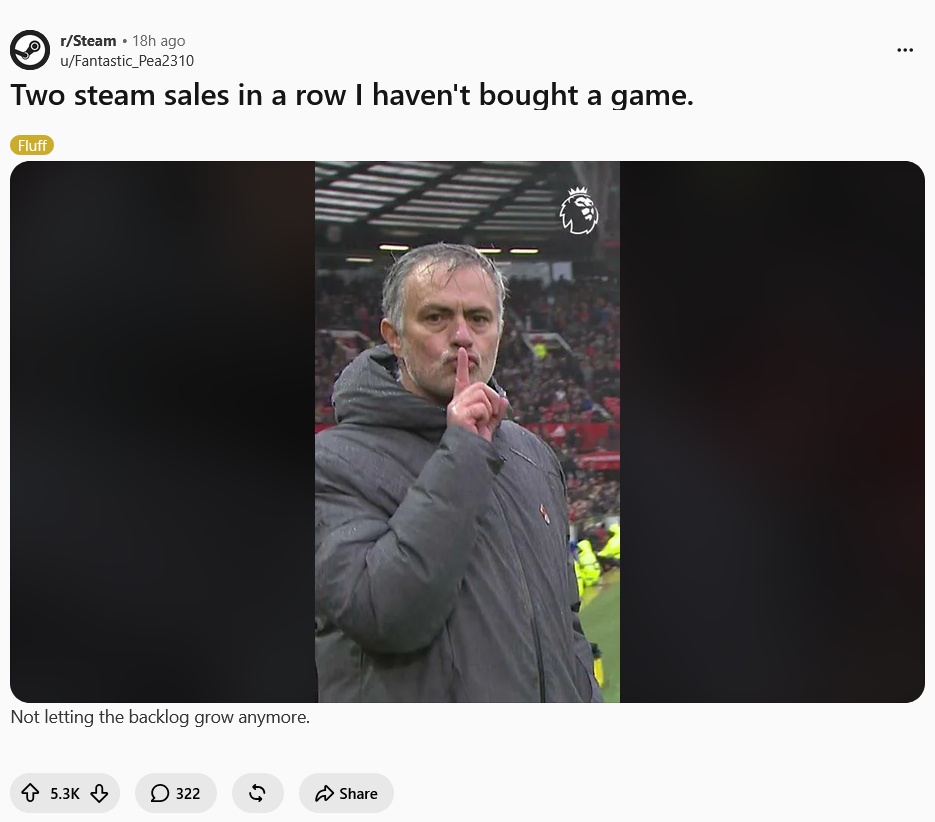
That is exactly what one Reddit user bragged about after the Valve autumn sale, which ended on October 8. The explanation was simple: no more feeding the backlog. Plenty of people were happy to share the pride, but for many the motivation was far more mundane. One put it bluntly:
You don't do it, because you have a strong will. I don't do it, because I have a hollowed out bank account. We are not the same.
A more modest theory says the sales have simply gotten worse. A two- or three-year-old game used to get 75–90% off without much fuss, entire publisher catalogs went for a couple of dollars, and flash sales, which Valve dropped back in the mid-2010s, turned every day of the event into a hunt.
Now a six-year-old title can easily sit at 30–50% off, and one commenter summed up the current format as "hey this $70 3 year old game is 50! What a deal!"
There is a solid counterargument, though. Steam veterans have long since collected almost everything worthwhile that ever dropped to 90% off, and against a library like that, new offers inevitably look pale.
Some people turned shopping into strict bookkeeping. One player sets aside £100 for every sale but spends it only after putting each purchase through an internal "trial." Since 2020, just seven games have made it into the collection, from Civilization 6 to Baldur's Gate 3, for a total of £101.06.
Others cap their wishlist at 50 titles, buy only at 50% off or deeper, or check the price history and quietly delete a game from the cart if the price isn't an all-time low.
- Student dedicates master's thesis to a system that identifies cheaters' additional accounts in Counter-Strike 2 by mouse and keyboard movements
- Gabe Newell decided to make Steam after telling the original Half-Life publisher to get lost
- Valve quietly changed the Steam storefront, and indie developers are seeing traffic increase several times over