Nvidia releases RTX Mega Geometry 2.0 – a 31 GB geometry scene takes up just 1.5 GB of video memory


Nvidia has updated its RTX Mega Geometry SDK to version 2.0. The main addition is support for streaming continuous level-of-detail clusters.
The feature lets developers work with extremely dense meshes, even in scenes that don't fit into the allotted VRAM budget.
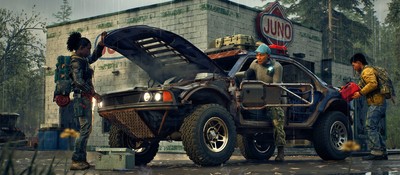
The update is part of the RTX Kit 2026.3 package, with details published in the Nvidia developer blog. The announcement comes close to the release of Gears of War: E-Day, which uses RTX Mega Geometry. Nvidia has not said which version of the technology the game uses.
According to Nvidia, Mega Geometry "organizes detailed meshes into clusters so ray-traced scenes can adapt geometric detail efficiently." In practice, that lowers the cost of building acceleration structures, the hierarchical "maps" of a scene that a GPU uses to find where rays intersect triangles.

The first SDK release, version 0.9.0 beta, appeared in 2025. Early that same year, the technology landed in Alan Wake 2 with title update 1.2.8. Tom's Hardware testing on an RTX 4090 showed about 1GB of VRAM saved and a 13% performance boost at native 4K with DLSS Quality.
On an 8GB graphics card, that saving is an eighth of the total memory. This week the SDK on GitHub reached version 2.0.0. Earlier versions made dense scenes cheaper to ray trace, while 2.0 targets geometry that doesn't fit into VRAM at all.
Nvidia's changelog states:
A scene's source geometry no longer has to fit in VRAM [with detail] bounded by a memory budget rather than by mesh count.
When a scene goes over budget, the system doesn't constantly swap geometry in and out of memory. Instead, it settles at a lower level of detail. Objects lose fine details, but they don't disappear or cause stutter from constant loading. The approach resembles how Nanite works in Unreal Engine 5.
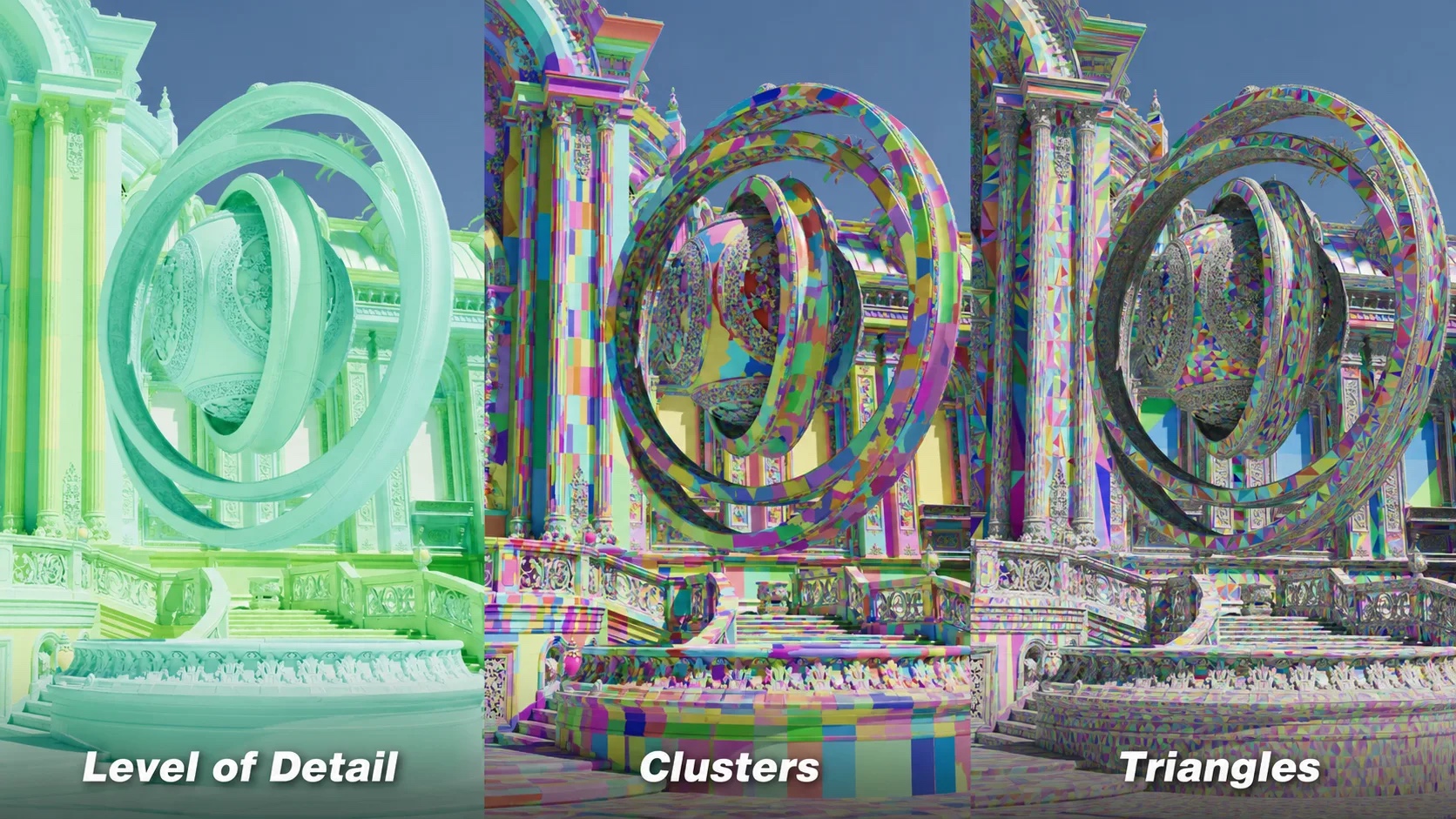
By default, 2GB of VRAM is set aside for streamed geometry. Another 2GB goes to ray-tracing acceleration structures, and 4GB to material textures. All values are adjustable, and the existing tessellation path remains in the SDK.
The scale of the technology is clear from Nvidia sample scene Zorah. It contains 1.6 billion unique triangles, weighs 70GB, and requires up to 64GB of RAM at peak on first load. Zorah has 31GB of mesh data in total, but in the courtyard view only 1.5GB sits in VRAM, running on an RTX 5090 at 4K with DLSS Quality.
Running the sample requires:
An RTX GPU with 10GB of VRAM or more
Game Ready driver 570 or later
Microsoft DirectX Raytracing (DXR) 1.1 or later
Windows 10 or a newer system
For now, Mega Geometry 2.0 is aimed more at developers than players. Nvidia offers an SDK with a reference sample, and no game has officially confirmed using the new version.
Besides Mega Geometry 2.0, RTX Kit 2026.3 includes:
RTX Character Rendering 1.4
RTX Dynamic Illumination 3.1
RTX Neural Texture Compression (NTC) 0.10 beta
RTX Neural Shading 1.4
RTX Texture Filtering 1.3
Neural Texture Compression uses neural networks to compress textures and cuts VRAM usage substantially. Version 0.10.0 beta has been available on GitHub since Aug. 4, but the DX12 LinAlg path is for testing purposes only. It requires preview driver 620.12, the preview Agility SDK, and Windows Developer Mode.

That leaves Vulkan as the only way for released games to use NTC with Tensor Core acceleration. Separately, Nvidia is working on making ray tracing compatible with Nanite. In August, Nvidia explained that under ray tracing, Nanite elements "switch to a single, static low-detail mesh."
The reason is that building acceleration structures for them with "existing DXR 1.2 and Vulkan APIs" is "prohibitively expensive." The solution took six years of research and development, with the new technology set to debut on Oct. 6 alongside Gears of War: E-Day. It will later become part of Microsoft DirectX Raytracing 2.0 standard.
On Sept. 22, in a Game Ready driver post, Nvidia stated that Mega Geometry enables "accurate ray tracing of Nanite geometry for the very first time." Driver 617.14 with support for the game is already out. Players will get to see the technology in action on Oct. 1, when early access to Gears of War: E-Day begins.
- Labs will have to be shut down – Nvidia CEO responds to calls from OpenAI and Anthropic to tighten AI regulation
- RTX 5080 owner burns out graphics card after launching GTA 5 with DLSS 5 – replacement issued anyway
- Gamers have started reselling RTX 5090 cards they managed to buy before the insane price surge on top-tier graphics cards