Enthusiast built an 8-bit computer with 460 vacuum tubes that needs 15 minutes to warm up

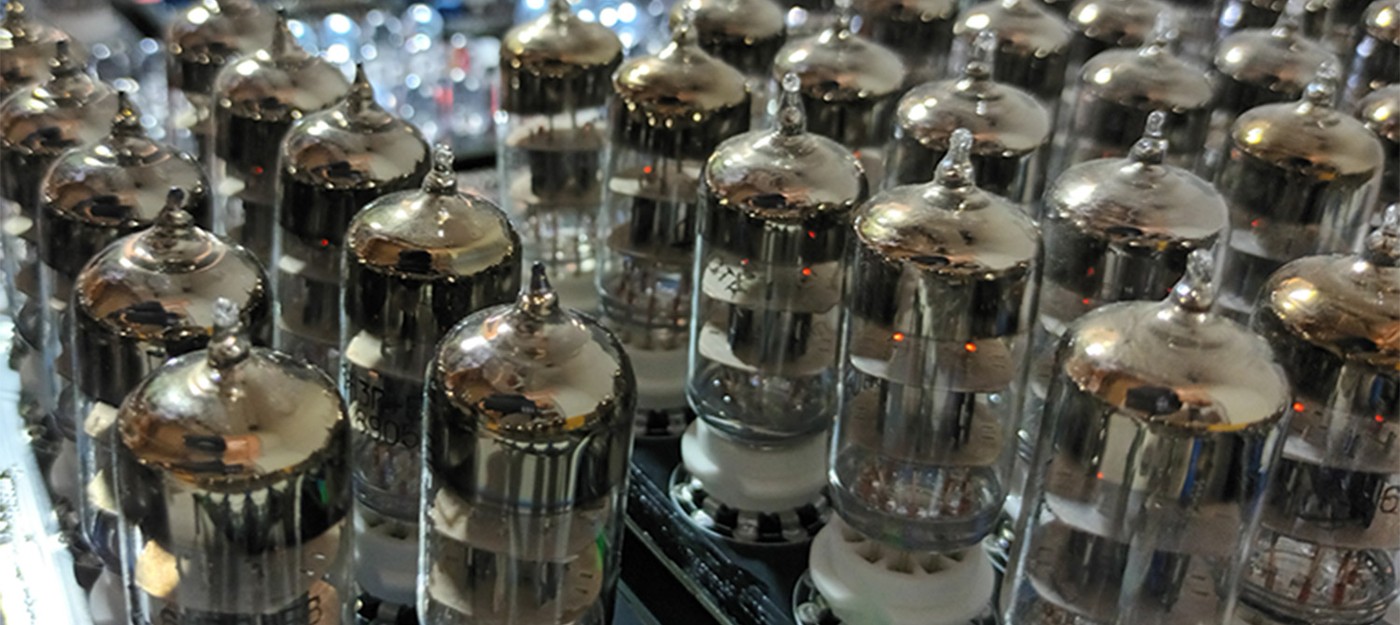
A self-taught electronics tinkerer named Mike built a working 8-bit computer that has no microprocessor, no microcontroller, and not a single modern integrated circuit inside it.
All the logic runs on 460 Soviet-made vacuum tubes. The machine, called The Tube Computer MK3, is the third tube-based computer its creator has built over the past decade.
Vacuum tubes powered the earliest electronic computers before transistors and integrated circuits took over. They're bulky, fragile, run hot, and wear out far faster than semiconductor parts.
Mike's machine makes it pretty clear why the industry moved away from that kind of hardware – and at the same time proves you can still build a fully working computer out of tubes.
Mike describes the system as "a modern 8-bit design, built with recycled 1950s vacuum tubes." It isn't a replica of any particular historic computer – it's an original design built on discrete logic, just implemented with old components.
The wall-mounted build uses 460 Soviet-made 6N3P double-triode vacuum tubes from the 1950s, along with germanium diodes. The tubes sit across 46 circuit boards, ten per board, linked together by five backplane PCBs. Everything is mounted on a 190-by-130-centimeter acrylic panel held up by an aluminum box-section frame.
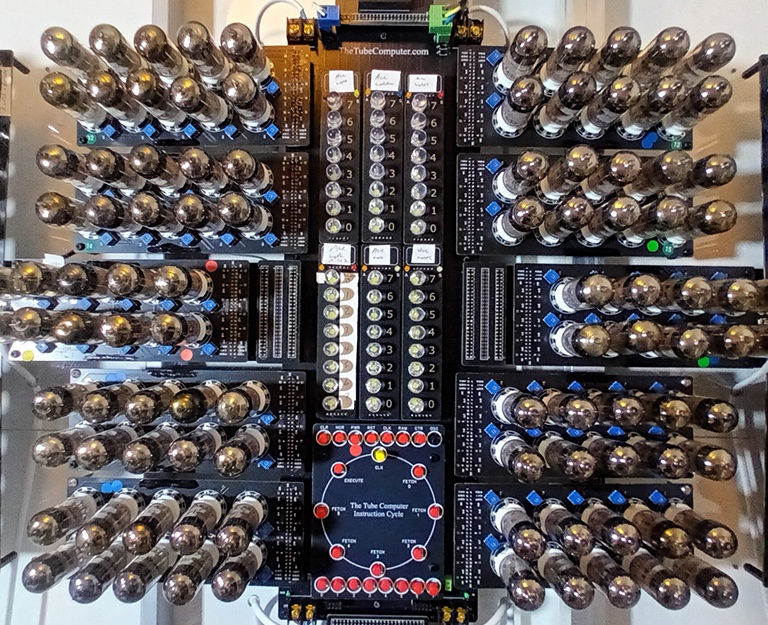
The logic is deliberately stripped down. The arithmetic logic unit handles five operations required by the instruction set: sum, carry, NOT, increment, and XNOR. There's no pipelining – each instruction runs through a six-step fetch cycle followed by a single execute cycle.
By modern standards, it's slow and clunky, but the upside is that all the computing logic is physically visible, spread across hundreds of tubes and boards. Getting it running takes patience: after power-on, the tubes need 10 to 15 minutes to warm up, and only then does Mike reset the system to bring everything into a common operational state.
Reliability is its own headache. Used and old-stock tubes last around 500 hours, so swapping out failed components is just part of running the thing. Since the computer hangs on a wall, reaching a dead tube sometimes means grabbing a stepladder.
Heat is another issue. The tubes glow while running and warm up the whole room, and the system leaves behind a smell of burning dust once it's going. Mike keeps a fire extinguisher close by, since earlier versions of his tube computers have occasionally failed explosively.
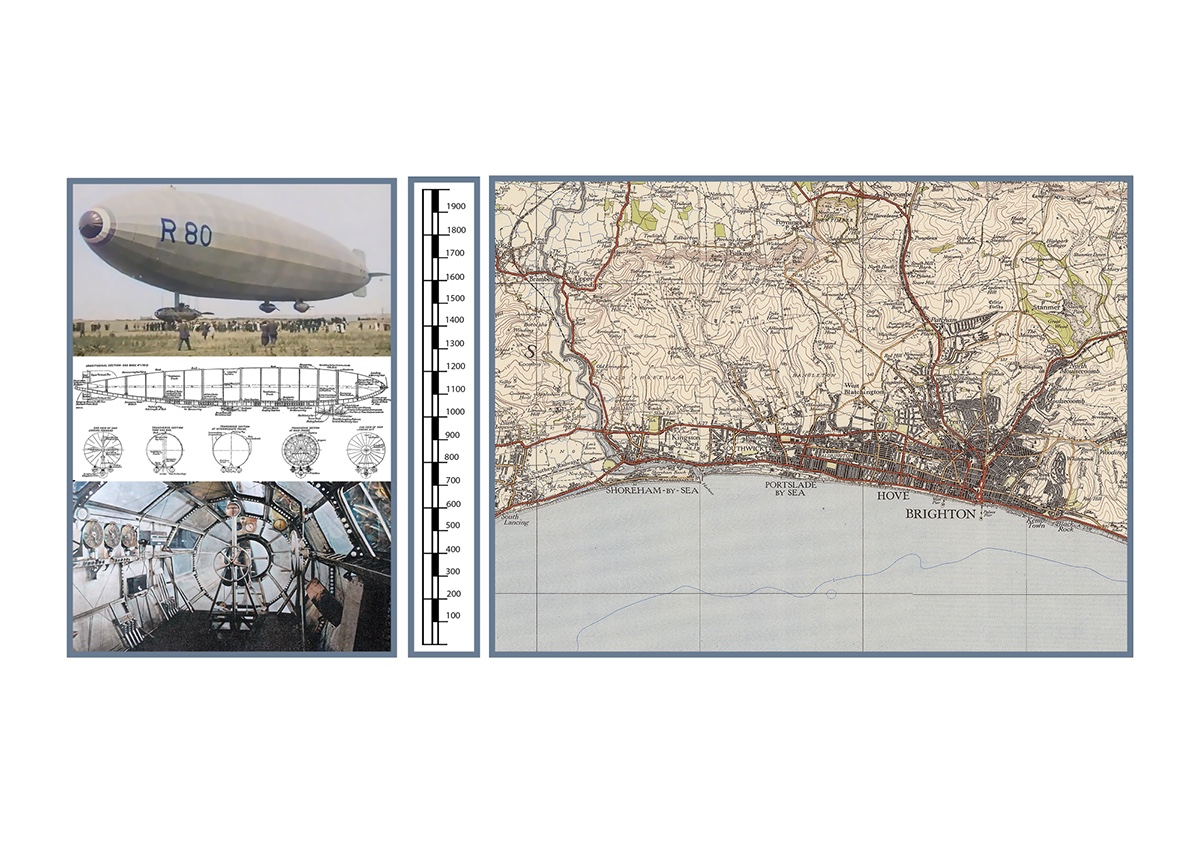
Right now the machine runs an airship simulator that lets users pilot a British R80 from Brighton to Paris. Membrane buttons placed over an image of the airship's bridge send commands straight to the computer's input board.
"By pressing controls on the image of the bridge of the R80, you can direct the airship software. These membrane buttons simply put 5 volts directly to the input board of The Tube Computer. You can control the ballast, gas release, engine power, elevators, rudder and the bow mooring gear, which is used to release the airship from the tower."
There's no practical use for a machine like this, but it makes for a fantastic piece of decor that's bound to grab a visitor's attention.
Full details on the project are available on the official website.