Google mapped the fruit fly's brain with 166,000 neurons, and engineers immediately ran Doom on it

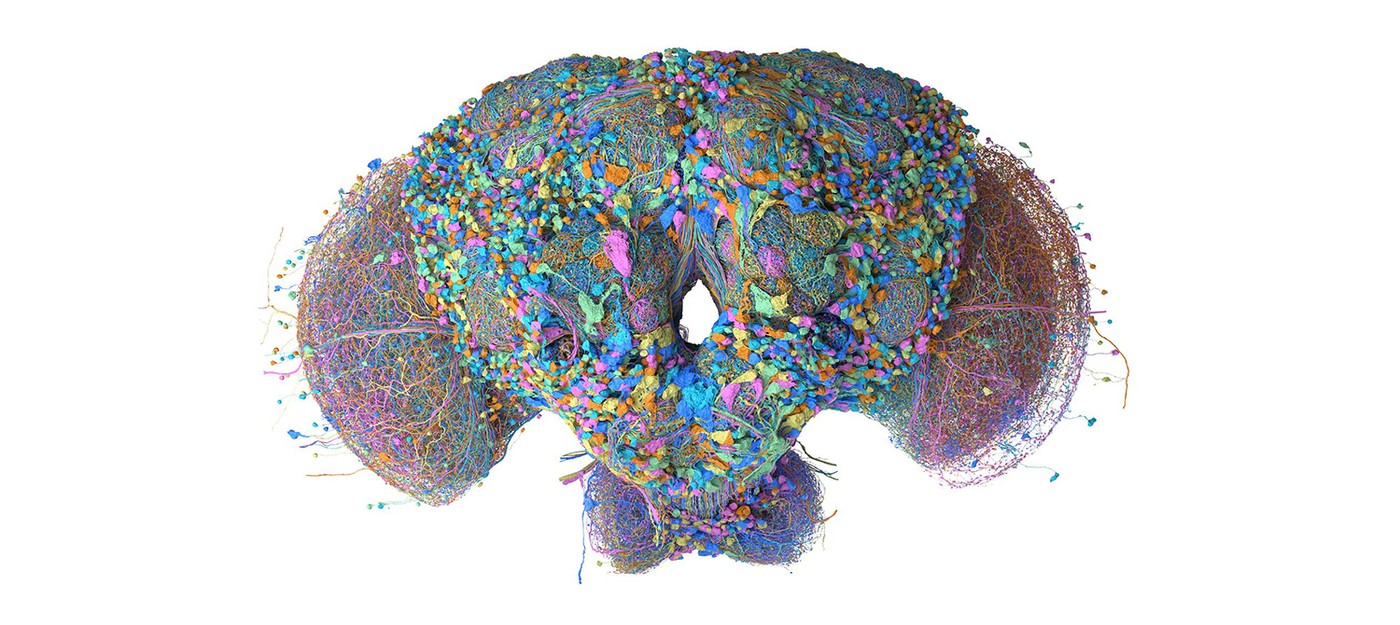
Google Research announced the completion of work neuroscientists had been waiting decades for. For the first time, the brain and central nervous system of an adult male fruit fly have been fully mapped. The model is called MaleCNS v1.0.
By the first weekend after the announcement, the dataset was already in the hands of the community, and by early the following week, enthusiasts were showing off the fly connectome being trained to play Doom and Super Mario 64. Arthur C. Clarke's third law apparently needs an update along the lines of "any sufficiently advanced technology will immediately be forced to play Doom."
Fruit flies have served as lab subjects for over a century and remain a key model organism in genetics and neuroscience. Google Research worked alongside HHMI Janelia Research Campus and the wider scientific community on the mapping effort.
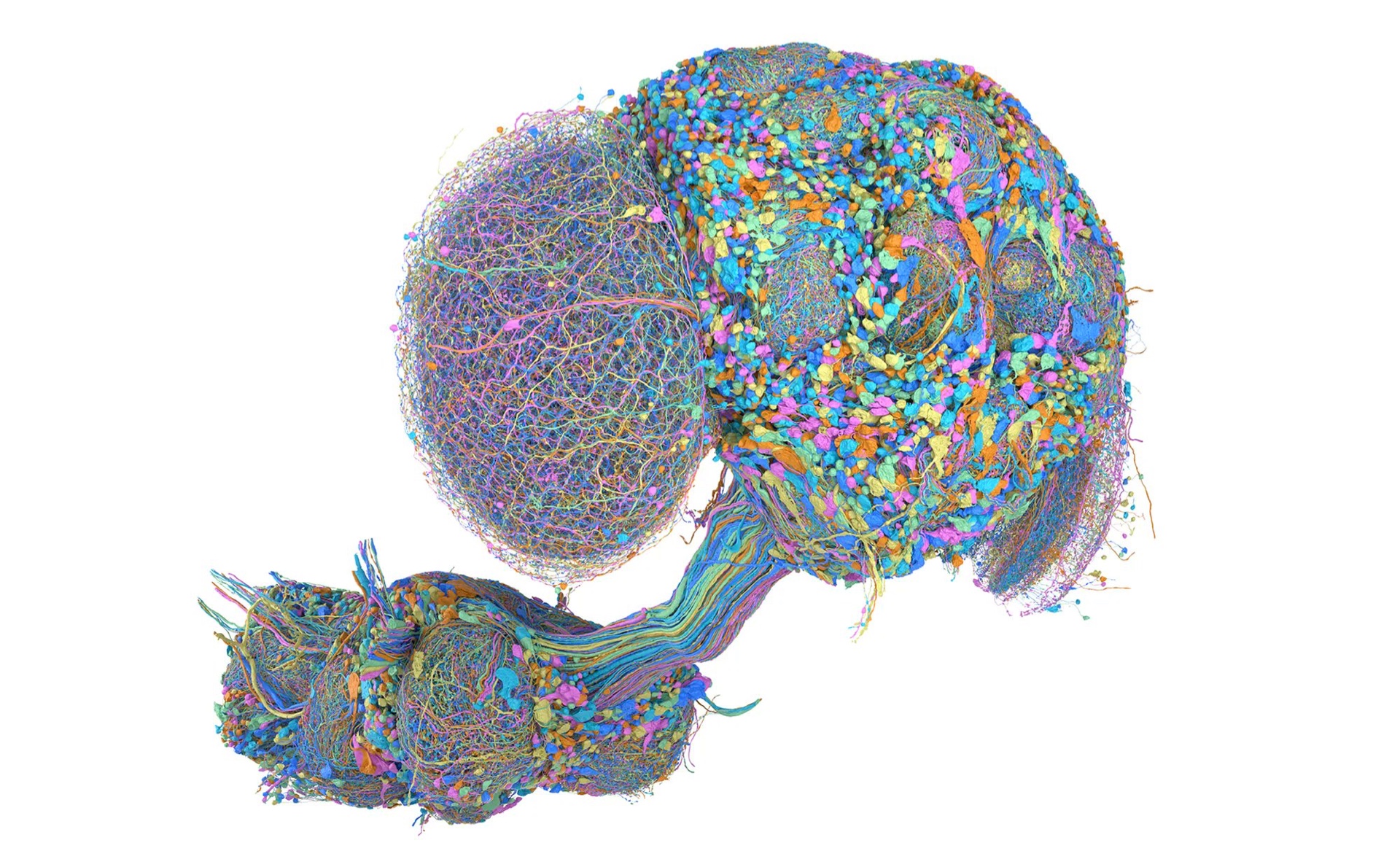
According to Google, AI was used "to combine millions of 2D images into 3D neural shapes, reconstructing a record-breaking 166,000+ neurons." For comparison, the human brain has an estimated 86 billion neurons, so a full digital replica of a human is still a long way off – and data centers are going to need a lot more memory before that happens.
Google called the result a major milestone in neuroscience that will accelerate our understanding of how the brain works. A practical use case showed up faster than anyone expected.
Software engineer Alex Wormuth built a link between a Doom emulator and a simulation of the fly nervous system. Each game frame turns into stimulation of sensory neurons, and the resulting neural activity gets mapped onto character controls.
The training setup is the interesting part. Taking damage triggers a pair of PPL101 dopamine cells, which in a real fruit fly brain are responsible for reinforcement and building associative memory.
Each Doom frame stimulates sensory neurons. Neural activity is mapped to game controls. Damage triggers a stimulus to two PPL101 dopamine cells as reinforcement. Will the fly learn to survive?
The code behind the experiment is fully open source, and you can watch the training progress of the 166,700 neurons live on a dedicated page.
The results are nowhere near clearing a level yet. In the published clip, Mario just keeps running and slamming into a wall, which honestly seems about right for fly-level intelligence.
Paquette admitted her version was "literally 100% vibe coded with GPT Astra... just for fun." The source code for this project is also public, and the developer says updates on training progress will come through social media.
- Promised 30% annual returns and an AI supercomputer for mining – businessman faces 280 years in prison
- Skyrim player launched DLSS 5 with 4000 mods on RTX 4080 Super
- NVIDIA reveals DLSS 5 performance – the model is 5 times faster, but it takes up to 60% of frames