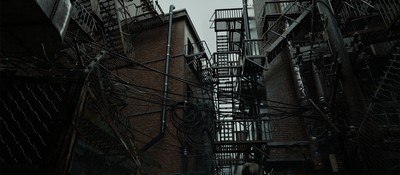
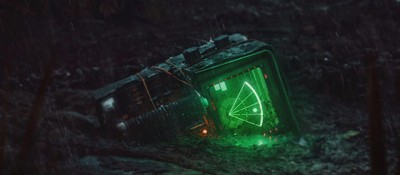
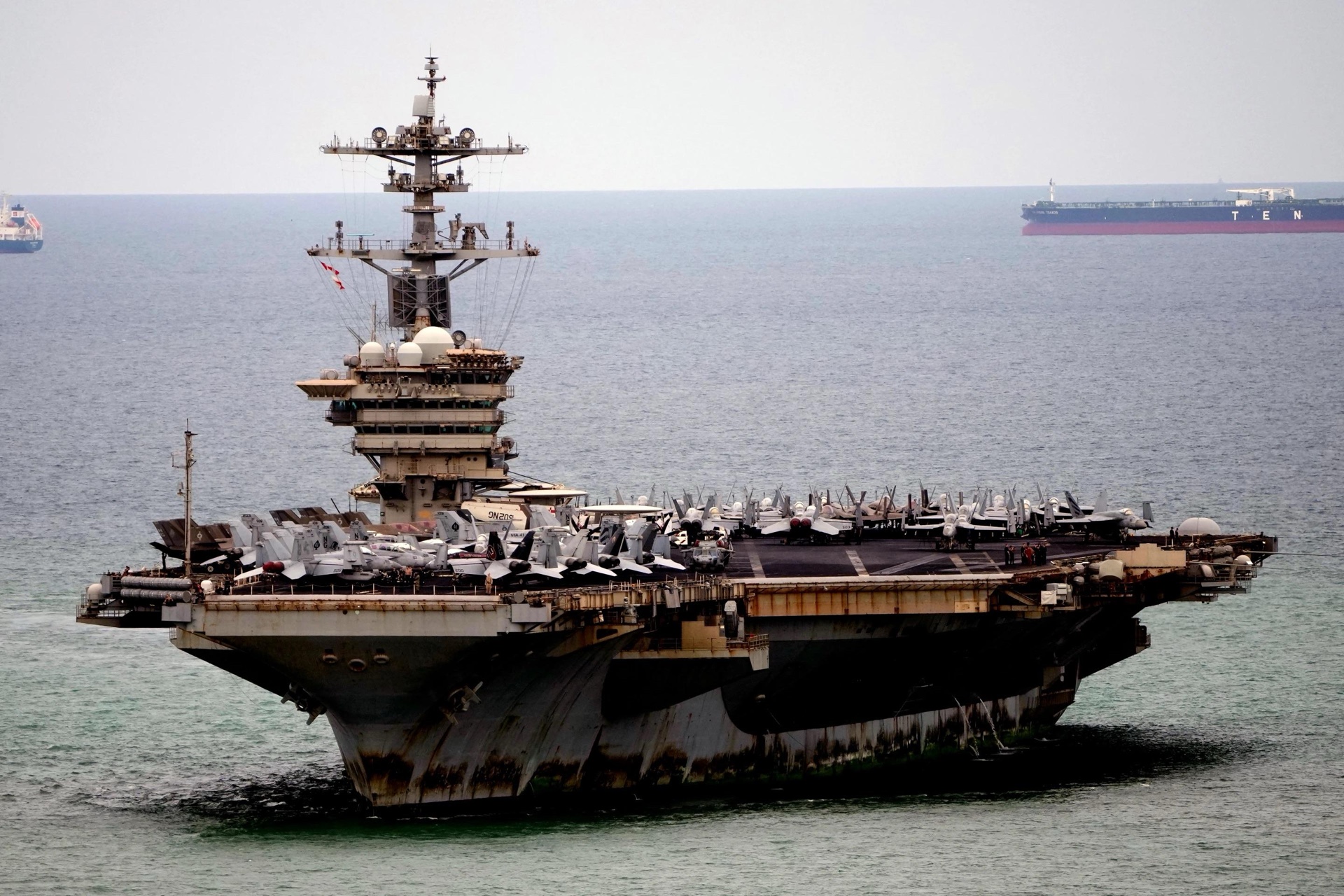
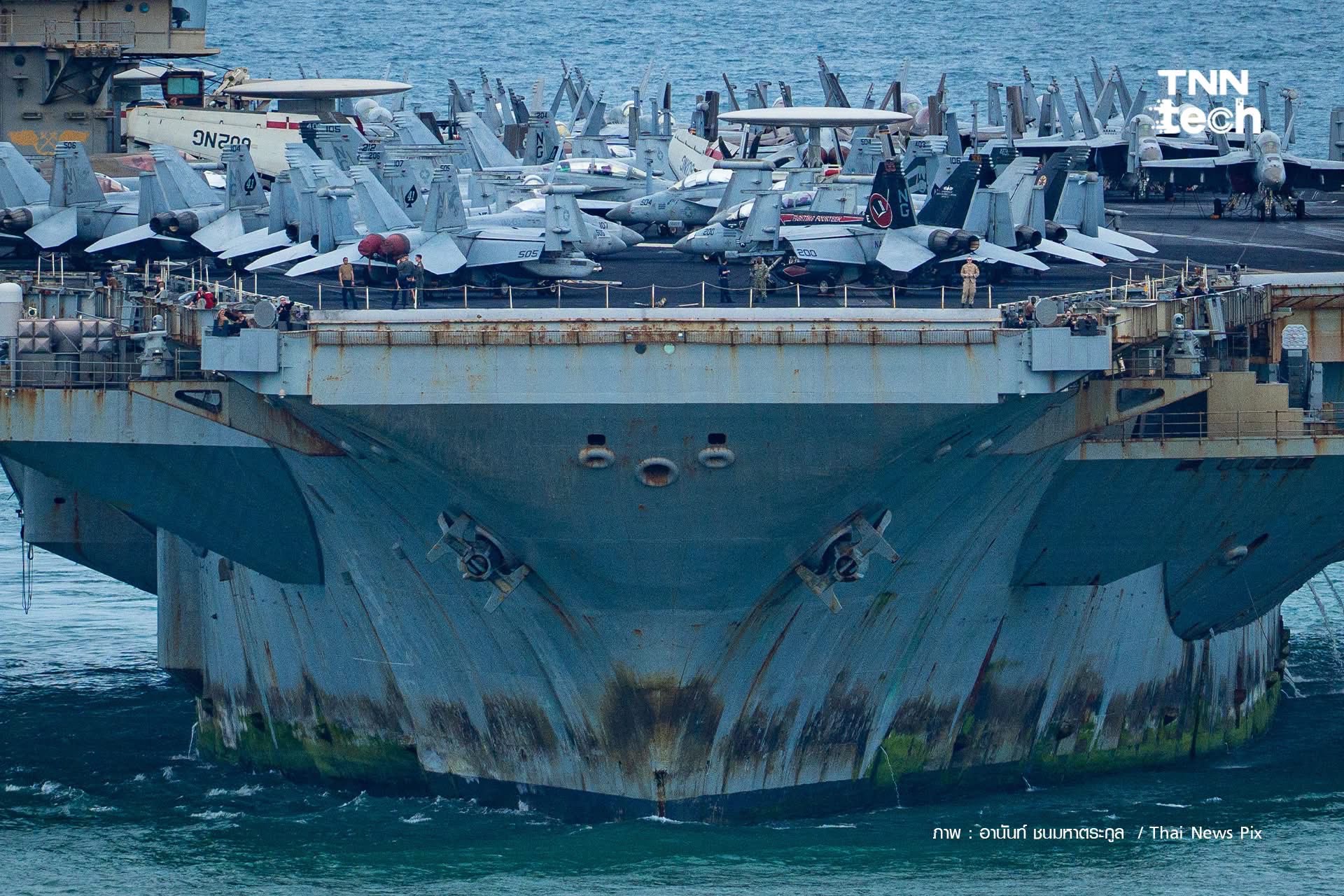
Rusty after 286 days at sea, the American aircraft carrier USS Abraham Lincoln reminded Fallout 3 players of Rivet City

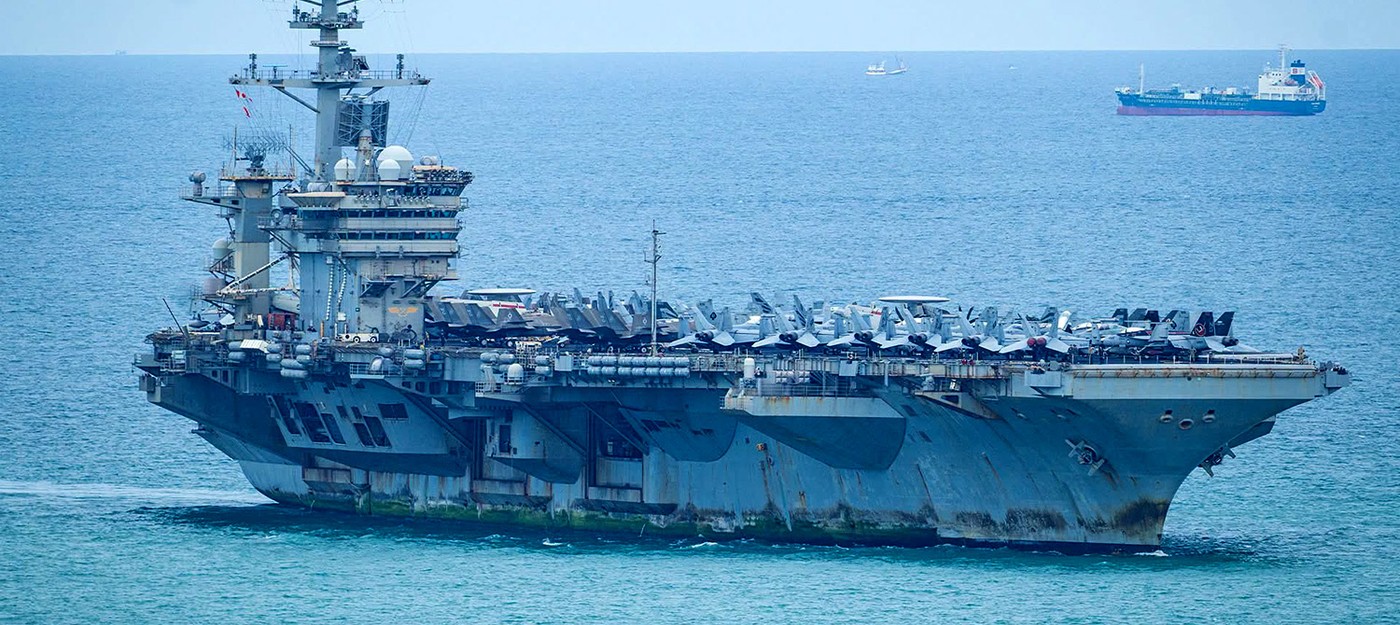
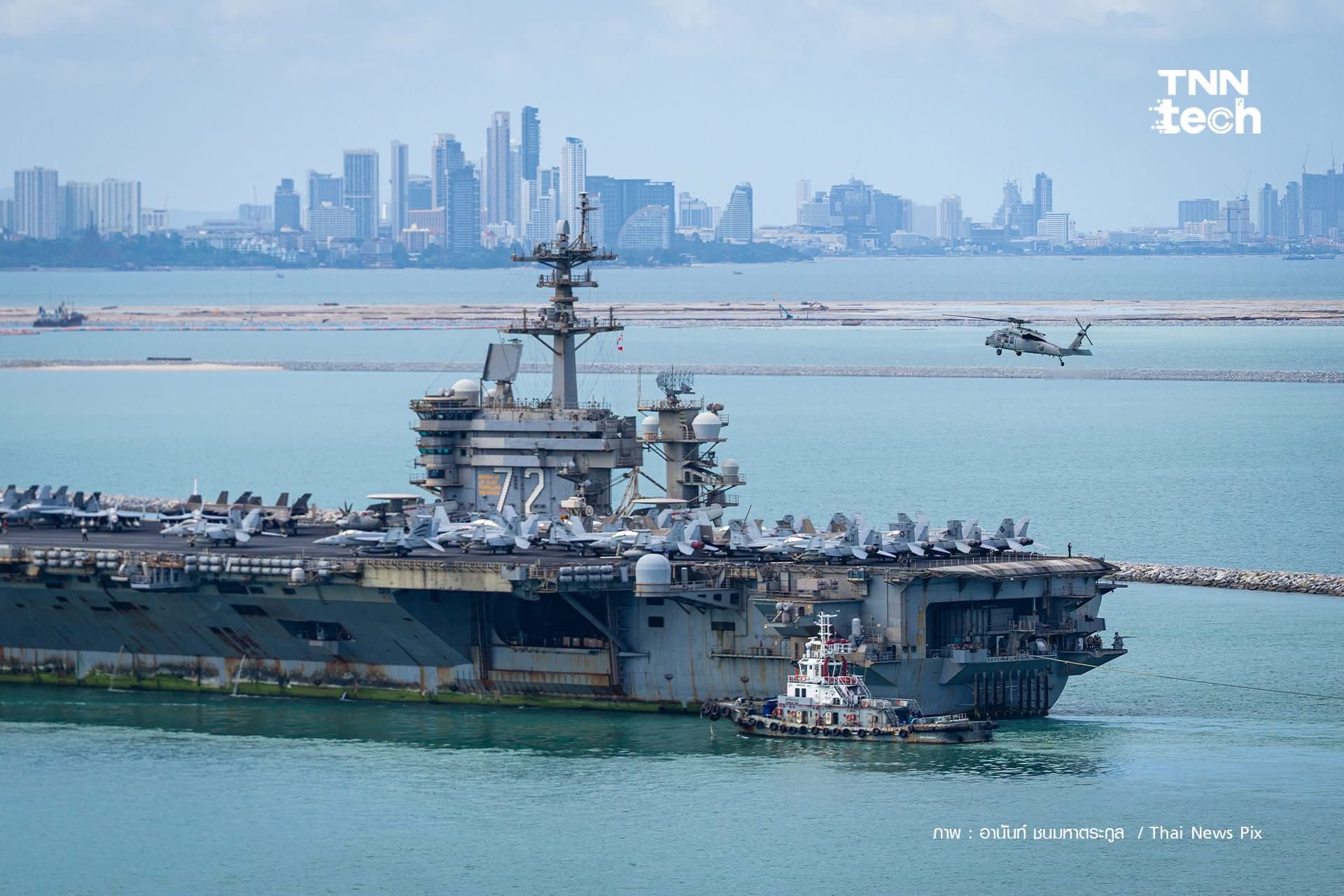
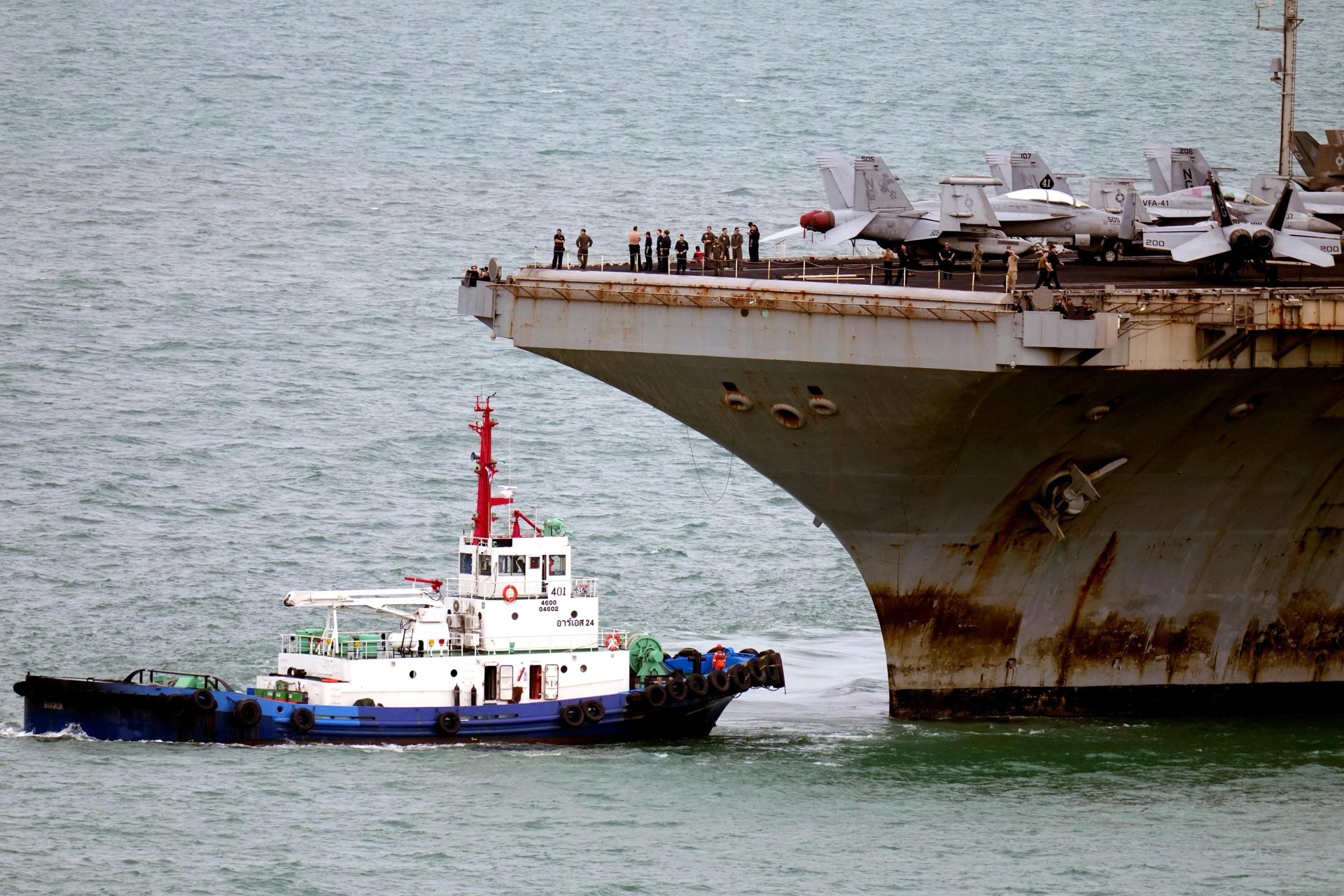
USS Abraham Lincoln pulled into the port of Laem Chabang near Pattaya after 286 days without a full port call, including 208 straight days at sea.
Paint on the massive hull had worn down to bare metal in places, and the internet immediately slapped a caption on it – US Navy, brought to you by Vault-Tec. The joke gets funnier when you consider that, according to rumors, sailors themselves were speculating about a secret experiment testing how long the deployment could go before the crew finally snapped.
In the Fallout universe, that is not a joke – it is literally how the company operated. Vault-Tec vaults were almost never built to actually save anyone, since each one was designed to test a single variable on a sealed-off population.
The list of experiments is well known at this point – Vault 11 demanded a yearly human sacrifice from its residents, Vault 92 blasted white noise around the clock to try to turn musicians into soldiers, Vault 27 was deliberately packed at three times normal capacity, and Vaults 68 and 69 were each given exactly one person of the opposite sex for their entire population.
An aircraft carrier fits the same formula without a single modification needed – it already has a sealed environment, a fixed population of over four thousand people, its own reactors, a rigid command structure, and no way for anyone to leave.
The difference is that Vault-Tec experiments only worked as long as the test subjects had no idea they were in one.
Now consider what would happen on October 23, 2077. A carrier out in open water would survive the exchange of nuclear strikes almost unscathed, since the targets were all on land and the ship itself has no fixed base to lose. Its reactors would keep it powered for decades.
What would actually kill it isn't radiation – it's the pantry. A carrier food supply lasts roughly two and a half months, and there's nowhere left to restock, since San Diego, Norfolk, and Pearl Harbor all stopped existing within the first few minutes of the war. Within six months, the entire air wing would be reduced to several dozen tons of metal with nowhere to go.
This is where Fallout lore actually gets it right. A chain of command only holds together as long as orders keep coming, and those orders come from a government that no longer exists. The closest canonical parallel to this is already sitting right there in the games – the Enclave, remnants of the US government holed up on the Poseidon Oil Rig, declaring every mainland survivor a lesser human being. A naval installation, an isolated elite that kept its technology and never let go of its belief in its own legitimacy.
The second scenario shows up in Fallout 4, and it's bleaker. The Chinese submarine Yangtze-31 got stranded off the coast of Massachusetts, and its captain Zhao is still aboard two hundred years later, now a ghoul, still waiting for orders that will never arrive. The crew in that story doesn't survive as a crew – it survives as one man who stopped being a man.
Turning into a ghoul isn't some random quirk here – it follows the setting logic. Ghouls come from prolonged radiation exposure without a direct hit, and a ship sitting out at sea under fallout matches that profile exactly. An irradiated crew loses the food problem, but it trades it for a sanity problem instead, since ghouls only start losing their minds after several decades.
As for the ship itself, Fallout 3 already gave us the canonical version. Rivet City in the Capital Wasteland was built inside a beached aircraft carrier, discovered by Horace Pinkerton and a group of scientists.
By the time of the game, it's stopped being a ship and become real estate – market stalls fill the hangar deck, a science lab sits in the superstructure, a retractable bridge serves as the entrance, and the founder himself got pushed out of the settlement he built.
Put these three pieces together and you can sketch out a fairly believable two-hundred-year timeline. The flight deck gets buried under soil and crops, since it's the only flat surface spanning several acres on the entire coastline. The hangar turns into a marketplace. The planes get stripped for scrap metal and fuel cells within the first decade. The reactor compartment either gets shut down deliberately, or it shuts the settlement down instead.
The real danger for a carrier in a post-apocalyptic setting is that someone, eventually, will board it. A working reactor and a stockpile of pre-war tech make it the richest cache on the entire coast, and the Brotherhood of Steel exists specifically to hunt down caches like that.
The Enclave, for its part, would consider the carrier legitimate government property – crew included.
The real Lincoln will spend four days in Thailand before heading back to San Diego. Rivet City never got that option.
- Fallout fans wondered how characters manage to see anything through the power armor helmet
- Fallout 3 players recalled how they couldn't get through the metro because the map was hidden in terminals
- Fallout 3 fan asked the remaster's developers to get rid of Rivet City's loading screens