NVIDIA reveals DLSS 5 performance – the model is 5 times faster, but it takes up to 60% of frames


NVIDIA shared the first performance figures for DLSS 5 on GeForce RTX 50 graphics cards.
The new neural rendering technology promises next-generation visuals, but it demands serious computational resources.
The first game with native DLSS 5 support will be NBA 2K27, with the technology set to launch in the game on September 4. NVIDIA used this title to measure frame rates across all target resolutions.
Two usage scenarios need to be separated right away. In games with native support, developers decide exactly what the neural network changes and by how much, while players just get a simple on/off toggle.
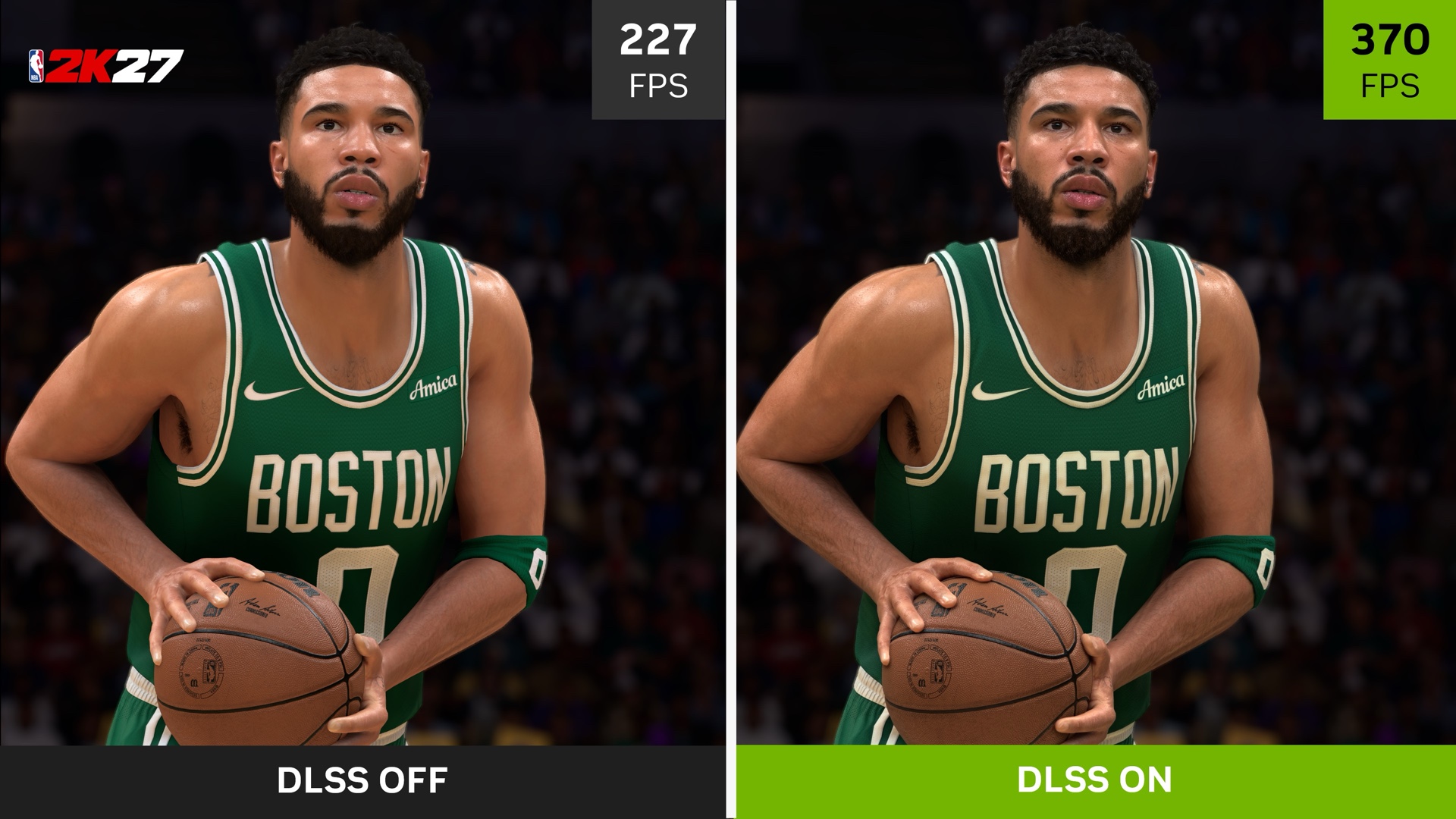
Without DLSS 5 and with DLSS 5:


What has already spread across the web as comparisons was created by modders using developer tools. These settings don't reflect the vision of the original artists and developers – they represent one individual's personal choice.
Integration through Streamline simplifies DLSS 5 implementation, giving studios access to a ready-made toolset. Customization and modding options will remain available, just as they have with every upscaling and frame generation technology before it.
NVIDIA representatives explained the purpose of these settings:
All the controls that we showed during the presentations, the way we see it is that, again, these are developer controls. We're developing, we're creating them for the developers.
So, our intent is that they're used by the different game devs to bring their artistic vision to life. And so, ultimately, when the players decide to play with DLSS 5 on, right, they know that they're playing with whatever the original developer had intended them to play with, right?
Obviously, at the same time, if the developer wanted to create, for example, presets in the future and all of that, you know, that we cannot know or we cannot comment on that. But ultimately, our vision when we're developing these tools, as you can see, they're very dev-oriented. So, we're creating them for people to make the game.
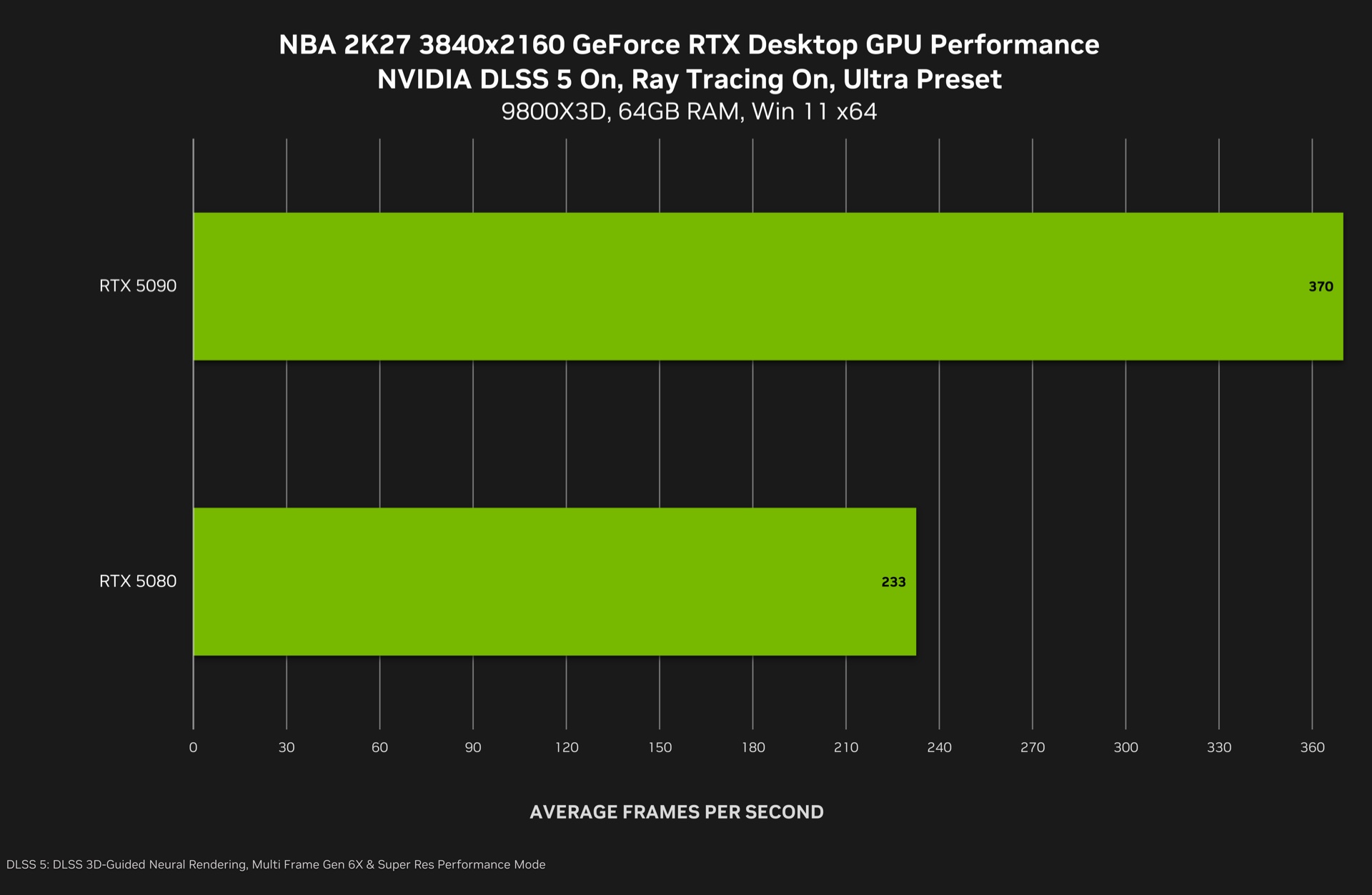
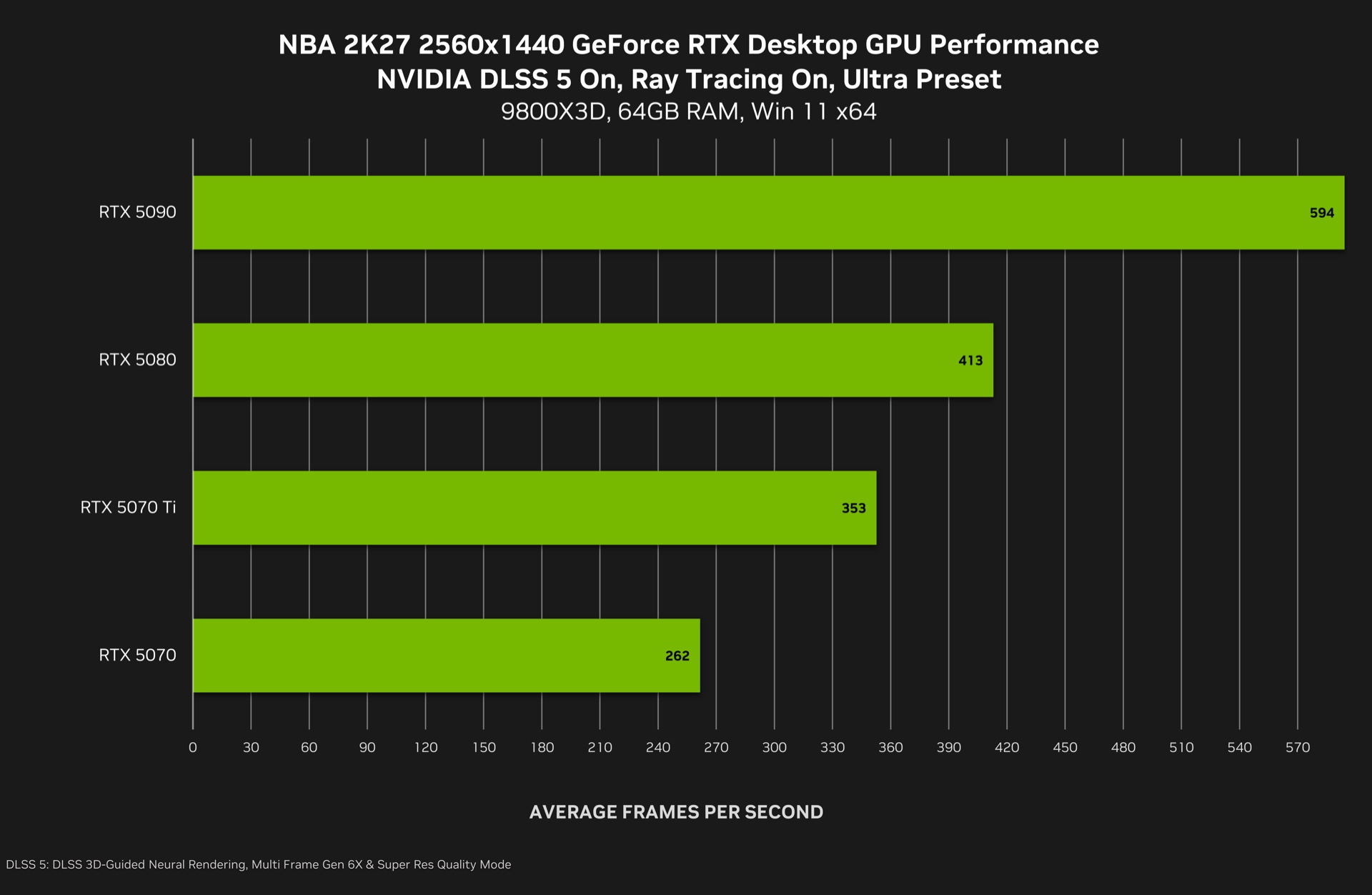
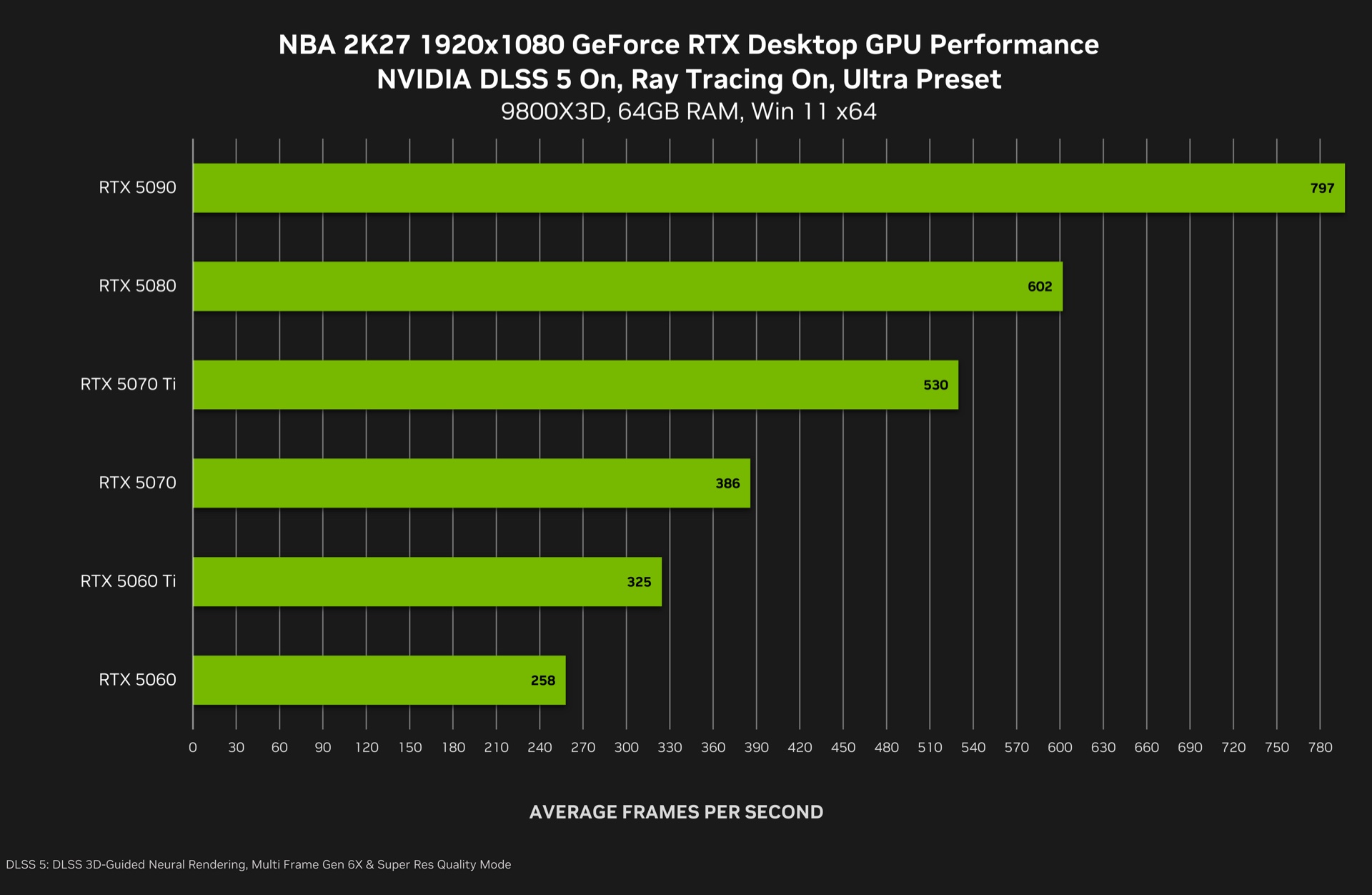
Testing was done with ray tracing enabled at the Ultra preset, Multi-Frame Generation running in 6x mode, and Super Resolution set to Quality mode.
At 1080p, the entry-level RTX 5060 hits over 250 FPS, while the rest of the lineup falls between 300 and more than 500 FPS. At these numbers, MFG 6x mode at low resolution looks like overkill unless you're running a display with an extreme refresh rate.
For 1440p, NVIDIA recommends RTX 5070 and above. The RTX 5070 delivers over 260 FPS, while the RTX 5090 pushes past the 500 FPS mark.
At 2160p, NVIDIA only recommends the RTX 5080 and RTX 5090. The former holds an average of 233 FPS, the latter 370 FPS, meaning even with MFG 4x the flagship card can comfortably hit a smooth 240Hz.
NVIDIA calls DLSS 5 its largest and most complex model to date. Priority goes to the fifth-generation Tensor cores of the Blackwell architecture, though training and inference both run in FP8, a format also supported by RTX 40 cards.
Enthusiasts have already gotten the technology running on much older RTX cards, but without MFG and with a low base frame rate, don't expect a playable result.
The headline number is a 50-60% average performance hit. That's exactly why Multi-Frame Generation modes are used so widely across the entire RTX 50 lineup.
DLSS 5 runs independently and can be layered on top of standard rasterized rendering. No other DLSS technology needs to be enabled as a prerequisite.
Latency fares better here than with frame generation – DLSS 5 doesn't wait for the next frame, since the extra latency comes purely from the "cost" of the model itself on the current frame.
The number of groups and masks a developer defines has no effect on speed. The model doesn't scale based on values in the buffer, and the different model versions (A, B, and C) all perform identically.
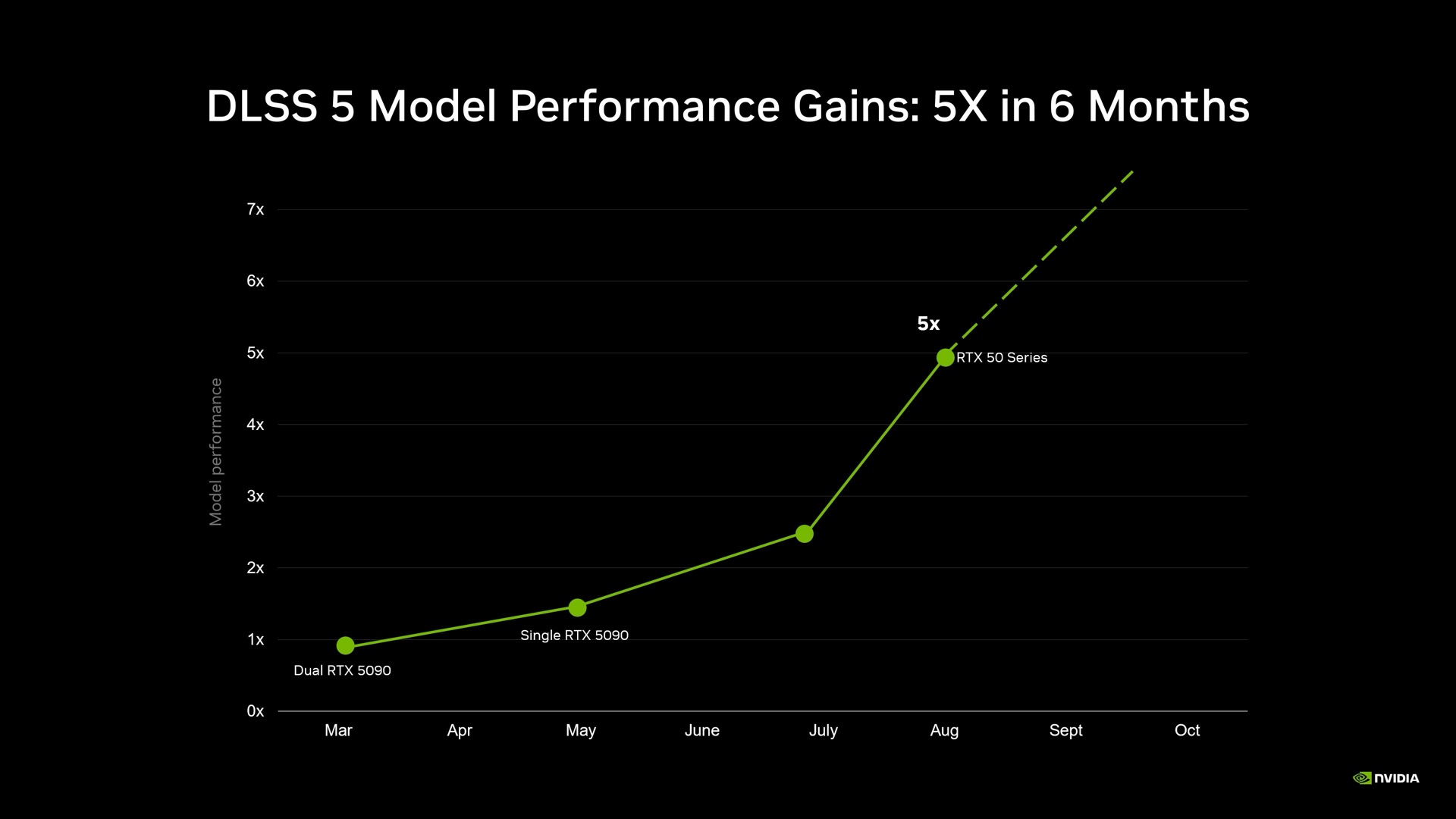
The optimization progress looks impressive. The first demo at GTC in March 2026 required two RTX 5090 cards, but within two months the model got 50% faster and ran on a single card.
By July, the gain reached almost 2.5x, and by August the model became 5x faster and started working across every RTX 50 graphics card. NVIDIA attributes the result to combined optimization of hardware, software kernels, and co-design work.
The final version is smaller, faster, more realistic, and gives developers more control than the prototype shown at GTC 2026. NVIDIA promises to keep accelerating improvements, with another model update expected before the end of the year.
NVIDIA also explained the fundamental difference between DLSS 5 and the transformer models used in DLSS 4 and DLSS 4.5:
Yeah, we're not revealing the detail of the background, but what it does is fundamentally different.
All the previous DLSS reconstruct the image based on sparse input signals, and DLSS does generation. All the previous DLSS does have a ground truth that is correct, and that's their target. That's why it's called reconstruction. DLSS 5 does not have a ground truth. The artist's direction is the new ground truth. Therefore, we offer tools for artists to use it as an additional tool in the graphics pipeline to generate the image that they want and fulfill their artistic vision, free them from the existing compute and VRAM budget.
There's no conflict with other neural technologies. Reflex works after DLSS, and neural texture compression happens inside the renderer, while DLSS 5 processes the finished screen buffer.
Backward compatibility with older games is possible if a studio chooses to implement it. The model only needs a color buffer and motion vectors, which makes integration into Streamline-enabled games fairly straightforward.
The model is universal and doesn't need training for each individual game – all three models provided work across every title. How much work goes into metadata labeling, where the neural network distinguishes foliage from furniture or metal, is left to each studio, right down to splitting things by indoor/outdoor areas, gameplay, and cutscenes.
Asked about its usefulness in games that don't aim for realism, NVIDIA said compelling results have shown up there too, though better input still produces better output, leaving the final call up to the developer and artist.
- Japanese modder launched DLSS 5 together with ENB in Fallout 4 – the game now looks like a photograph
- Dawn of War from 2004 with DLSS 5 causes split among gamers over art style again
- New utility overlays Nvidia DLSS 5 onto the entire Windows desktop – including movies and YouTube