Owner of a handheld console connected an RTX 5080 to it and asked if it's time to build a proper PC

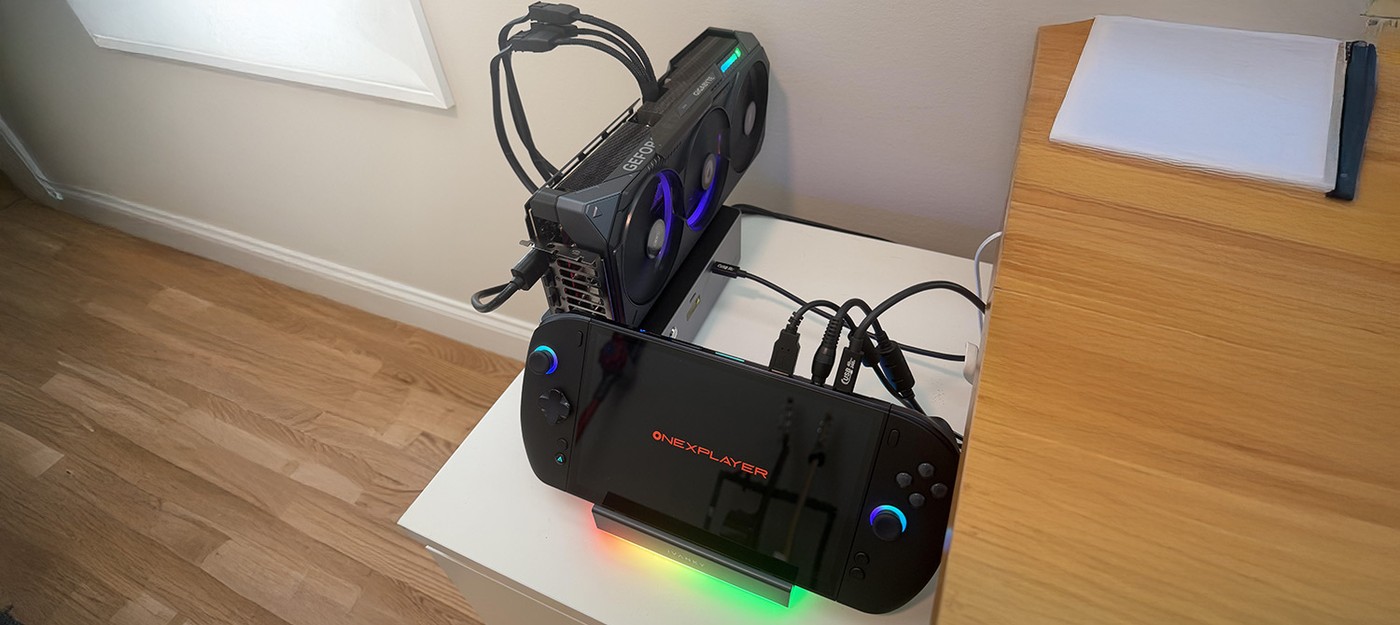
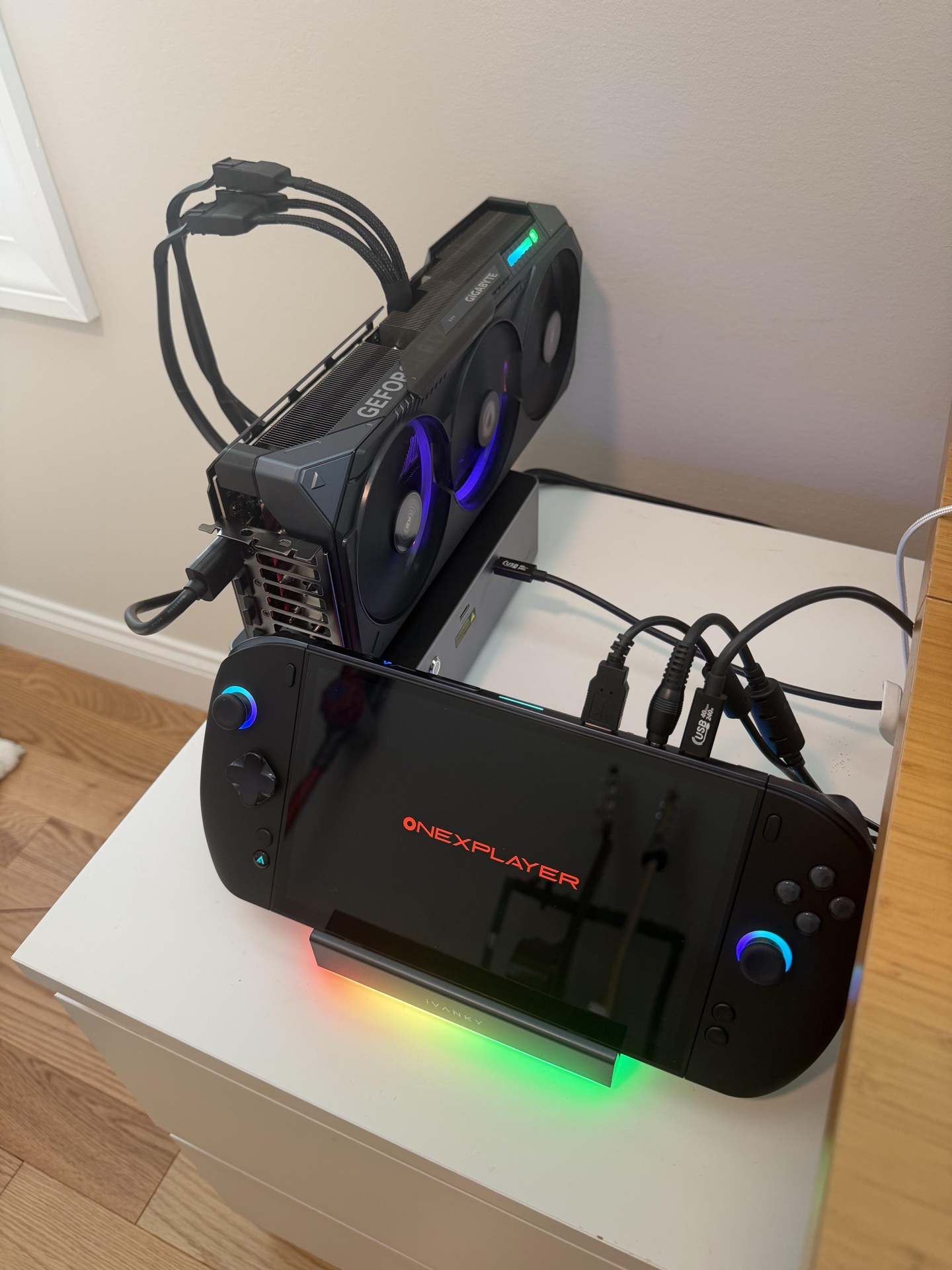
A hybrid rig combining a premium handheld and a desktop graphics card worth roughly three and a half thousand dollars has racked up hundreds of comments and split opinions right down the middle. The owner hooked up an OneXPlayer X2 Mini Pro to an external Aoostar AG02 dock housing a Gigabyte RTX 5080 OC, sent the output to a 4K monitor, and added a keyboard and mouse.
According to the original poster, the device spends about 80% of its time in this docked setup, which is what sparked the question of whether it's time to just build a proper PC instead.
The experiment makes more sense once you look at what's actually inside the handheld. The X2 Mini Pro runs on an AMD Ryzen AI Max+ 388, an eight-core Zen 5 chip with 16 threads clocked up to 5.0GHz, paired with Radeon 8060S graphics packing 40 RDNA 3.5 compute units. The base configuration comes with 48GB of LPDDR5X and a 1TB drive, starting at $2,499.
The interesting part is that this chip shares its graphics silicon with the beefier Ryzen AI Max+ 395, despite having half the CPU cores. CPU, GPU, and NPU all draw from a shared high-speed memory pool with direct data access. Rounding out the package is an 8.8-inch 144Hz OLED screen, detachable controllers, and a magnetic keyboard that turns the handheld into something resembling a laptop.
In this setup, the external dock handles both power delivery and the connection to the graphics card. The AG02 packs an 800W built-in power supply, an open metal frame that fits full-size cards of nearly any length, and two connection options – OCuLink with an effective bandwidth of 64Gbps, and USB4 with up to 100W of reverse charging. The dock is rated to support cards drawing up to 600W.
The biggest technical debate centers on the performance loss. The external connection limits the card to a PCIe x4 link instead of the usual x16, so when the chip shows 90% utilization, that's not 90% of its real potential – just the ceiling under these particular conditions. The owner posted a Steel Nomad score of around 8,400 points versus roughly 9,400 on a desktop system running the same RTX 5080, putting the gap at about ten percent.
Plenty of commenters figure that kind of loss is worth living with, especially given current DDR5 prices. At 4K resolution, the load shifts more heavily onto the GPU anyway, so CPU bottlenecks matter less.
On the other hand, some pointed out that the priciest component is already bought and paid for – the rest of a full PC build wouldn't cost nearly as much, and it would come with all the perks of a proper desktop gaming rig.
One suggestion was to sell the handheld, grab a mini PC with an OCuLink port, and connect the card directly without USB4 getting in the way. Another idea flipped the logic entirely – let a desktop machine handle the actual game rendering and stream the picture to the handheld over Moonlight.
An Asus ROG Ally X owner running an external 4070 Ti Super chimed in with their own experience, saying the setup worked great for single-player games and emulation but fell apart in CPU-heavy titles thanks to the handheld 20W power limit. They eventually went back to a desktop build with an i5-13600K under custom water cooling. Someone else recalled hooking up a GTX 750 Ti to an HP laptop years ago using a PE4L adapter.
Safety is another sticking point people keep bringing up. An open graphics card sitting on the edge of a desk makes some gamers visibly uneasy. One commenter suggested swapping the splitter-style power adapter for a cable running straight from the power supply, citing cases of these connectors melting.