Kingdom Come creator claims all developers use AI – sparks massive DLSS 5 debate

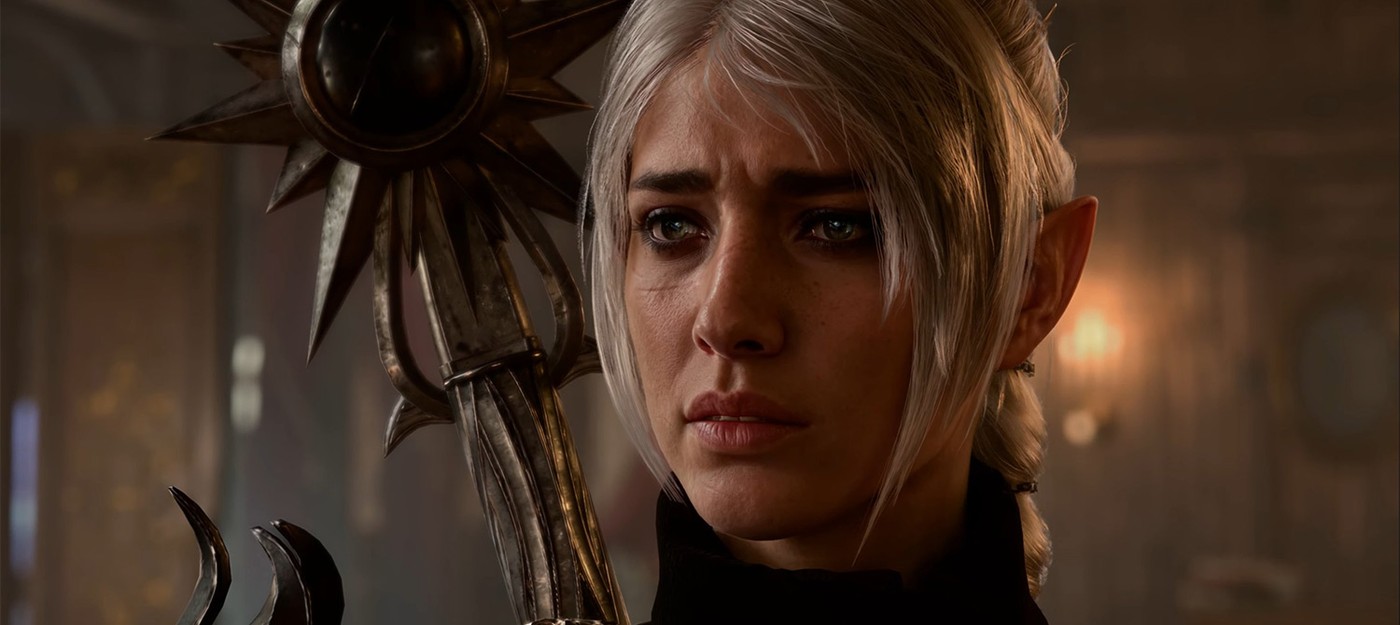
Daniel Vavra, former creative director at Warhorse Studios, unleashed a series of statements on social media about AI use across the game industry. He argues the situation has gotten absurd – a small but loud group of people hates the technology, and developers, scared of getting targeted, publicly swear they don't use it at all, when in reality everyone does. He backed up his stance by pointing out he has nothing left to lose.
Daniel Vavra:
I’m not working on any game. So you have nothing to boycott guys :) I’m retired for now, sipping whiskey, and having a great time, so I don’t give a fuck.
Vavra claims he spoke with employees from many studios over the past year and found zero exceptions. Programmers, he says, can no longer function without neural networks, and most developers now build their own tools for nearly any task. He listed the areas where the technology gets used in practice:
generating high-quality character models
assisting animators, concept artists and 3D specialists
writer and designer work, including research and idea development
building utilities for people who don't know how to code
NPC behavior AI itself
He also noted that the most talented people he knows use the technology more actively than anyone else, since they're less afraid and see its potential more clearly. He called the idea that someone with a hundred-million-dollar budget would turn down a tool that speeds up and cheapens development insane.
To back this up, Vavra pointed to his own experience – one game took seven years to make, and in that same span he'd rather have made seven.
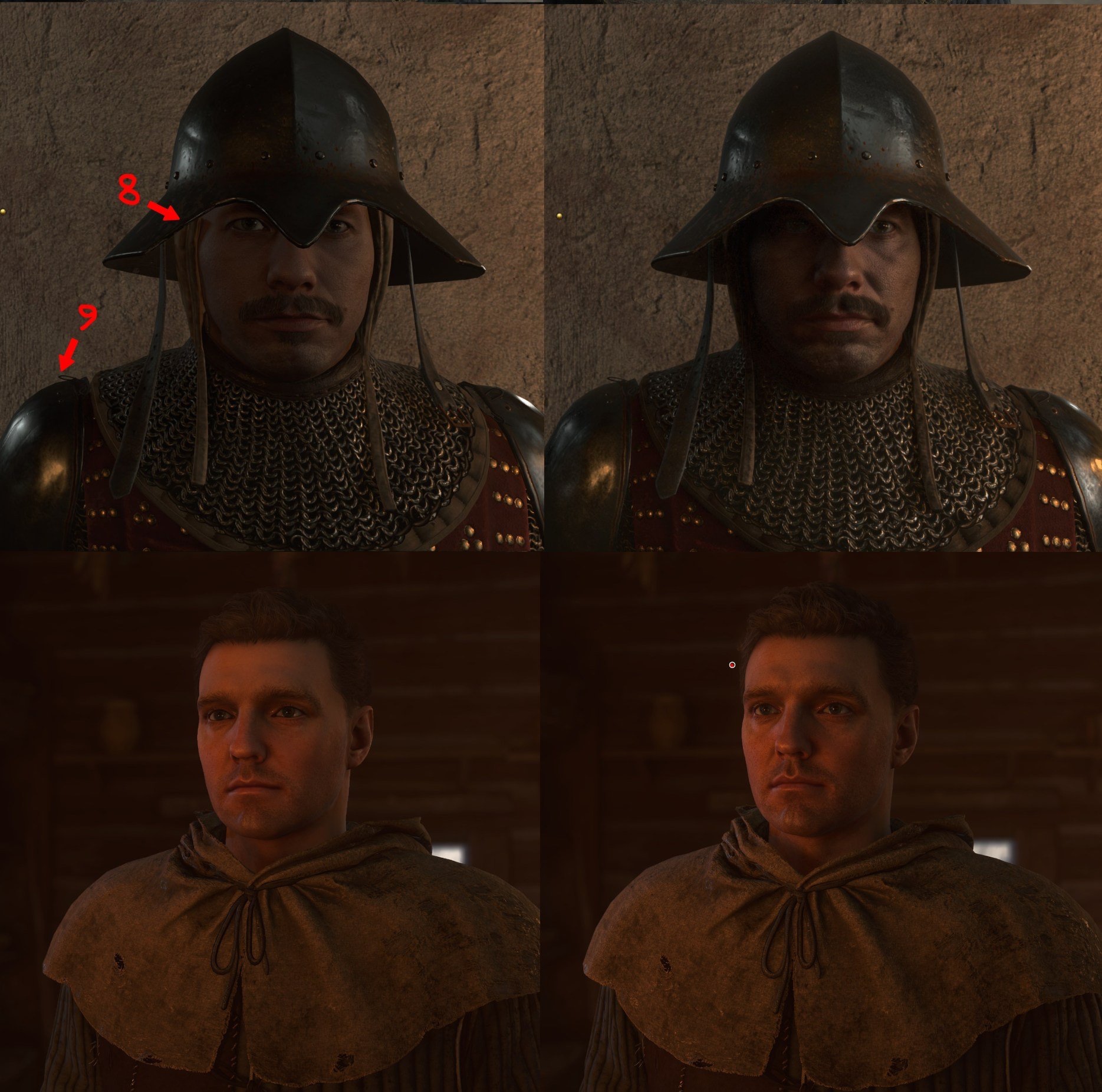
A second front of the argument opened up around Nvidia neural rendering. Vavra posted a comparison of two frames showing the same character head from Kingdom Come: Deliverance 2 and got accused of caving to AI slop, with demands to restore the original artistic vision. He responded that the model geometry hadn't changed at all – the difference came entirely from lighting, shadows, skin texture and hair.
Daniel Vavra:
Having no shadows from helmets on faces and fucked up normal map rendering WAS NOT OUR ORIGINAL ARTISTIC VISION.
Character heads in the game were scanned from real people using photogrammetry and then refined by artists. According to Vavra, the frame processed with neural rendering looks exactly like the models appeared in ZBrush on workstations, and it was the engine limited lighting system that ruined the original intent all along. The studio had spent years unable to get shadows from hats, hoods, helmets and small props like buckles and pouches to fall correctly on characters.
The technology in question was unveiled by Nvidia on March 16, 2026, and detailed further at SIGGRAPH 2026 in July. At its core sits a compact diffusion transformer model, distilled from larger neural networks, which takes in the color buffer, motion vectors and internal engine data before enhancing the final image. The technology improves global illumination, subsurface scattering on skin, light interaction with hair and cloth behavior.
After the first wave of backlash, Nvidia gave developers more control over the results. Instead of one single network, three models are now offered with different tradeoffs between reconstruction quality, global illumination accuracy, texture generation and computational cost, and these can be assigned separately to locations, scenes, and even individual characters. Release is planned for fall 2026, and it will only run on GeForce RTX 50 graphics cards.
Vavra acknowledged a serious drawback in the current implementation, noting that frame rates drop by roughly half. Still, he sees the future potential as positive, including for older games.
Players are considerably less enthusiastic. A TechPowerUp reader poll found that 58% of gamers don't want AI touching their games at all, and an early DLSS 5 mod for Skyrim showed just how drastically the technology can reshape faces and lighting under aggressive settings. Vavra own examples look tame by comparison.
He built his argument around a story from twenty-seven years ago. In 1999, Vavra worked as a 2D texture artist at a fledgling studio on a small indie game called Mafia, hand-painting bricks, doors and windows on a tablet, with the average texture measuring 256 by 256 pixels and the entire open world needing to fit into 32 MB of video memory.
Tired of the grind, he grabbed a film camera, photographed walls and windows around the city, sent the film off to a lab, and a week later scanned the prints, getting textures better than anything made before.
His colleagues reaction, he says, amounted to complaints about a lack of soul and predictions of mass layoffs. Only one person backed the idea – future art director Pavel – and the two of them bought one of the first digital cameras and drove to Vienna to shoot the final level, coming back with an almost exact copy of a real building. Nobody lost their job, and the game shipped faster, cheaper and with better graphics, even though around thirty people spent four years making it.
The same story, according to Vavra, repeated itself with motion capture, which the studio built in-house because ready-made solutions were too expensive, and which people also branded as cheating.
Animators didn't disappear – they became one of the most in-demand specialties, and a shortage of them later got one of his games canceled. Texture creation has since turned into its own science, with multiple maps needed for every surface, and while the time it takes to build a level the size of one from Mafia has stayed the same, the team needed for it has grown from thirty to hundreds and even thousands.
Vavra himself stepped away from game development in February 2026, shifting his focus to transmedia work and the Kingdom Come: Deliverance film adaptation, for which he's writing the screenplay.
Warhorse, meanwhile, has two open-world RPGs in the works under Prokop Jirsa and Viktor Bocan, including a new adventure set in the Kingdom Come universe and an adaptation of Middle-earth based on The Lord of the Rings.