The artist showed a 23-year-old photo with the fairy that Nvidia once used to promote video cards

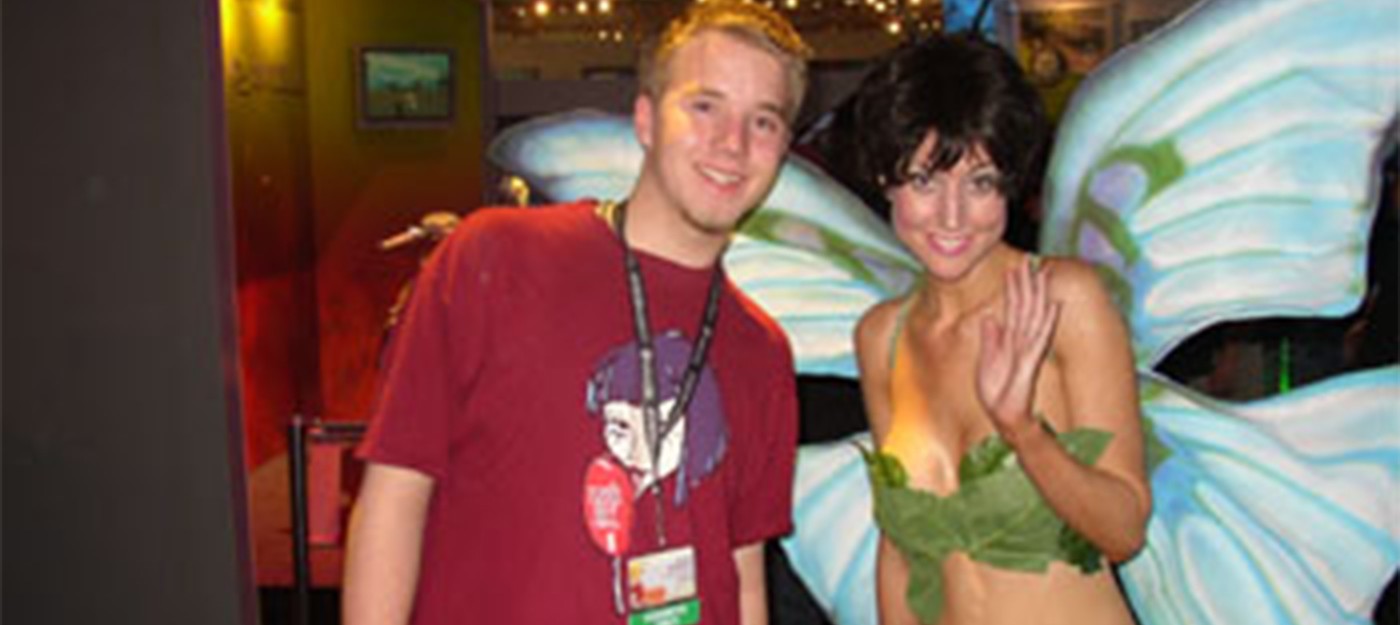
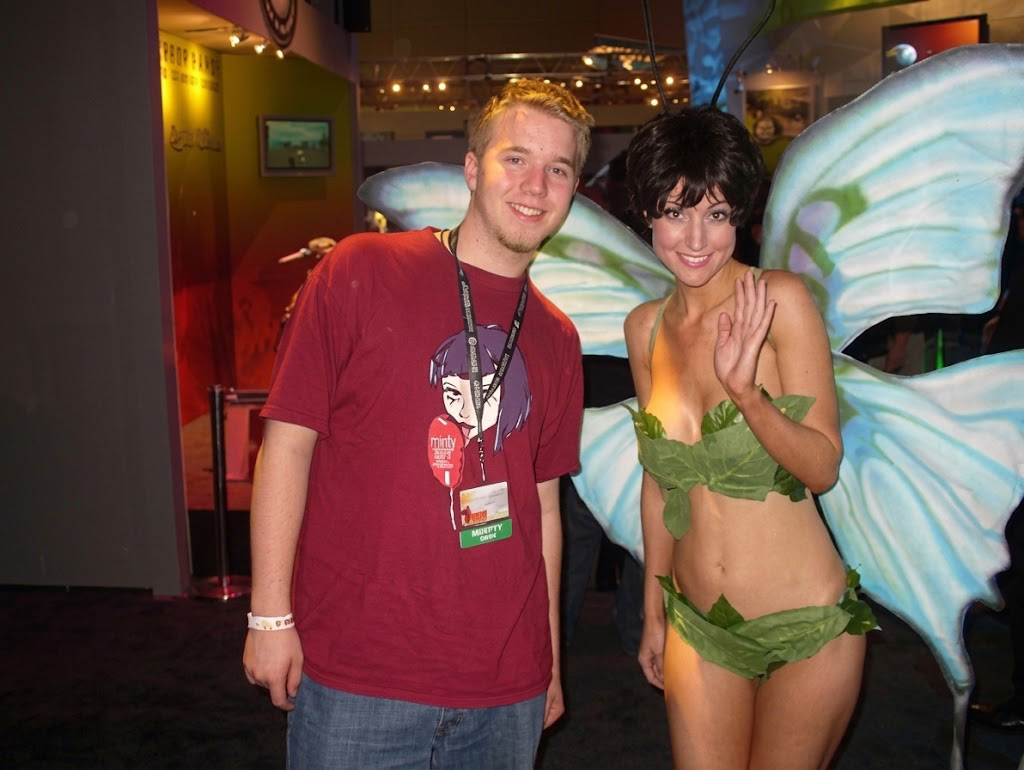
Ahead of Nvidia latest earnings report, longtime PC scene veteran and digital artist Bryan Brinkman posted a photo of himself from E3 2003, showing him at eighteen years old standing next to a model dressed as a fairy.
Back in the early 2000s, Nvidia used to release tech demos featuring fictional characters tied to each generation of graphics cards, starting with Dawn, who showed off the power and programmability of the GeForce FX line. By 2020, all of them had quietly disappeared. The photo racked up thousands of reactions and turned into an impromptu trip down memory lane for an era when graphics cards didn't cost thousands of dollars.
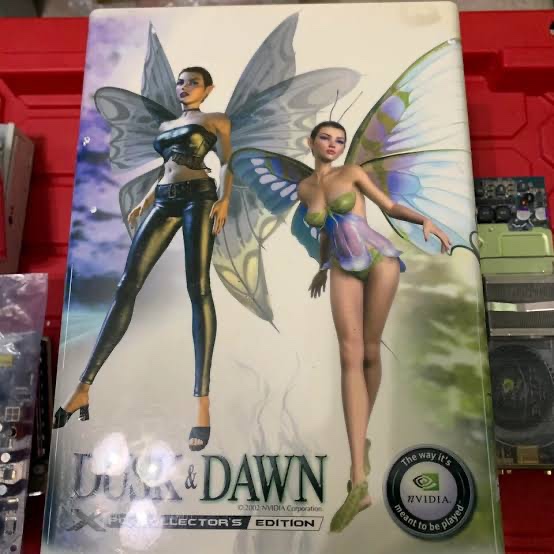
Dawn debuted in 2002 as the flagship showcase for the GeForce FX lineup. The demo presented a fairy with detail, smooth shapes, and facial animation that felt unusual for the time, and it remained the most memorable of all Nvidia tech demos.
By the standards of the era, this marked the first time a fully animated, convincing character existed in real time rather than in a pre-rendered video.
The technical details behind Dawn appear in GPU Gems, a collection published with input from Nvidia engineers. Vertex shaders deformed a high-polygon mesh through indexed skinning and morph targets while also preparing data for lighting calculations in fragment shaders. Skin and wing shaders delivered a range and level of detail that simply wasn't achievable before programmable graphics chips existed. Ambient occlusion was precomputed by a separate tool that stochastically cast rays across the visible hemisphere of each vertex and checked for intersections with the rest of the geometry.
A few months later, the fairy got a sister. Dusk ran on the GeForce FX 5900, and her hair was made entirely of geometry, made possible by powerful vertex shaders, while the combination of vertex and fragment shaders produced an anisotropic lighting model.
Right after launch, Dawn ended up at the center of two stories people still bring up today. The demo wouldn't run on ATI cards, but a group of MIT students wrote an OpenGL wrapper that got it working on the competitor chips anyway. Around the same time, enthusiasts discovered that the fairy clothing was a separate piece of geometry, with a fully modeled body underneath, making it trivial to strip down.
Over the following years, Nvidia built out a whole roster of characters, each tied to a specific chip generation:
Dawn – GeForce FX 5800, 2002
Dusk – GeForce FX 5900, 2003
Nalu, a mermaid with long hair and underwater lighting simulation – GeForce 6800, 2004
Luna, whose name is an anagram of her predecessor – GeForce 7800 GTX, 2005
Adrianne, a digitized scan of Adrianne Curry – GeForce 8800, 2006
A decade later, the fairy made a comeback. The A New Dawn demo opened with a sweeping shot of a tropical forest, a far cry from the original, which had been limited by hardware constraints and leaned heavily on bloom and depth of field. The revival served as a showcase for tessellation, a technique game developers were only beginning to adopt at the time.
The end came quietly. In September 2020, every demo featuring female characters, including Dawn, Nalu, and Medusa, vanished from the GeForce tech demo page without explanation. Enthusiasts preserved the files on the Internet Archive, along with Luna, Adrianne, and Dusk 1.1.
The discussion around the photo quickly drifted away from graphics and toward the trade shows themselves. Models dressed as these characters used to stand at hardware booths, appear in gaming magazine spreads, and draw long lines of people waiting for a photo, careful not to touch them.
Many veterans recall hired dancers working those same show floors, along with outfits that sent fake reporters to shows whose only job was photographing booth models for disc sales afterward.
The practice faded out gradually and unevenly across events. E3 2006 rules imposed an on-the-spot $5,000 fine for any booth whose model dressed too provocatively. PAX introduced its own restrictions in 2010, banning partial nudity and requiring booth staff to actually know the product. RSA security conference organizers sent out a dress code in 2015 banning shorts, tank tops, miniskirts, and latex costumes regardless of gender.
One person in the discussion mentioned an acquaintance who worked booths and car shows to pay her way through an architecture degree, later opened her own firm, and now heads the design department at a Paris fashion house.