Space Engineers 2 player created a giant automatic quarry that yields 560 thousand iron in three hours of work

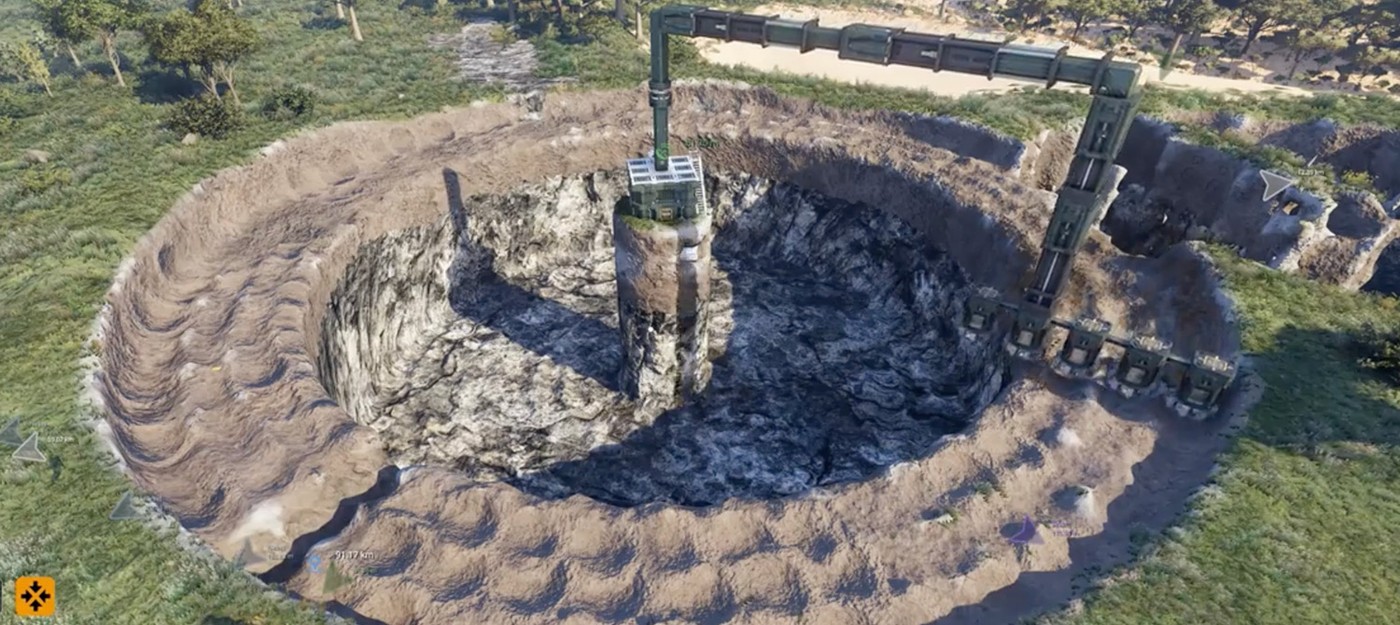
Space Engineers 2 now has a working example of fully automated mining in survival mode. The rig spins around a vertical axis and lowers drills into the ground without any player input, grinding out circle after circle.
Over three hours, it produces roughly 560,000 units of iron and around 600,000 units of nickel.
The first version of the setup ran in a semi-automatic mode and needed manual intervention between cycles. After talking things over with the community, the builder simplified the design and made it fully autonomous. The final logic runs on just six timer blocks and two event controllers.
Here's how it works:
Timers handle piston movement, while an event controller watches for the moment the vertical pistons hit their maximum length of 15 meters. That trigger kicks off a new chain of timers, which raises the vertical pistons and extends the horizontal ones, shifting the drills to the next radius.
The parts list turned out to be short. Besides the logic components, the build uses:
four pistons, vertical and horizontal
one rotor, spinning the whole assembly
five drills in a row
a large cargo container for ore
a battery and control station
The descent speed is deliberately slow, with the pistons sinking half a meter per minute. Reaching a deposit 80 meters down is technically possible, but it would take an unreasonable amount of time. The rig isn't built for depth – it's built for covering a wide area of surface soil.
Nickel here is a byproduct, not the goal. The soil layer on the planet runs about ten meters thick, and below that sits rock, which is where the nickel actually comes from. For pure iron mining, a single piston would do the job, and that setup would be cheaper too.
The layered surface structure in Space Engineers 2 determines exactly what ends up in the container:
sand yields silicon, and lunar regolith counts as sand too
soil, which covers most of the planet, yields iron
rock a few meters down yields nickel
snow-covered areas yield ice
None of this works on asteroids. Empty rock there gives you nothing, so mining only makes sense along ore veins. Series veterans point out that a decent ion drill on asteroids still outperforms a surface quarry, pulling in about 500,000 iron over the same three hours.
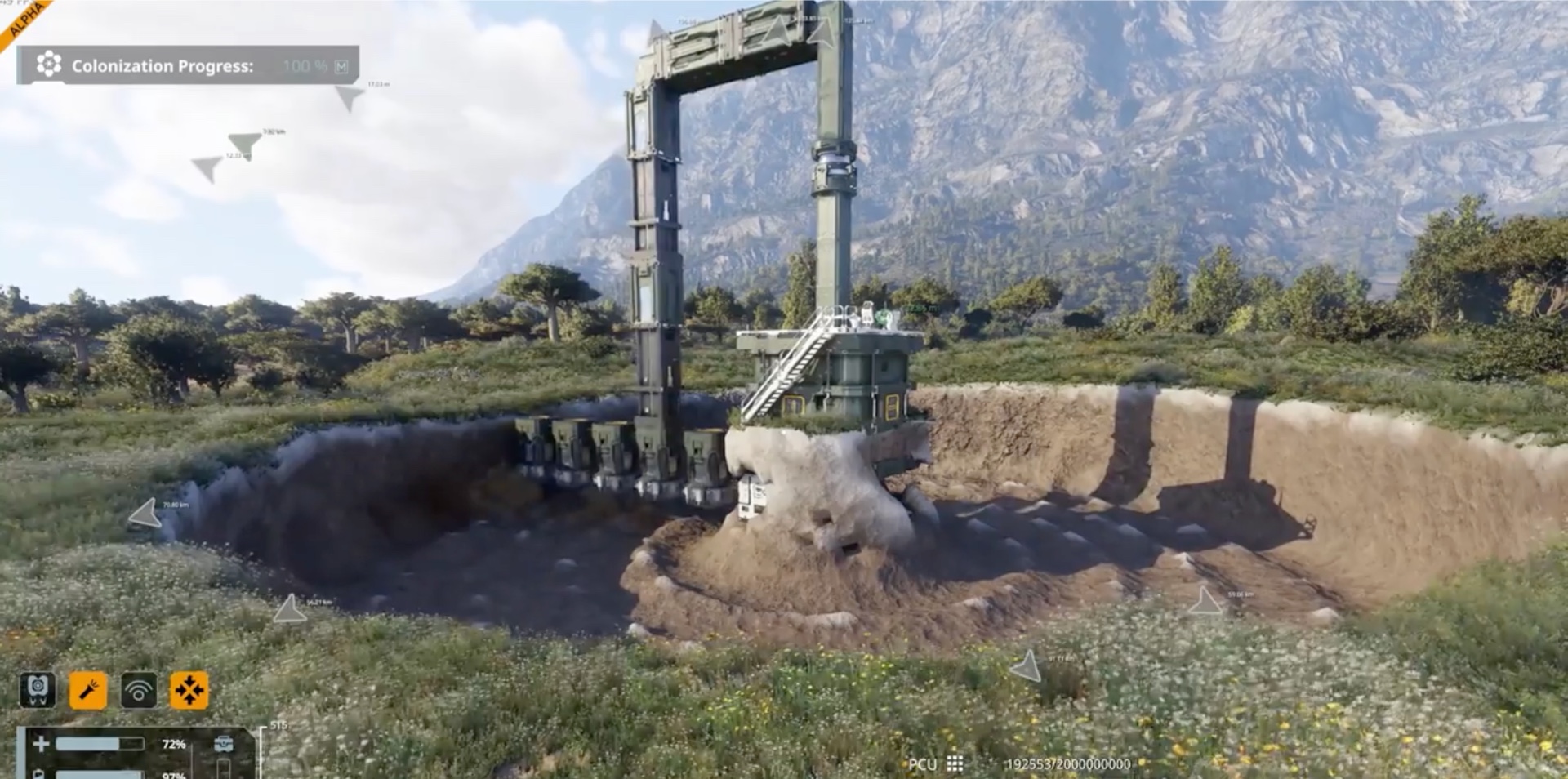
A separate discussion thread focused on mobility. You can lift the quarry and move it, but only when empty, since a thousand tons of ore in the container would require an absurd number of thrusters and batteries. Without cargo, the assembly stays light enough, and landing gear helps lift it off the ground.
Someone immediately suggested a logical next step. A connector mounted at a right angle from the second-to-last drill would end up at the edge of the pit, level with the ground, once the drills are lowered. A wheeled vehicle could pick up ore straight from there, then double as an anchor point for hauling the whole rig somewhere else.
Wheels only recently arrived in the game, added in the July VS2.3 update called Drive, Automate & Detonate. Along with them, the developer added hinges, automation blocks, warheads, and wind power. Those mechanics are what made a build like this a realistic project for a solo player.
Moving parts have always been the weak point of the series, and the community has a name for when things go wrong: Klang, after the joke deity blamed for physics glitches. In Space Engineers 2, physics get calculated separately for each grid, which makes assembly behavior unpredictable and can send a ship jittering in place for no reason. That said, the biggest troublemakers from the first game – wheels and mechanical blocks – run noticeably more stable this time around.
Similar quarries showed up in the original Space Engineers too, where builds like this almost always fell apart. Veterans describe their old versions as monstrosities held together despite the engine, not because of it. This new rig spins smoothly and holds up under load.
Not every item-transfer mechanism works correctly yet. Hinges don't pass ore through them, and rotors are a bit of a mixed bag.
The game launched into early access on January 27, 2025, running on the new VRAGE3 engine, and still only supports single-player. Four-player co-op with player-hosted sessions is planned for the VS4 update in November or December 2026, with dedicated servers arriving later.