China launched a 582-ton magnet for a nuclear fusion reactor "artificial Sun"

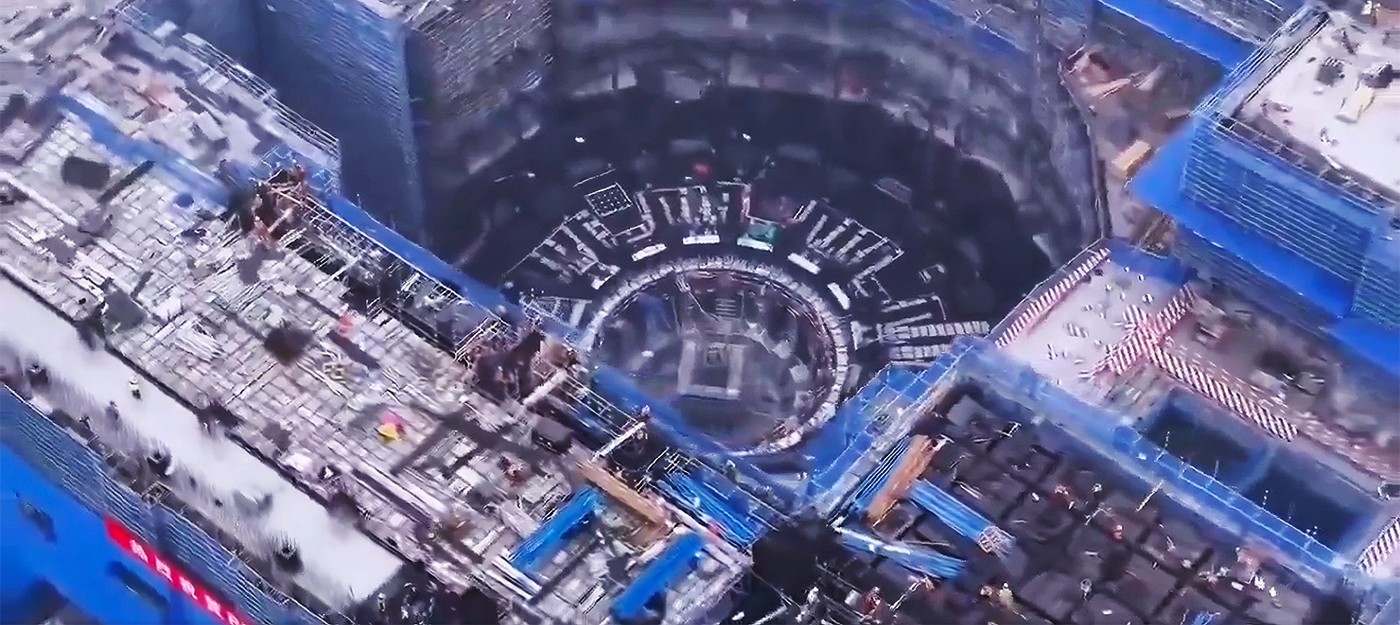
The Institute of Plasma Physics at the Chinese Academy of Sciences released a video showing the world's largest superconducting magnet for fusion reactors.
The toroidal field coil completed full-parameter testing a month ago, and the new footage shows the finished structure along with the test stand used to verify it.
The magnet belongs to the CRAFT platform – a comprehensive research facility for fusion technologies that supports a long-term commercialization program. The coil will eventually go into the BEST tokamak, where researchers aim to achieve burning plasma. Sixteen of these coils will be built in total.
Everyday comparisons help put the scale into perspective:
at 582 tons, it's heavier than a fully loaded Boeing 747
by mass, that's roughly four adult blue whales
the 6.5 tesla field at its center is more than four times stronger than a hospital MRI scanner, which runs at 1.5–3 tesla
Another impressive figure hides in the structural shell. The coil load-bearing case weighs 400 tons and is made from austenitic steel designed to withstand extremely low temperatures. The rest of the mass comes from the superconductor itself and its insulation.
Engineers tested the high-temperature central solenoid beyond its design specs. With a rated operating current of 46.5 kiloamperes, the team pushed it to 60 kiloamperes. Stored energy reached 6.03 megajoules during the test.
The solenoid job is to induce and sustain plasma current while dynamically adjusting the confinement configuration. Without this component, the reactor can't reach operating mode, so its performance determines whether the entire machine can run stably.
Assembly of BEST is planned for completion by 2027. The engineering design for the CFETR demonstration reactor wrapped up back in 2020, though full-scale construction isn't set to begin until the second half of this decade. CFETR is expected to deliver its first electricity to the grid by 2035.
Detailed performance data comes from the institute own releases and state media. No independent verification of the claimed parameters has been published yet.