Hundreds of thousands of units fight simultaneously in space and on planets in the Horu strategy game trailer

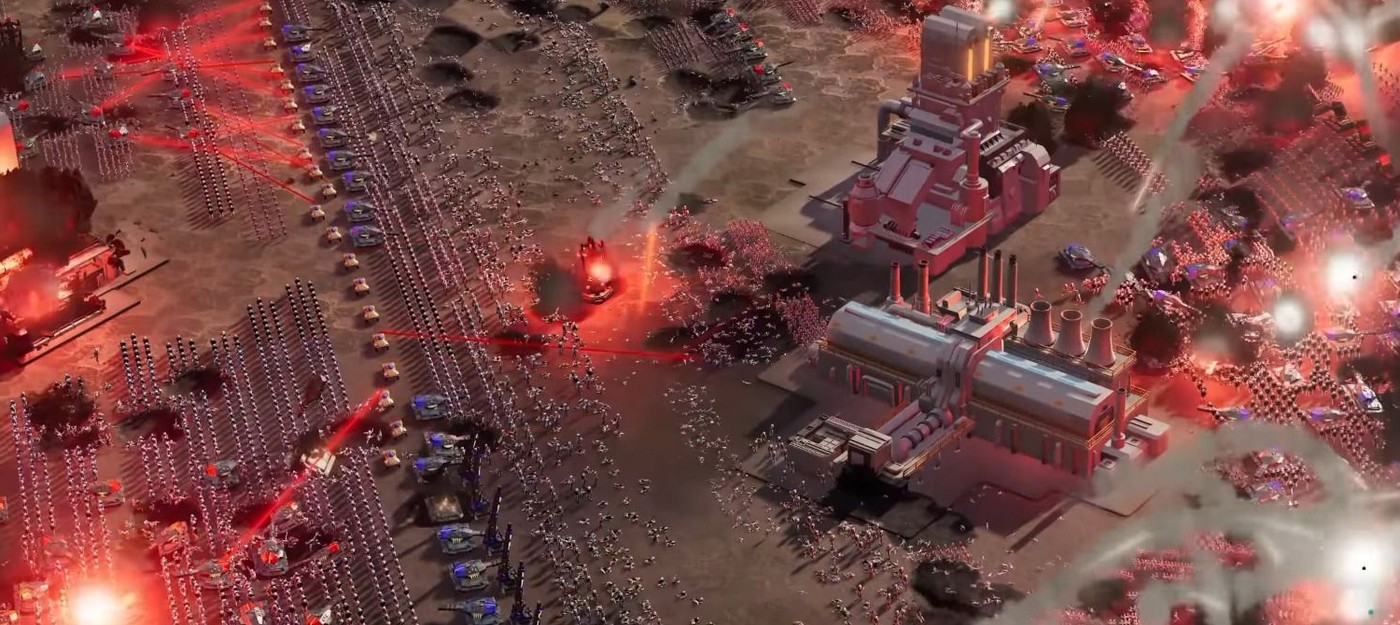
GlassBeaver released a Kickstarter trailer for Horu, a science-fantasy hybrid of real-time strategy and 4X.
Star Wars: Empire at War, where a galactic map tied together ground and space battles, serves as the developers' inspiration. Horu pushes that idea to a scale where hundreds of thousands of units fight at once. Players put together fleets and armies of infantry, war machines, cyborgs, battlemages, and monsters.
Every battle runs simultaneously, so there is no need to wait for one fight to end before taking command of another or returning to empire management. Some battles can be fought personally, while others can be handed off to commanders as players focus on strategy on the star map.
An invasion starts long before the first landing. Players assemble a fleet, load up troops or a strike force, and head into enemy orbit. Warships commit to the fight while dropships slip through the enemy blockade, and special abilities like orbital wormholes can push them through without casualties.
Thousands of ships clash in space battles, and every dropship that breaks through adds fresh forces to the ground operation. On the surface, infantry pushes toward control points while armor and artillery cover the advance. Captured points hold territory, and enemy structures can be destroyed or taken over if the planet is worth it.
Reinforcements can arrive at any moment, as long as they don't get blown up in the space battle overhead. Players can switch freely between the star map, space battles, and ground battles to direct the war wherever it matters most.
To handle such huge armies, Horu uses a drop zone system. Players place a zone and assign it objectives, and the troops that land there carry out orders automatically. Units can capture or destroy buildings, hunt down enemy artillery, or move to arbitrary points on the map.
Magic plays its own role. Players can call down meteor strikes, hit enemies with lightning, or freeze them in place. If that isn't enough, carpet bombing and powerful orbital strikes are on the table.
The strategic layer of Horu is built around growing an empire. The developers highlighted the following mechanics:
Colonization and production. Players settle worlds, develop infrastructure, mine raw materials, produce alloys, and harvest mana on anomalous planets. Forge worlds help produce ships and troops, while shipyards, space stations, and orbital buildings are backed up by garrisons.
Physical logistics. Resources are stored on planets and carried between them by merchant ships. Where something is produced matters, and so does getting it to the world that needs it.
Espionage. Agents infiltrate rival empires through bribery, deceit, and subterfuge. They gather intelligence on fleets and planets, sabotage the enemy war effort, send false orders, steal resources and technology, or pose as informants feeding fake intel.
Market. Raw materials, alloys, and mana can be bought and sold on the interstellar market. Buying up a resource keeps rivals from getting it cheaply, while flooding the market crashes its price and hurts those who depend on selling it.
Research. Progress runs along two branches, "Tech" and "Genes." The first improves the empire, while the second upgrades units.
Release is planned for the fourth quarter of 2027.