Vibe coder created a drone-shooting shooter in 8 hours for $550 with one short prompt in Fable 5.2 – waiting for the first AI hit worth millions

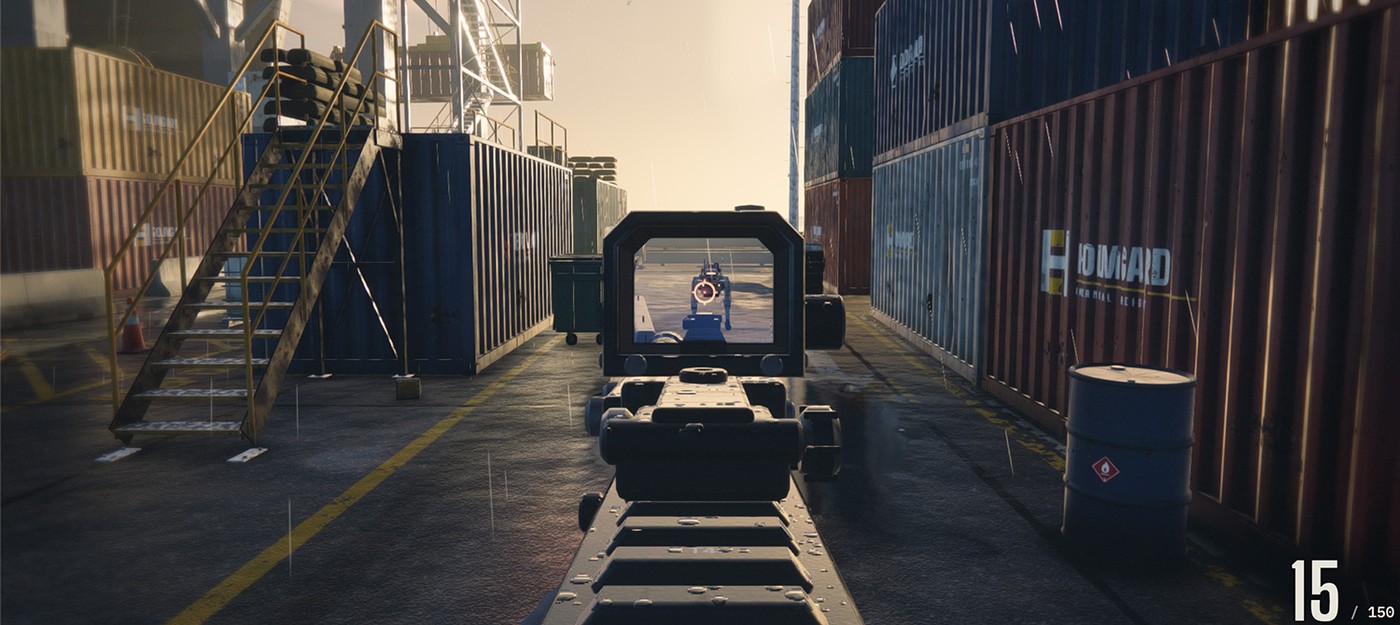
Anthropic employee Felix Riseberg showed off a first-person shooter written by the Claude Fable 5.2 model. He wanted to see what the neural network could do with short prompts and no hints from a human. Many people compared the result to AAA games.
According to Riseberg, everything in the game was built from scratch, including the models, sounds, and textures. The job took 8 hours and cost roughly $550 at API rates. The model generated about 2.7 million tokens and processed 445 million input tokens, most of them cached.
You can try the shooter here.
The whole game is one small location in an abandoned warehouse, so it's more of a micro-demo. Think of it as a mini slice of potential gameplay, with a weapon in hand, running animations, a UI, a crosshair, and sound effects. It plays right in the browser, and one user noted that it even runs on an iPhone with graphics maxed out.
The prompt itself turned out to be the biggest surprise. Asked about it, Riseberg said the era of prompt engineering feels like it's over:
You know, make me a first-person shooter too. Insanely detailed quality, please, something that can visually compete with AAA. Keep it small in scope, like a tiny level, but otherwise with impressive photorealistic graphics.
Plenty of people were blown away. Some called the result true AAA quality, others figured a studio would spend several million dollars on something like this, and one person valued it at a full year of work for an entire studio. One commenter even claimed that GTA 6 will be the last AAA game made by a traditional studio.
There were also quite a few skeptics who doubt that a result like this can really come from a single prompt. They say that when working with Opus, character models get imported backward or hang in midair, and the animations look like a kid made them.
A user named Wolfbyte Studios repeated the experiment on Fable 5.2 and said the output was roughly the same as what he got with Opus.
Another user suggested that the Riseberg prompt looks like the continuation of an existing session, where expectations for the model had already been set. He recommended also asking the AI to "be ambitious" and "not limit itself in compute."
Critics also latched onto the cost and practicality. One commenter pointed out that behind "one prompt" sit 8 hours of work and a $550 bill. Another said the result is still very far from a full game.
The Riseberg experiment also raises a question our editorial team keeps hearing from all corners of the internet. If a small photorealistic level can be made in under a day for a few hundred dollars, when will the first game made almost entirely by AI become a commercial hit and earn millions?
And what happens after that?
- AI enthusiast spent $2,618 on a single prompt and got Rome of 320 AD overnight
- In 44 hours, Claude Fable 5.2 built a playable Gears of War clone from a three-line prompt, but the compute was valued at nearly $15,000
- Claude solves problems better than candidates, and an Anthropic manager gave up coding interviews