The Witcher 3 developers explain how mead changed the new Songs of the Past expansion

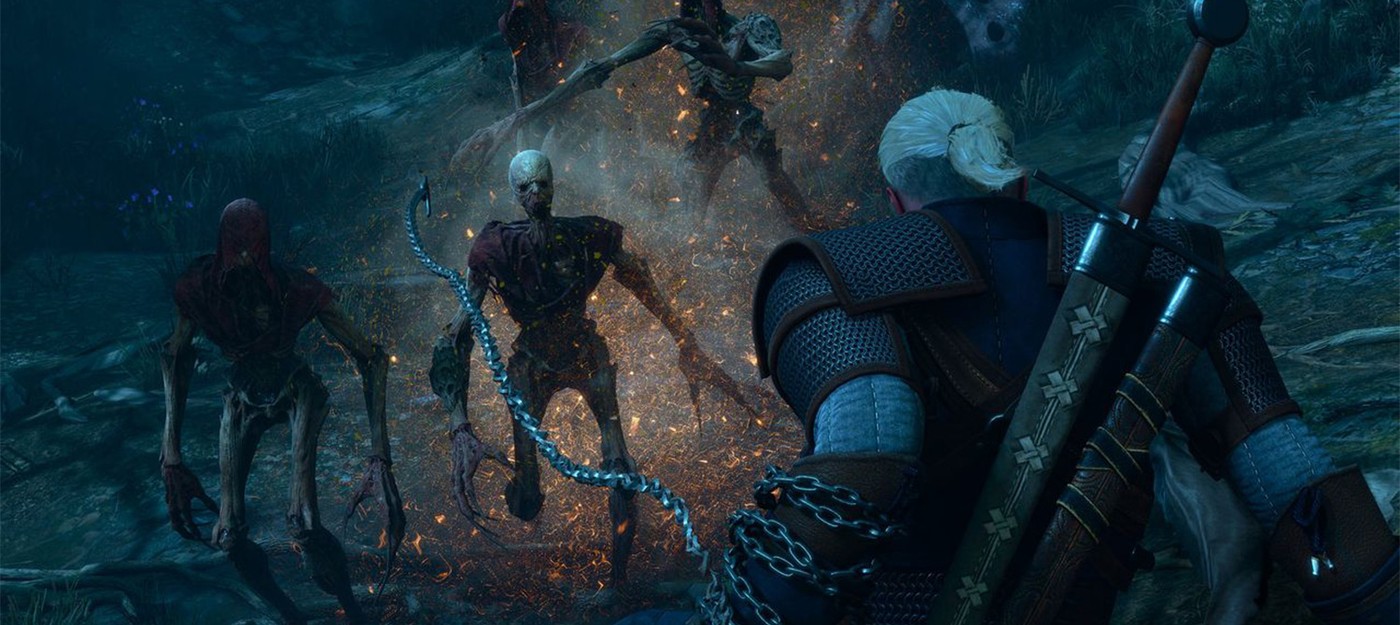
More than eleven years have passed since The Witcher 3: Wild Hunt launched, but CD Projekt RED isn't done with it. The third expansion, Songs of the Past, arrives in 2027 with a new region, new monsters, and new stories.
The studio has a tricky job. Expanding one of the most beloved RPGs ever made means keeping devoted fans happy without breaking the lore of a universe built up over decades.
At the Lucca Comics & Games festival, CD Projekt RED level design lead Miles Tost and Songs of the Past writer Paula Meissner told IGN how this new corner of the Continent came together. The conversation covered local booze that turned out to be surprisingly important, and why bringing characters back from the dead doesn't have to break canon.
A new region with its own character
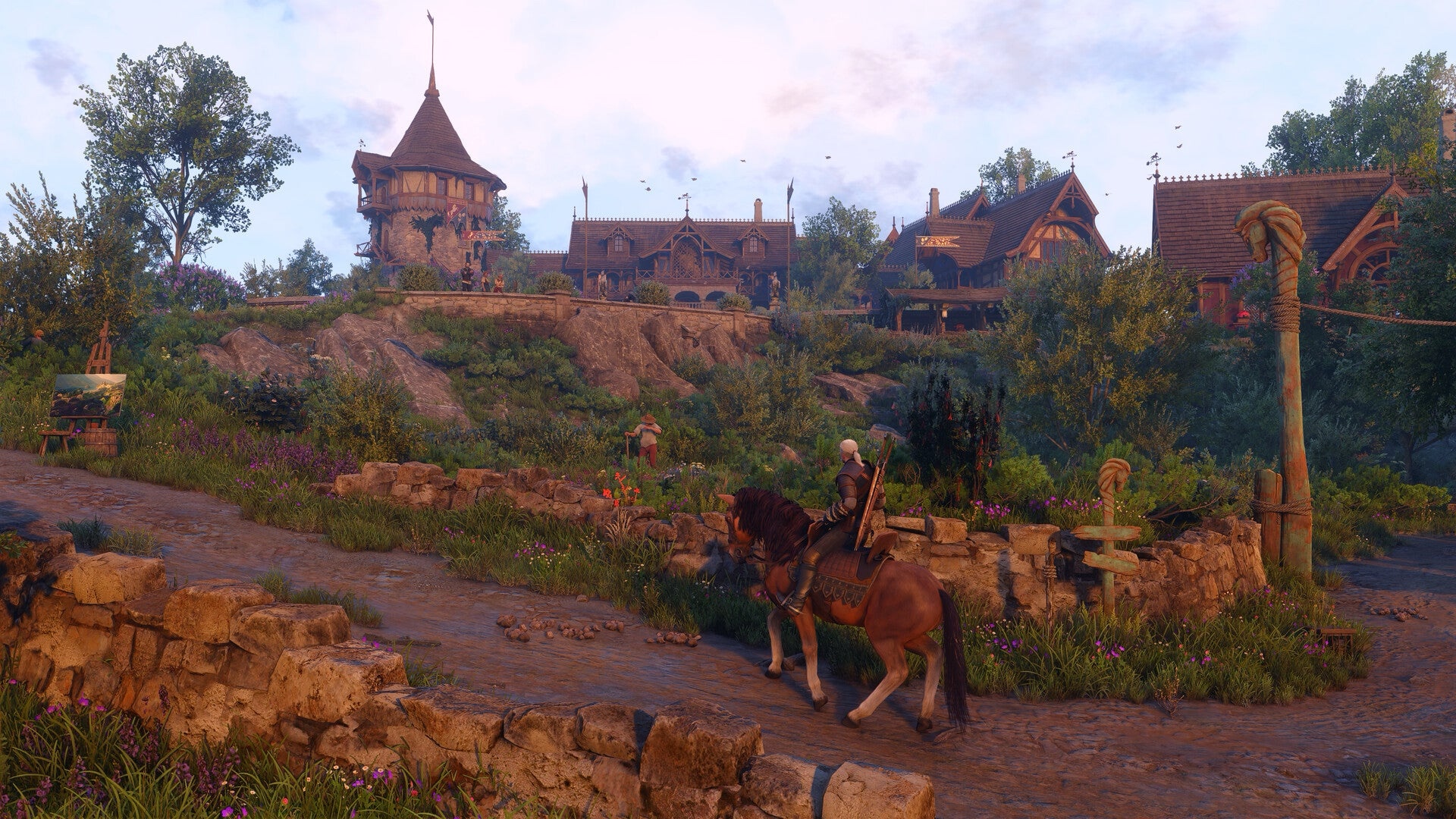
Asked what will surprise veterans, Tost said the main novelty is the region itself. According to him, the studio always tries to make each location unique, not only in how it looks but in how it feels to move through it.
If you've played the base game and the other expansions, for us, these regions are really fun. I think they have a lot of answers for that question by themselves because we try to always make each one feel unique, not just visually, but in the sense of the traversal.
Skellige, for example, has a lot of boat travel as a reliance. It's also very mountainous. No Mans Land is a much wider space. And I think with the value of Lettin, you'll basically see also that as you move around we're not introducing a new motion mechanic as far as I'm aware but generally it's really important to us that when you are in an area, you have this distinct feeling of being in this space.
The region has its own identity on a cultural level too. The people of Lettin have a distinct cultural backdrop, and the developers worked it out in great detail.
And this goes further culturally, for example. The people of Lettin have their own cultural backdrop. There are some British influences in the aristocracy there, but also we have very, very many Polish countryside influences there. You see that in the architecture, and we usually go pretty deep in thinking about the cultural identity of these spaces. So with Skellige, we have the more Viking-esque influences, but here, these people have their own alcohol.
Bracket and monsters that love honey
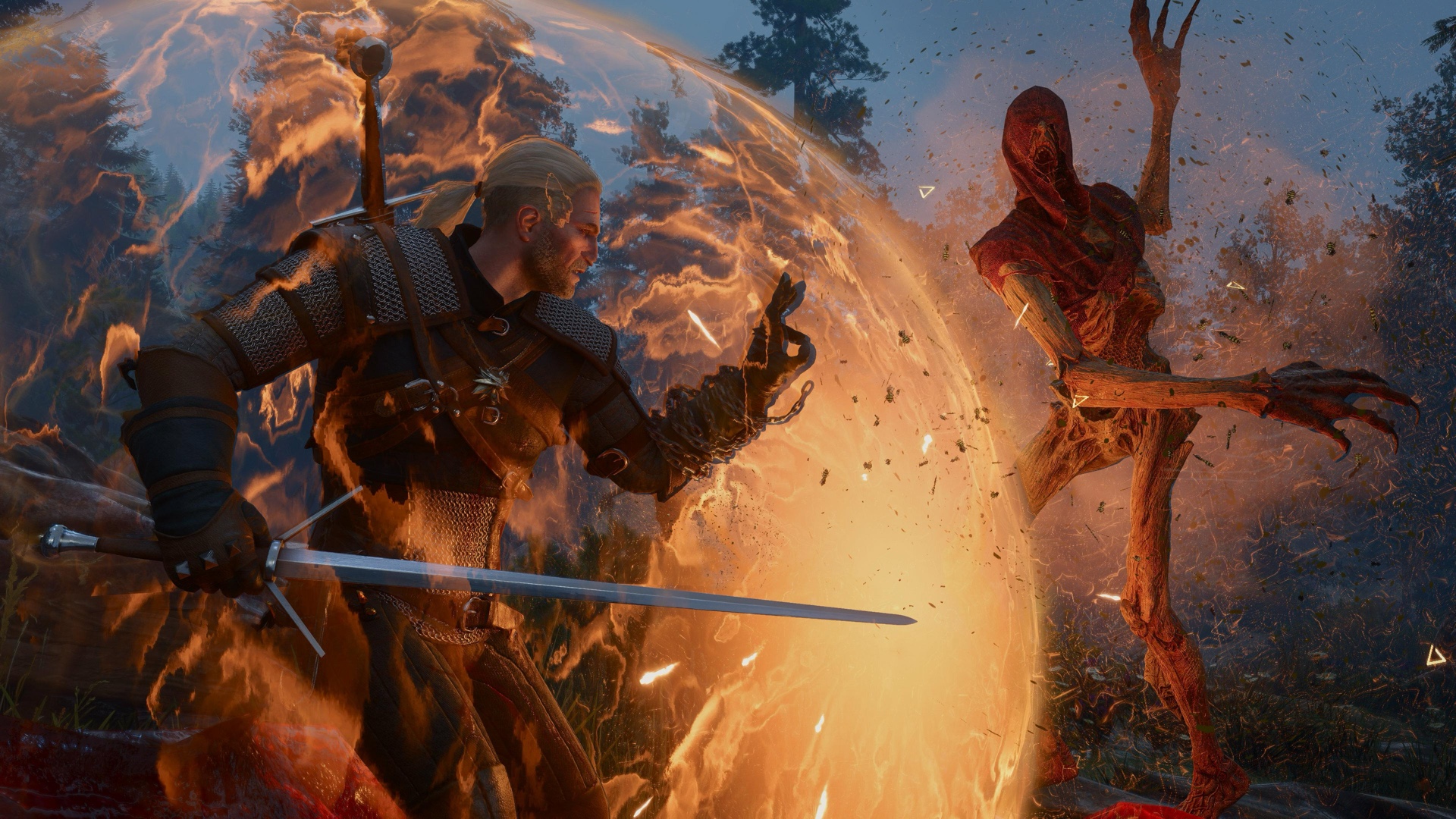
The local drink is called Bracket. Tost described it as a cross between honey and beer, and this one detail shaped much of the region.
It's a fun thing to mention because Bracket is what it's called, it's a kind of fusion between honey and beer. It feels like such a small thing, but for us it's very important, because it draws a lot on what this region is. So for the production of it, you need honey and you need hops. And so you will find both of these in the area. And other than it being a cultural export, of the area and the economical backbone of the place, it even changes how we think about monsters there.
So in the demo we've shown, we're basically introducing one new monster, the Swarmion, and these guys love honey. They use hornets as a means of protection, all that stuff. And so the logical reason there is because what kind of monster would live there? So the Swarmion makes sense. So you find that this seemingly small thing of these guys having their own alcohol, and it really has this huge effect on the entire area. And so this is a bit of how we're trying to make things feel unique and special. And it goes into the quest storytelling and all of that.
The approach has precedent. In Blood and Wine, the winemaking culture of Toussaint shaped both the story and the setting, and in Songs of the Past, honey beer looks set to play the same role.
Canon, lore, and the dead coming back
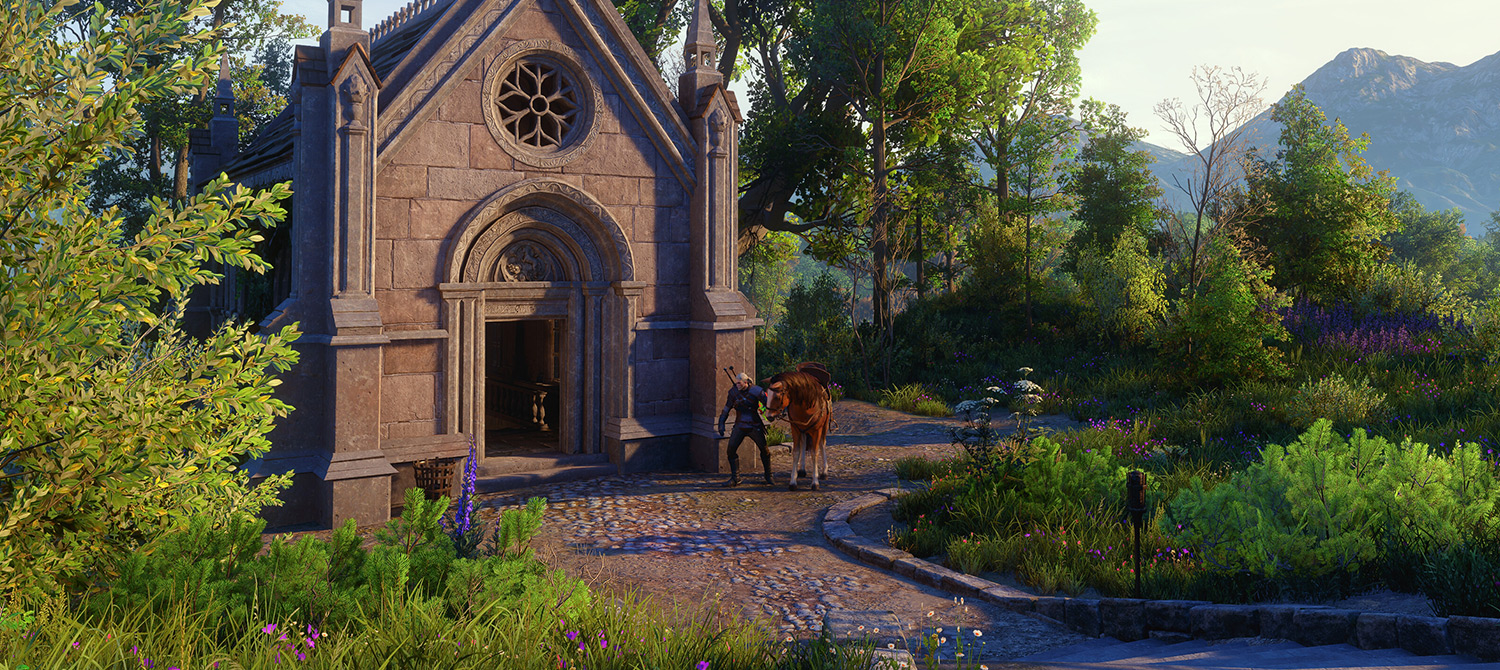
The Witcher universe has some of the deepest lore in fantasy, so canon is a serious concern for the studio. Meissner said the writers work constantly with a dedicated lore team inside CD Projekt RED.
We actually do have an amazing lore team in CDPR that we are cooperating with. And these guys are just amazing. They know everything, every detail from the books, from every game, from every piece of franchise content. So we do talk with them on a regular basis to make sure that we don't say anything stupid and that we stay actually truthful to the lore. But yeah, it is a tricky question because it touches on topics that weren't revealed yet. So there were definitely challenges, but I don't know how much I can say about those.
Tost added that the studio doesn't think in terms of "can" or "can't" and aims to keep evolving the universe. As an example, he pointed to the return of the vampire Regis in Blood and Wine, something many fans would have called impossible before release.
The general thought is that we try to always also evolve and make things fresh. So it's really important for us to not really think in this way of like, "Oh, can we do this or can we not?" If we do, how? How would we bring Regis back? If we just told people before Blood and Wine, "Yeah, we're going to do it." A lot of the hardcore fans would probably go like, "That's impossible. He fucking vaporized. How would he?"
And I think we asked ourselves those same questions, and ultimately I think we settled on something that works as an expectation where he's like, "Yeah, he's back, but he's like 10% of his power, and he's still recovering. He's only been able to recover because he's had help from this other higher vampire." Geralt, by himself, is already like, "Hey, let's just bring him back from the dead."
And it works as long as you can explain it and make it make sense. And I think this is really the approach that we're trying to take. So we don't really try to retcon things, but we do try to find cool ways to expand and build on the franchise and the established lore as long as we can find ways to explain it.
According to Meissner, the writers have a trump card in debates with the lore team: the attitude of Andrzej Sapkowski himself toward canon.
We often actually use discussing challenges with the lore team as Andrzej Sapkowski would do it. If you look at the books and lore of The Witcher in the books, it's such a mix of everything, to be honest. And even if you hear Sapkowski in interviews and people ask him these questions, he's often like "Whatever." So yeah, this is the ultimate argument that we use sometimes, and sometimes it works.
Songs of the Past is the third major expansion for The Witcher 3: Wild Hunt, following Hearts of Stone and Blood and Wine.
No exact release date has been announced yet, only that the expansion arrives in 2027.
- One PC setting rids The Witcher 3 Remastered of its washed-out picture
- The Witcher 3 Songs of the Past scriptwriter wrote her thesis on Hearts of Stone – is the story in good hands?
- Songs of the Past were made possible thanks to the development of a remaster of the 11-year-old The Witcher 3: Wild Hunt