Eight pins and 30 years of suffering: how PC builders thank the creator of the single connector for the power button

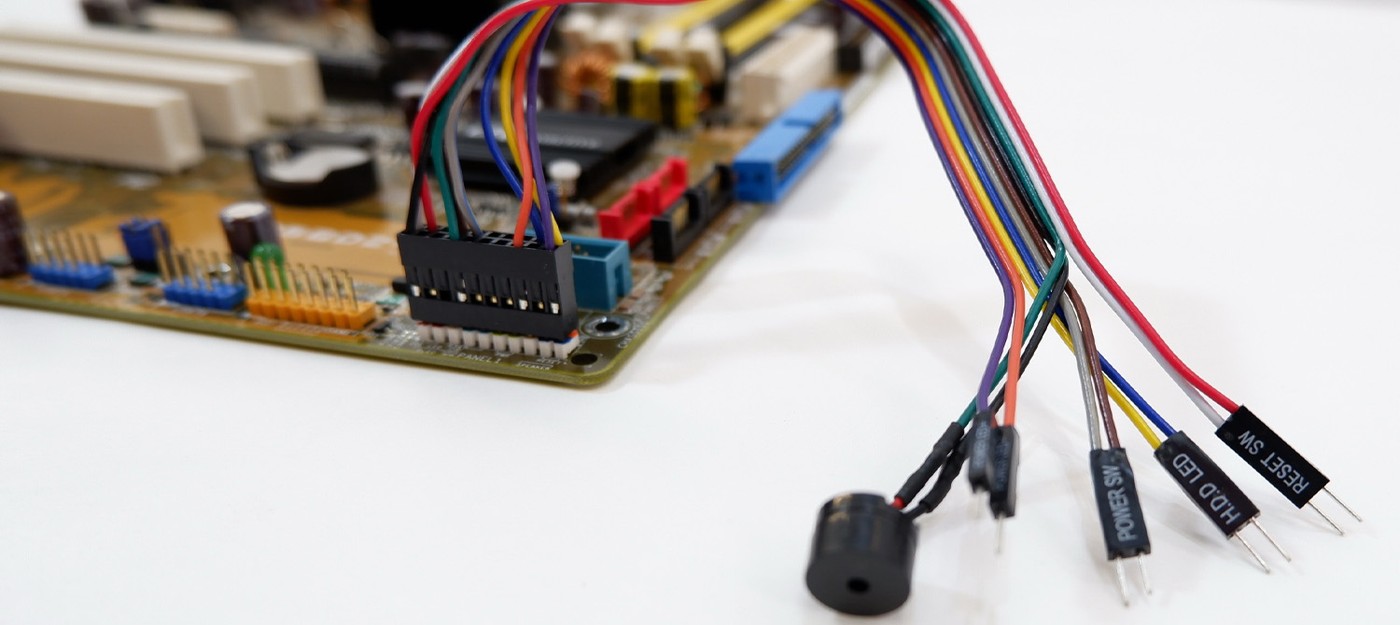
Building a PC has its share of nerve-racking steps: seating the CPU in the socket, applying thermal paste, the first boot. But for several generations of enthusiasts, the real final boss has been a handful of tiny wires from the case buttons and indicators.
Pushing rice-grain-sized connectors onto pins in the darkest corner of the motherboard, with ordinary human fingers no less, is a whole different level of challenge.
A meme on Reddit brought the old scars back. One user thanked whoever figured out how to bundle these connectors into a single plug. The connectors in question are the front panel headers, which handle the power and reset buttons, the power and drive activity LEDs, and sometimes a built-in speaker.
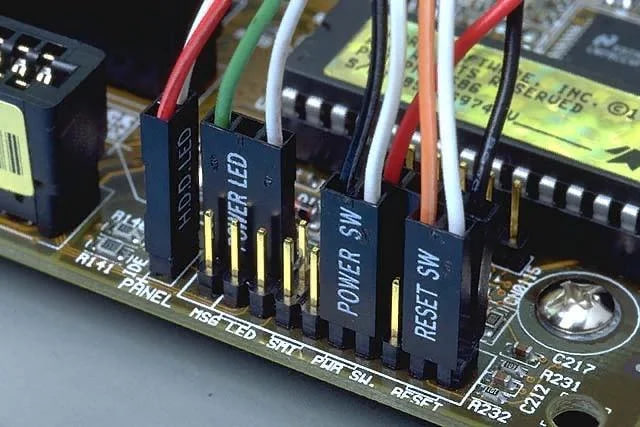
Back when the ATX standard was taking shape, Intel described a recommended layout as a 2×5 pin block. Board makers interpreted it however they pleased for years, while cases kept shipping with a pile of individual plugs.
Veterans recall manual diagrams a couple of millimeters across and rotated at random angles, boards with no markings, and the razor-sharp case edges of the early 2000s that left builders bleeding all over their hardware. One person even admitted to figuring out the right pins by shorting contacts with a ballpoint pen until the computer turned on.
Confusion over standards only adds fuel to the fire. The power LED connector is two pins on some boards and three on others, with the middle one left empty, and the drive activity LED sometimes sits apart from the rest of the group. The good news for the cautious: an LED plugged in backwards simply won't light up.
Trouble is only possible if the button and indicator pins get mixed up, which can cause something like an endless self-shutdown loop, but that goes away once the mistake is fixed.
Solutions have existed for a while but catch on slowly. Asus made the Q-Connector, where the wires are first gathered in a plastic block that then goes onto the board in one go. MSI puts an extension adapter on a ribbon cable in the box, and ASRock has shipped similar blocks.
Now case makers have caught on too. On the MSI MAG Forge 130A and several Corsair models, all the wires are combined into a single plug, with separate connectors for boards that use a nonstandard layout. The most impatient builders dream of replacing the whole header with a single USB-C port.