An old video of Gabe Newell explaining why Valve will never become a public company that answers to shareholders has gone viral online

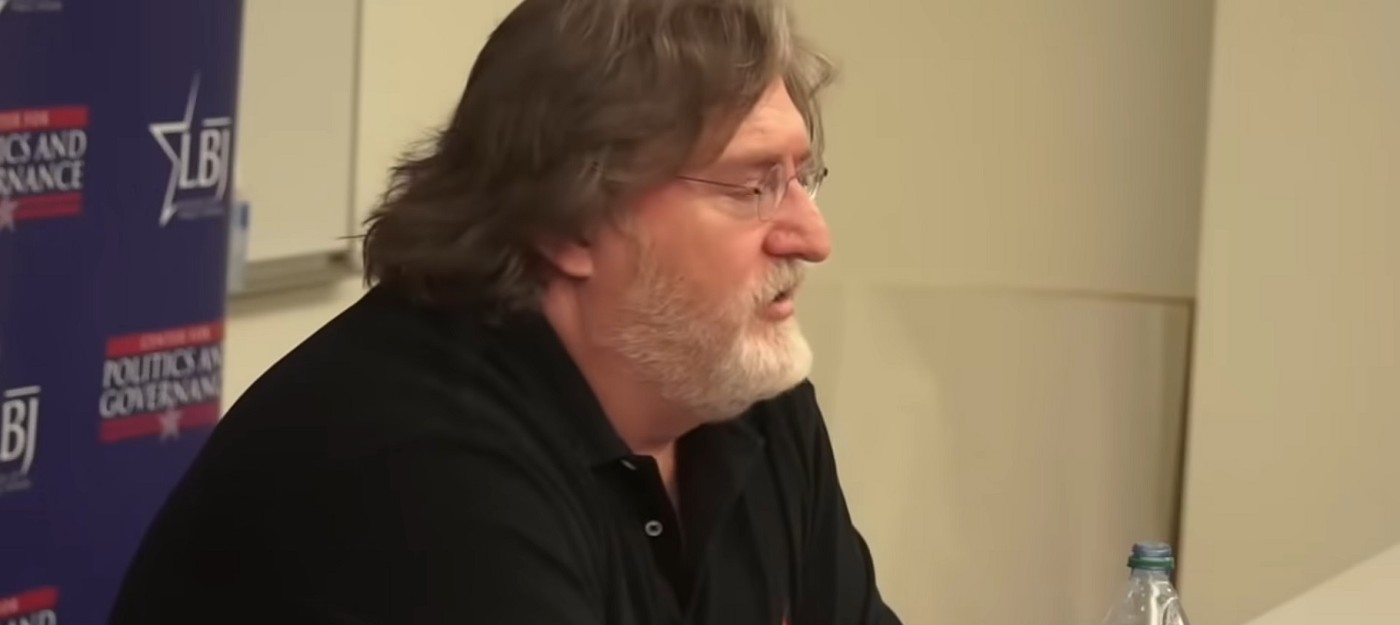
An old clip of Gabe Newell has resurfaced online, showing the Valve boss discussing private company ownership and prioritizing employees over shareholders. The clip feels especially relevant given the wave of layoffs sweeping the tech industry.
Valve itself enjoys per-employee profits that embarrass the likes of Microsoft and Meta, companies responsible for heaps of the layoffs in recent years.
The clip comes from YouTube channel WebKnower, which, for months, has existed primarily to post short videos of Linux godfather Linus Torvalds. It seems the YouTube algorithm pushed the channel to pivot toward Newell content instead.
The video, titled "Gabe Newell Explains Why Valve Never Went Public," racked up 1.3 million views in just four days, making it the channel most-viewed upload.
Newell comments were pulled from a January 2013 lecture at the LBJ School of Public Affairs at The University of Texas. The full talk runs 62 minutes and was titled "Productivity, Economics, Political Institutions & The Future of Corporations."
As is often the case with these new-again Newell snippets – like the story of him telling Portal writer Erik Wolpaw to "get better" instead of resigning amidst a health crisis – the full story lies outside the viral segment.
In the lecture, Newell explains why Valve prioritized its own values over trading shares publicly. Much of this flies in the face of conventional cost-cutting wisdom still followed today, especially at large tech and game companies.
Newell mentions "there was a big thing a couple of years ago where everybody was trying to hire low-cost content producers in India and China." He says Valve was "trying to do the opposite."
If somebody working on a feature film production in New Zealand is making $200,000 a year, if they come to Valve they should be making $500,000 or $5 million, creating that much value.
This approach was foundational at Valve from the start. Back in 1996, Newell says he and co-founder Mike Harrington had spoken to insurance companies, airline companies, and startups in Silicon Valley, and became convinced that "everybody was going in the wrong direction."
There's sort of a movement towards outsourcing, and outsourcing is essentially, where can we find the lowest-cost English language speaker somewhere in the world and we'll give them a job and they'll do it just as well for a lot less money. To us, that seemed exactly the opposite of what you should be doing. What we decided was that we were going to buy the most expensive talent that was out there in the world. That the opportunity was, those were the people who were least correctly valued.
Newell singles out one of those golden talents as an example: Half-Life programmer Yahn Bernier was "shipping 4,000 lines of code per day" in a pre-AI agent era.
This brings Newell back to how to "attract and retain the most highly productive people in the world," and here he explains why Valve turned away from going public.
If our thesis is correct, that's where we're going to create our greatest incremental value. Valve is not a publicly traded company. Being a publicly traded company adds a bunch of headaches and it didn't really solve any problems for us. It meant that control around decision-making now involves third parties.
According to Newell, going public would slow everything down – from the hiring approach to internal approval processes – forcing the company to bend to the whims of investors and a board of directors.
The whole point of being a privately held company is to eliminate another source of noise in the signal between the consumers and the producers of a good.
A similar line of thinking shows up in another recently exhumed clip, where Newell describes piracy as a service issue rather than theft.
This drive to eliminate "noise" also shaped Valve title-lax structure, where employees regularly dip into multiple disciplines instead of sticking to narrow roles. Newell points to Half-Life again: the person who designed the skeletal animation system also had a bachelor of fine arts and could build environmental art.
Newell argues that the original Half-Life shows the tangible effects of these business policies.
There are a set of experiences that you get in Half-Life 1 that are entirely a consequence of the person working on it being able to change the environment, change the code, or change the animations depending upon what was the most tractable way of solving the problem. Titles in organizations keep people from properly encapsulating a problem at a point which allows them to be most productive.
It would be interesting to hear Newell explain his stance today. With games industry-wide upheaval largely driven by publicly traded companies, Steam and Valve look more successful than ever, making the approach hard to argue with.