Portable Xbox in a Pelican Case Failed to Start at an Altitude of 10 Kilometers

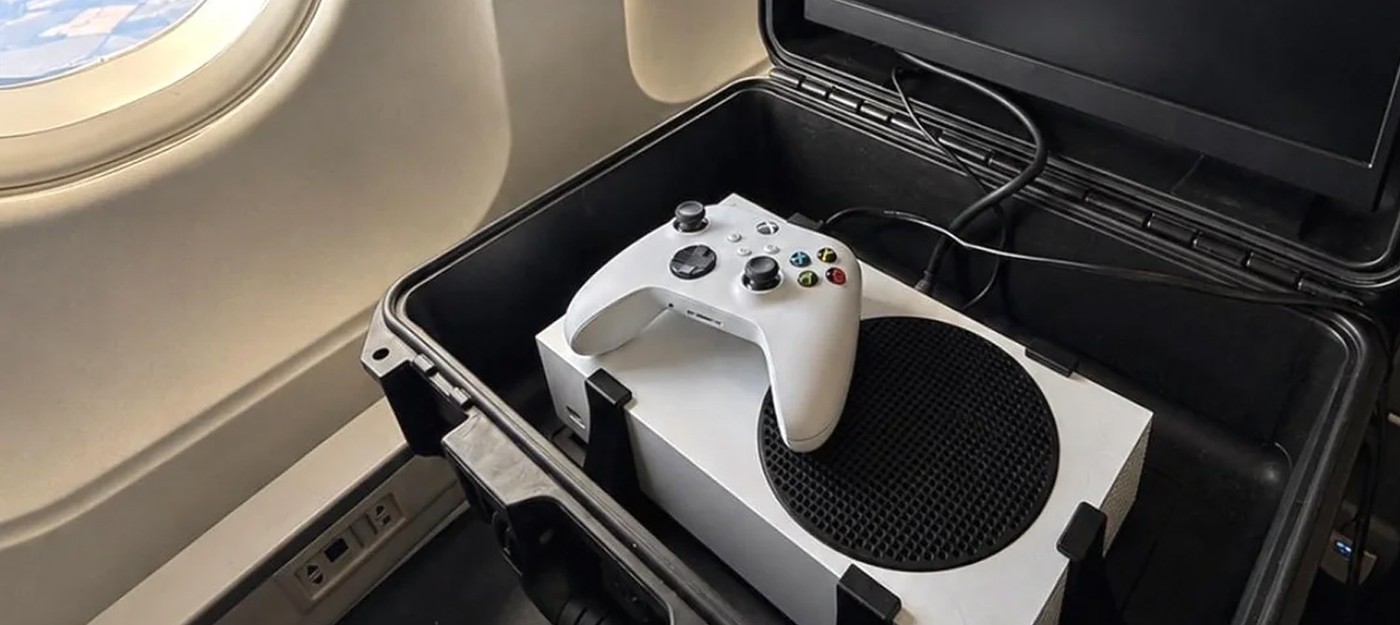
Home consoles have long since learned to travel: people stuff them into Pelican cases, wire in a monitor and power jacks, and turn the whole thing into a portable gaming station.
The logical next step is carrying that case onto a plane and starting a gaming session 35,000 feet up. Logical right up until the aircraft power system says a firm "no".
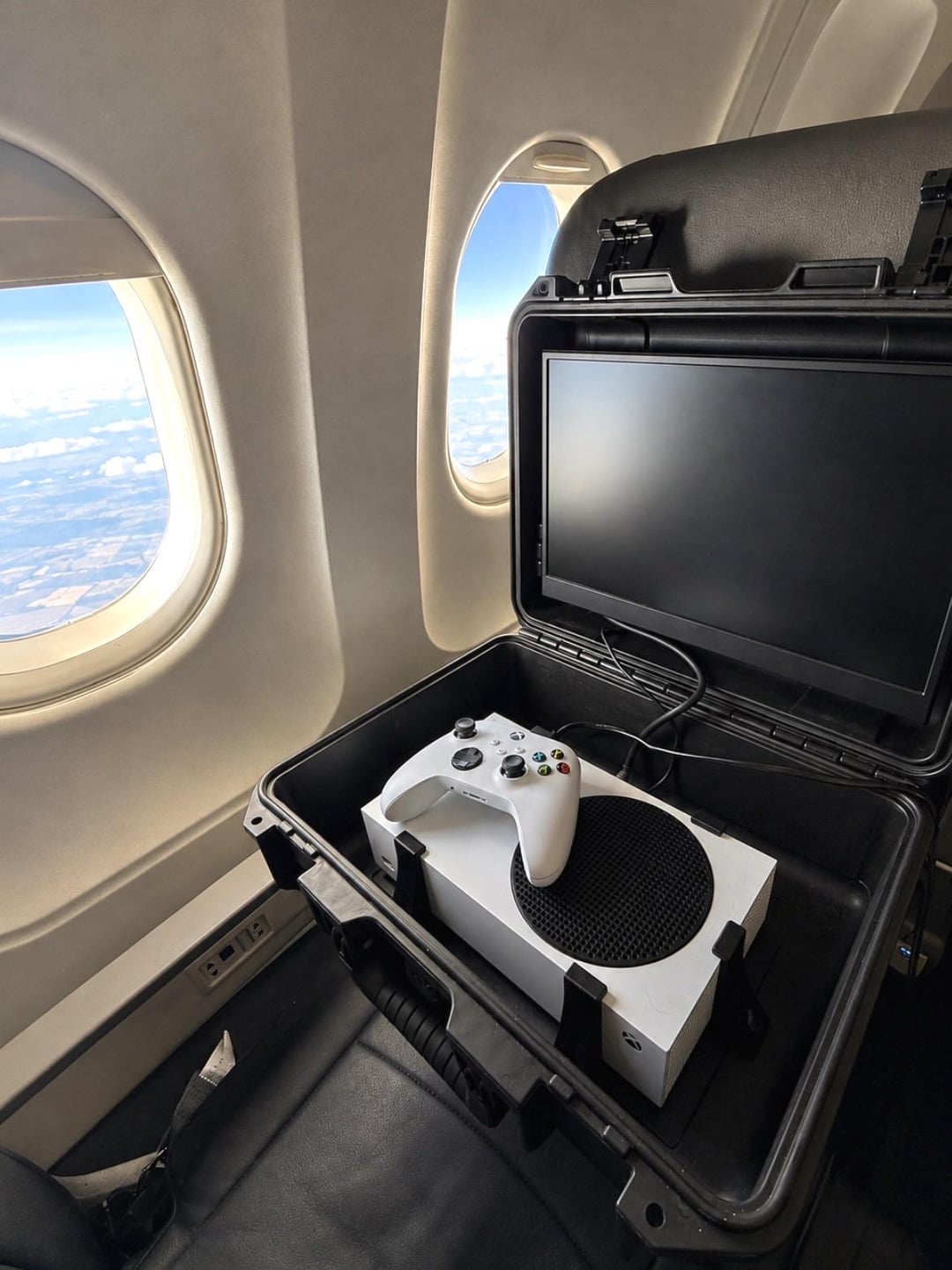
One owner of such a homemade case caught the perfect conditions for testing it out: an empty row, an outlet right by the seat, and ten hours ahead.
The result came instantly – the moment the plug went into the socket, the light on the outlet went dark. Pulled the plug, and the light came back on. The portable Xbox has officially been demoted to a device for long layovers and hotel rooms.
The reason is pretty mundane and comes down to math. Seat outlets run off inverters that put out roughly 75-110 watts per passenger, and that's a hard ceiling shared across the whole row, not per seat.
A Series S under load draws around 70-75 watts on its own, the monitor adds another 15-30, and a Series X in a demanding scene can push well past 100 watts, so the safety cutoff trips before the console even shows its logo.
What's odd is that the outlet cut out instantly, before the console even powered on. The culprit is inrush current: the power supply charges its input capacitors, and for the first few milliseconds the draw spikes far above the rated wattage.
A household circuit breaker shrugs that off, but an aircraft system with electronic load monitoring reads it as a fault and kills the outlet. One passenger described a familiar scenario:
My Dell with a 120W charger would reliably trip the outlet on long-haul flights to Asia, I had to start carrying a 90W charger instead.
Getting around the limit with an external battery pack won't work either. The FAA allows lithium batteries up to 100 watt-hours, batteries between 101 and 160 watt-hours need airline approval, and anything above that isn't allowed on board at all.
Those very rules are what killed off the "smart" suitcases with built-in batteries, which airlines banned en masse after a string of fire incidents.
There's exactly one setup that works reliably in the air: handhelds and laptops with chargers rated up to 65 watts. Devices like the Steam Deck or ROG Ally X draw power without sending the inverter into a panic.