Fallout creator's face has been hidden in the game's icon for almost 30 years

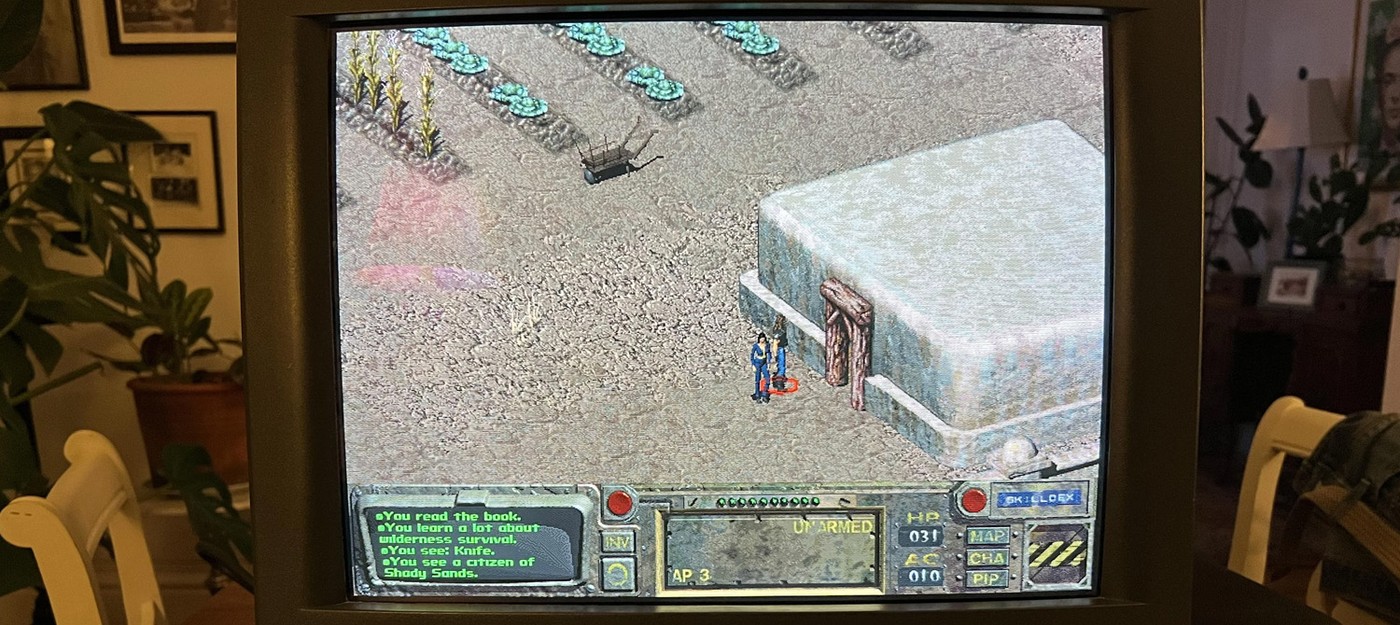
A joke made for future hardware doesn't stay a joke forever. Developers in the 90s hid gags in places they figured nobody would reach for another twenty years, and then technology caught up and spilled the secret to everyone.
That's exactly how a bearded man in glasses became the face of Fallout 2 on modern PC desktops.
The story concerns the executable file icon in the Steam versions of Fallout and Fallout 2. Instead of the familiar Vault emblem or radiation symbol, under certain conditions a photo of Tim Cain shows up, the lead programmer and director of the first game.
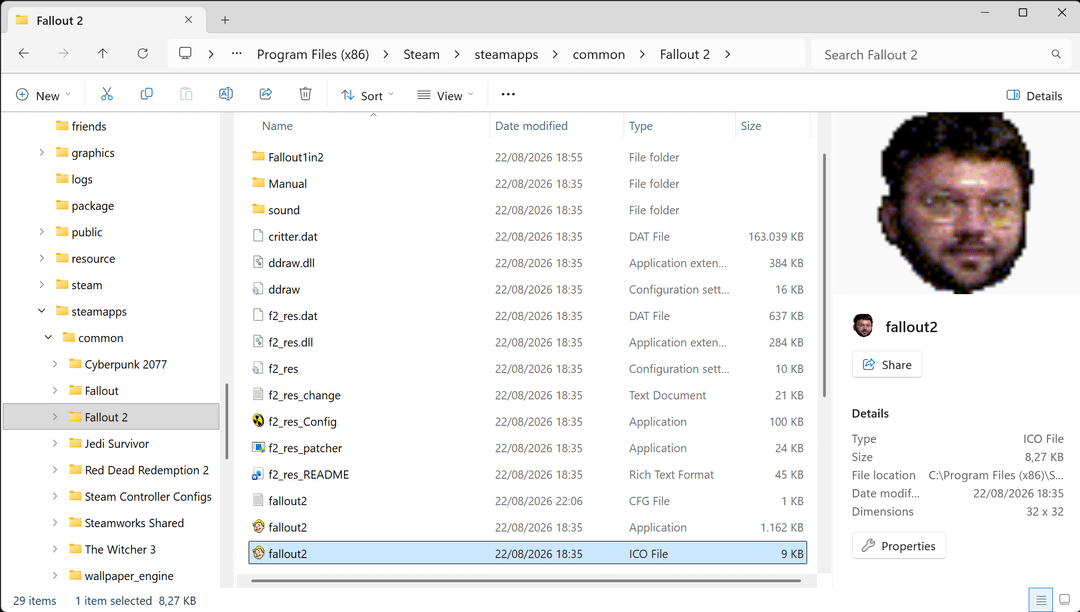
Originally this was a genuine hidden surprise: the image only loaded at an "absurdly high" resolution, something that simply didn't exist back in 1997.
The mechanism itself is simple and entirely legal from Windows point of view. An icon file stores several versions of the image at different sizes, and the system picks whichever fits the current display scale. Back in the days of 640x480 and 800x600, the larger versions never got requested since shortcuts lived at 16x16 and 32x32 pixels.
Nowadays, large icon modes and high DPI monitors pull the biggest slot by default, and that's when Cain stares back at the user. Fans jokingly call him John Fallout.
Cain isn't just a decorative figure for the series. He spent six months writing the engine and working out the core mechanics single-handedly as a personal passion project, which eventually grew into full development, and the SPECIAL stats system came about with his direct involvement.
He later founded Troika Games, which put out Arcanum, The Temple of Elemental Evil, and Vampire: The Masquerade – Bloodlines. These days he works at Obsidian and runs his own YouTube channel about game design and the industry.
Calling him the sole creator of Fallout would be wrong though, and Cain himself is the first to push back on that idea. The visual language of the series, that retrofuturism built on 50s posters, owes a lot to art director Leonard Boyarsky, while Chris Taylor worked on the design and skill system.
The way to put it that satisfies everyone goes something like this: without Cain the game simply wouldn't exist, but it didn't grow out of code all by itself either.