Microsoft will finally remove from Windows a utility familiar to administrators since Windows XP

Microsoft has confirmed that WMIC will soon disappear completely from supported Windows editions. The news showed up in the changelog for a new Windows 11 Insider Preview build numbered 26100.9267/26200.9267.
According to the changelog, WMIC will no longer ship with Windows 11 24H2 and 25H2 starting in August 2026. Since 2022, the tool has already been available only as an "on-demand" download that users had to install manually. Now it's set to vanish from that list of optional features too.
The first warning signs came back in 2016, when Microsoft listed WMIC among the deprecated features of Windows Server 2012.
The underlying Windows Management Instrumentation framework that powers the tool has shipped with every Windows release since Windows 2000. It was even offered as a standalone download for Windows NT 4.0, Windows 95, and Windows 98.
WMIC itself came later, arriving with Windows XP and Windows Server 2003 as a command-line front end for querying and managing a system through WMI. It's worth pointing out that Microsoft is retiring the front end, not the underlying WMI framework – that one isn't going anywhere.
Microsoft explained its reasoning a few years back – PowerShell delivers the same functionality through a more efficient, more powerful command-line environment. The company has poured significant resources into PowerShell and wants legacy tools phased out of Windows entirely.
PowerShell offers a set of cmdlets for working with WMI, and Microsoft argues that cutting deprecated components reduces the complexity of the Windows ecosystem, boosting both productivity and security for users.
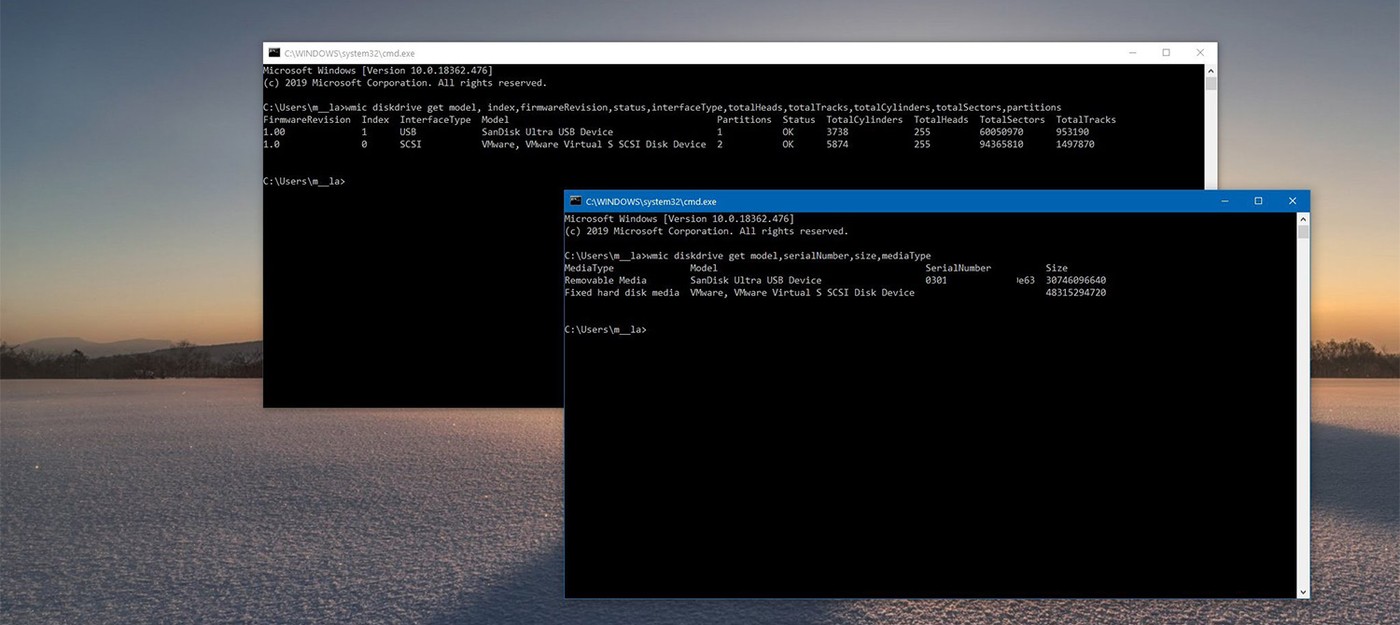
In practice, WMIC has served as a workhorse for developers and power users for years. It let people quickly pull hardware details from a PC, check a Windows product key, and handle plenty of other tasks without needing third-party software.
Anyone still running WMIC scripts should move to PowerShell, Microsoft says. Developers, meanwhile, are being pointed toward the Win32 API for programmatic access to WMI, using supported languages such as C++, .NET, and VBScript.