Swiss engineers create ultrasonic engine for future silent microdrones

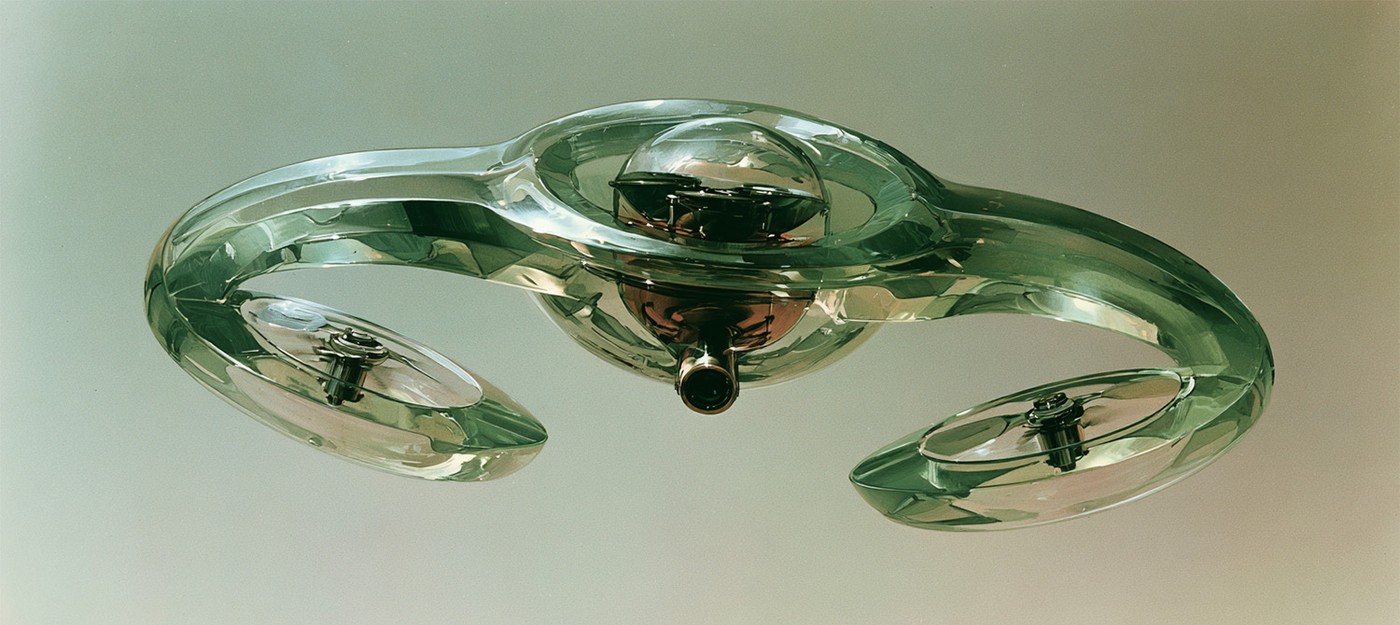
A research team from the Microbiorobotic Systems Laboratory (MICROBS) at Switzerland's École Polytechnique Fédérale de Lausanne (EPFL) unveiled a "sound-powered engine" that turns acoustic waves into directional thrust.
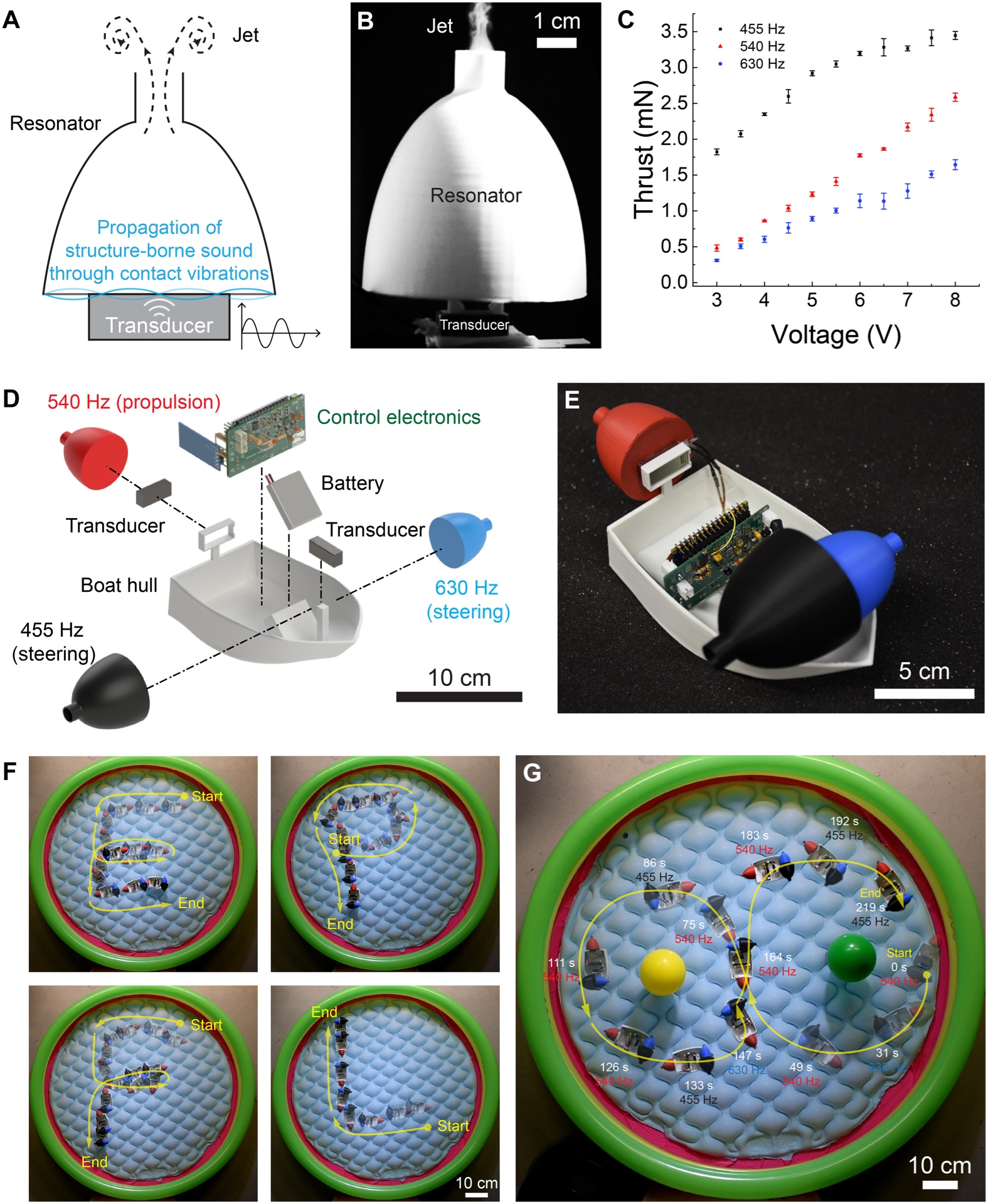
At its core is a 3D-printed cavity of a special shape that functions as an acoustic resonator.
The principle relies on the resonant frequency of that cavity. When the structure gets hit with sound at the right frequency, the air molecules inside start oscillating much more strongly, then get pushed out through a specially designed nozzle as a concentrated jet.
MICROBS head Selman Sakar said:
Instead of pushing devices around with sound waves, we have created acoustic resonators that are tuned to harness sound at specific frequencies to generate directional thrust and controlled motion. Our work shows the feasibility of transforming a simple, cleverly designed mechanical piece into robot matter.
The team built three working prototypes. The first is a boat with three resonators – one at the stern tuned to 540 Hz for forward propulsion, and two more mounted on the sides handling steering.
The other two devices fall into the microflier category and run on ultrasonic frequencies. The first one has three cavities pointing downward, letting it lift off the ground like a rocket.
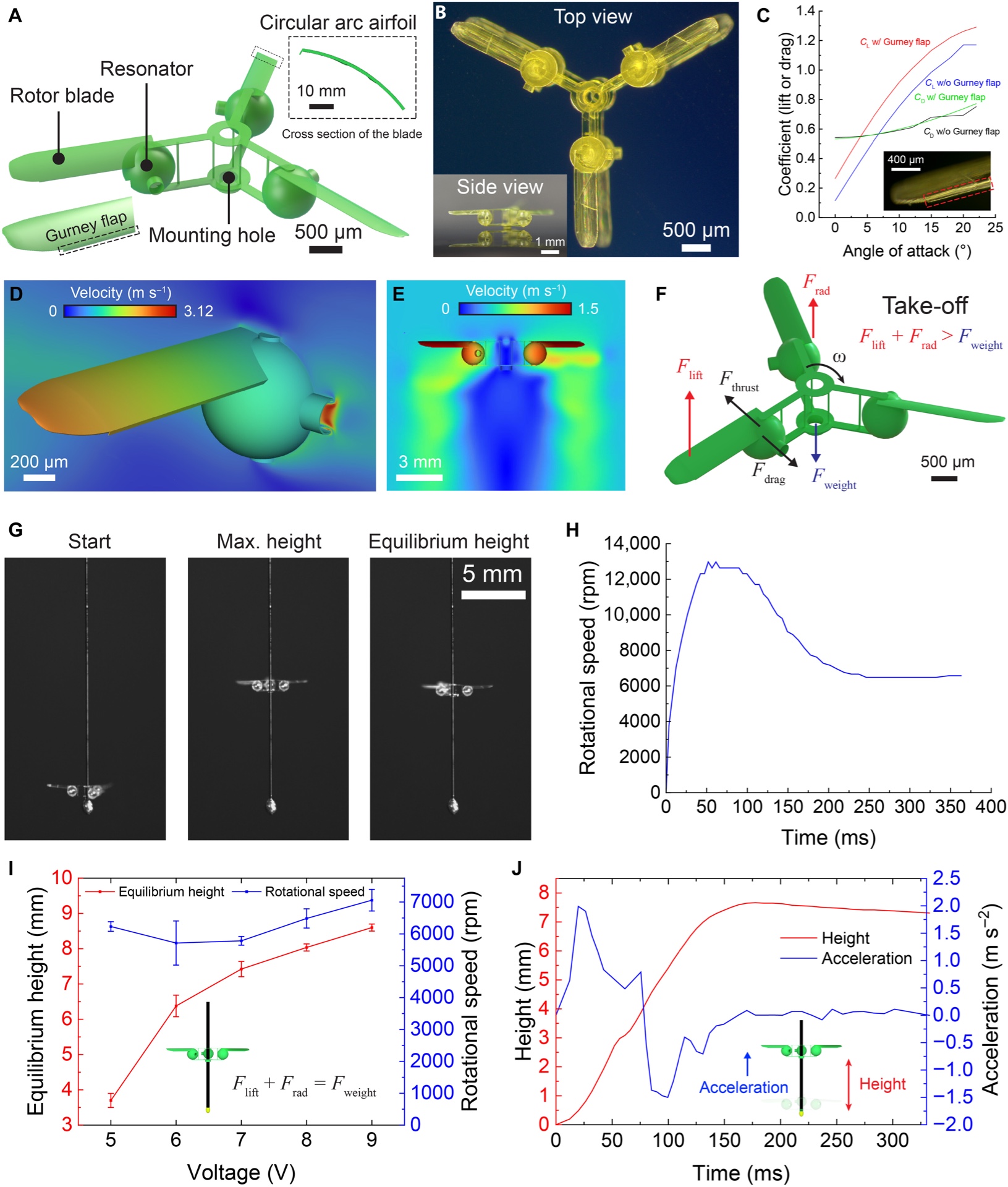
The second design leans closer to a helicopter layout. Three blades meet at a central point, with a backward-facing resonator mounted at the base of each one.
Once hit with the exact frequency, the resonators generate enough thrust to spin the rotor past 12,000 rpm, which is enough to keep the whole thing hovering in the air. Since ultrasonic sound is inaudible to human ears, these devices hover almost completely silently.
The idea echoes xMEMS' fan-on-a-chip solution, though the execution is fundamentally different. The "fan-on-a-chip" excites air using an ultrasonic piezoelectric membrane, while EPFL sound engine achieves the same effect through cavity geometry and resonance.
For now, this remains a lab demonstration. The microfliers top out at less than 5mm in altitude, and the boat weighs next to nothing.
The team next needs to scale up the design so the devices can carry a payload. If that works out, the technology could power micro-drone propulsion systems, including mosquito-sized units.