Gamers tried to figure out why electricity doesn't work if you plug a plug in between two outlets


A regular power strip works in such a basic way that it seems impossible to break its logic.
Under the plastic casing hide two long metal bars: one connects all the live contacts, the other all the neutral ones. That's exactly why someone might be tempted to plug a two-pronged plug not straight into one socket, but diagonally, hooking one prong into one outlet and the other into the neighboring one.
This trick sparked a small investigation on Reddit. The poster shared a photo of a plug wedged exactly between two outlets and admitted he had no idea why the device refused to turn on.
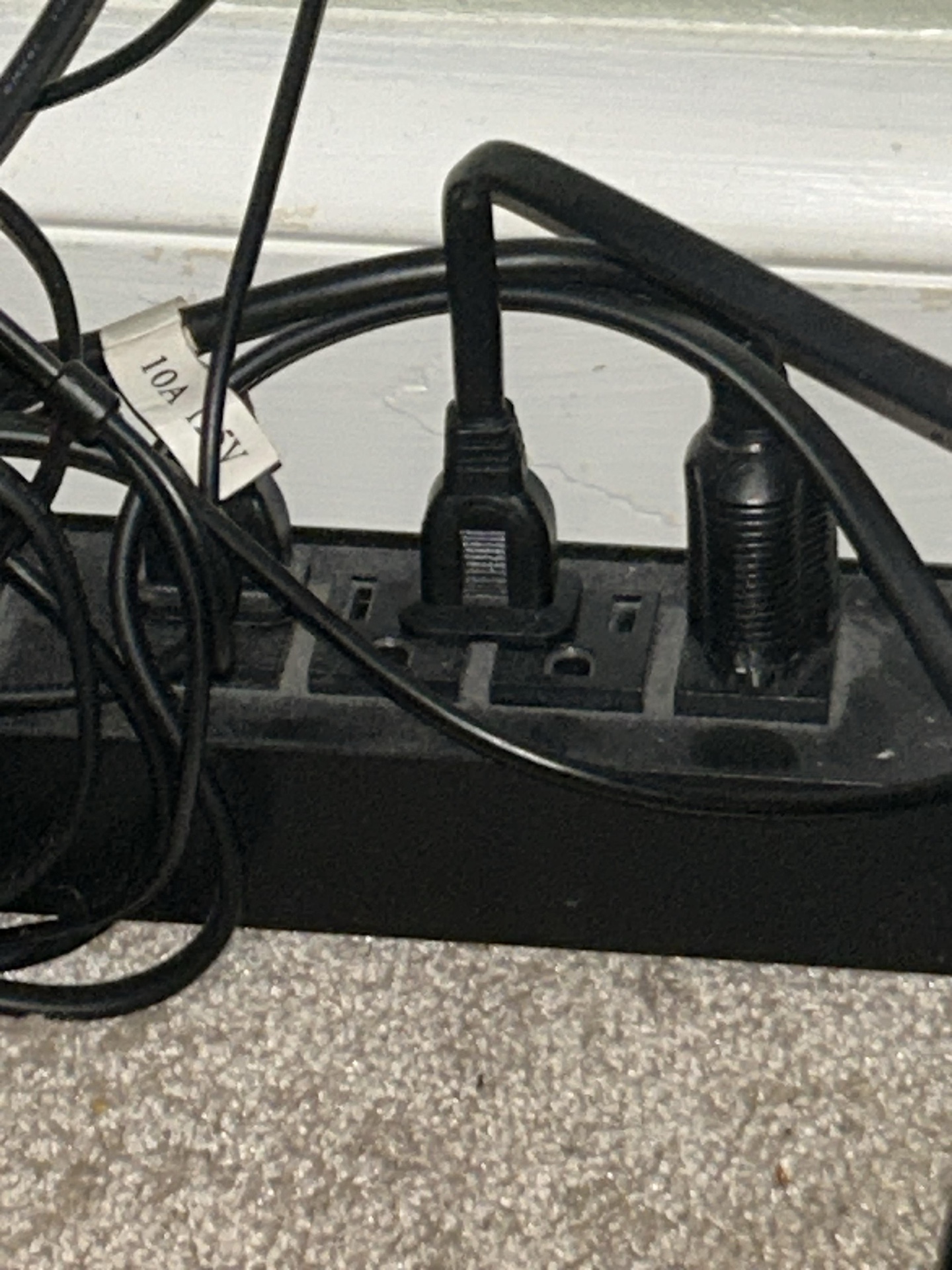
PC gamers took it upon themselves to crack the case.
In theory, everything should work fine, since one prong sits in live and the other in neutral, just pulled from different sockets on the same strip.
From a purely electrical standpoint, there's nothing wrong with it. Since all the live contacts share one bar and all the neutral ones share another, the potential difference between the prongs stays exactly the same no matter which slots you use. One commenter with an electrician's license put it plainly:
Licensed electrician here, this should work. If this doesn't work, you may have a separate problem.
The most down-to-earth explanation surfaced almost immediately. In the photo, the plug sits at a slight angle and looks clearly crooked, so the prongs simply aren't reaching the spring-loaded contacts inside the sockets.
Someone pointed out that if contact drops even in that setup, it's worth being cautious, since even a properly seated plug would barely stay connected. A separate thread veered into fantasies about power strips with individual GFCI protection on every single outlet, though such a device would end up as an expensive gadget nobody actually needs.
Oddly enough, this kind of setup exists on purpose in some places. Japan sells power strips with so-called "8.5 outlets," where a plug can deliberately sit in a half position between sockets so a bulky power adapter doesn't block the neighboring slot.
For non-polarized plugs with identical prongs, this works without any caveats.