CD Projekt RED reminded everyone that The Witcher wouldn't have been released without BioWare

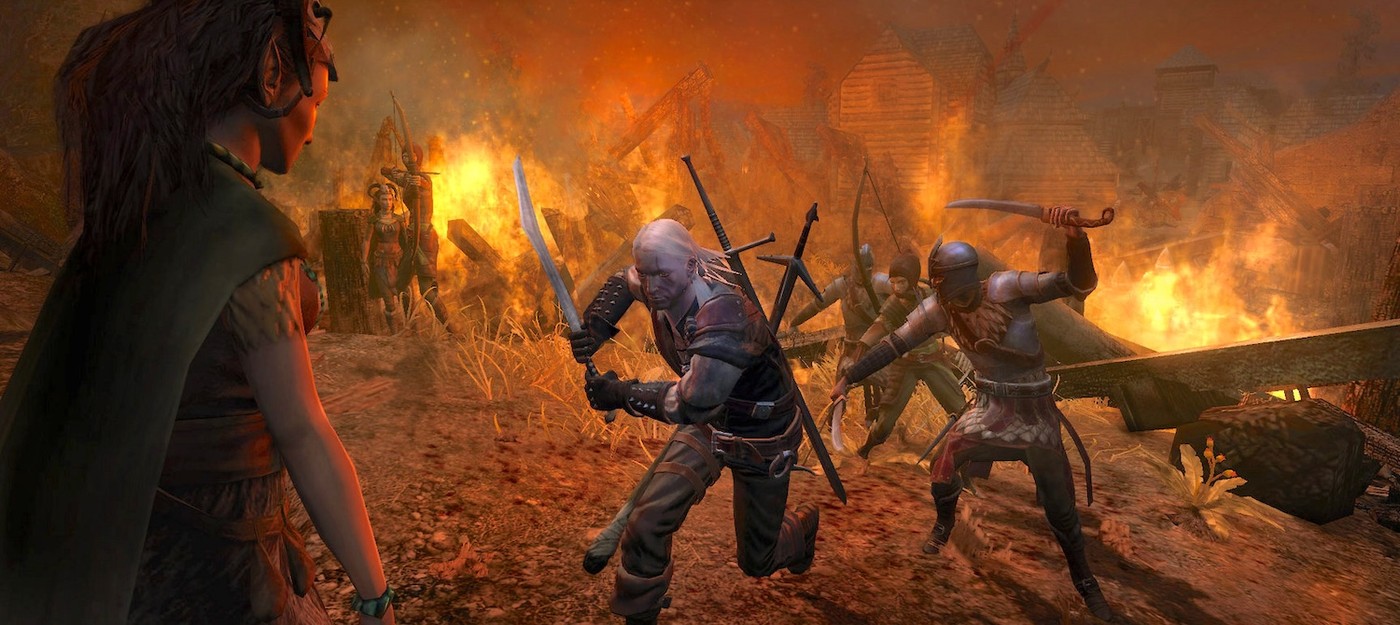
CD Projekt RED marked the 19th anniversary of the first game in the series and reminded fans of the direct support it received from the developers of Mass Effect. BioWare is gone, but the legacy of its RPGs lives on in the work of countless developers.
For the makers of The Witcher, the influence goes beyond abstract inspiration.
19 years ago, an ambitious dream to bring an iconic book series into the world of video games came to life with the release of The Witcher. It was the start of an unforgettable path, which wouldn't have been possible without our friends at BioWare.
From lending us their Aurora Engine and sharing their knowledge, to giving us a spot at their booth at E3, their support helped turn our vision into Geralt's first interactive adventure.
The developers have credited BioWare many times before. CD Projekt started out as a PC game distributor in Poland, where the market was completely dominated by piracy. Co-founder Marcin Iwiński recalled in a 2017 NoClip interview:
Software is free, hardware is what you pay for.
Success came when CD Projekt began making Polish localizations of games from abroad. The quality was high enough that pirates couldn't compete. One of the first big wins was a publishing deal for Baldur's Gate, the 1998 classic that put BioWare among the top studios.
The deal looked risky for CD Projekt, since it had to assume all the risk on an initial order of 3,000 units.
Before we signed the deal, we were shitting our pants with [co-founder] Michal [Kiciński] that these 3,000 units can bankrupt us. Because if we fail, you know, we're done. We're never seeing a lot of money in it, and maybe we'll not sell 3,000, or 1,000.
But CD Projekt went all out on Baldur's Gate. The release included professional Polish voice acting, a deluxe collector's box, and a deal with the local publisher of the Polish version of Dungeons & Dragons. The game became a hit, with 18,000 units ordered before launch and 50,000 sold in the first year.
With a successful publishing business in place, CD Projekt decided to make its own games. It secured the license for a series of fantasy stories legendary among Polish readers and got to work on The Witcher.
While the search for a publisher dragged on, the team founded a development-focused subsidiary, CD Projekt RED. Today the entire company goes by that name. That studio approached BioWare to license the Aurora Engine, which had been used to create Neverwinter Nights.
A year later, CD Projekt RED flew to Edmonton and showed BioWare leadership a version of The Witcher running on the engine. The half-broken demo "magically" worked and impressed.
You talk to the RPG gods, and they will rule on your demo if it's good or not. Imagine the amount of stress.
BioWare liked that early version of The Witcher so much that it invited the Poles to show the game at a shared E3 booth. A tiny team that almost nobody outside Poland had heard of ended up next to a glitzy demonstration of Jade Empire, BioWare presumed next big hit.
In the end, The Witcher cast a much longer shadow than Jade Empire. Both studios found mass-market success, BioWare with Mass Effect and CD Projekt RED with The Witcher 3. The histories of the two companies are closely intertwined, but things ended up the way they did.