Anthem producer calls CD Projekt RED's position dangerous, as every game from the studio must sell 15–20 million copies

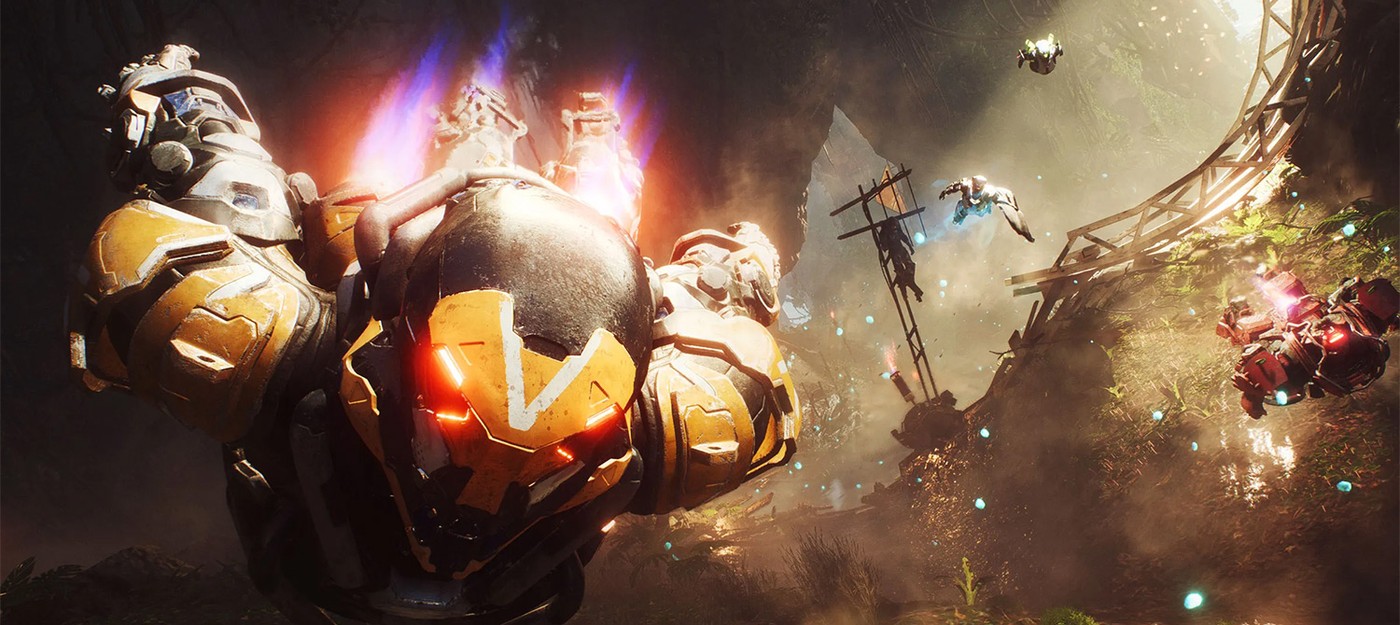
Former BioWare executive producer Mark Darrah believes CD Projekt RED is in "a really dangerous place". By his estimate, every new game from the makers of The Witcher and Cyberpunk 2077 now has to sell 15 to 20 million copies just to turn a profit.
The comments come from an interview in the Summer Eternal Anthology, a 500-page book that doubles as a manifesto, design document, and making-of for Red Rooster, a new RPG from a group of former Disco Elysium developers.
Darrah started out as a programmer at BioWare, working on Baldur's Gate, Neverwinter Nights, and Jade Empire. He later led the teams behind Dragon Age and Anthem, and has spoken publicly more than once about Anthem's troubled development and the problems inside the studio. He watched the industry scale up from the inside, and his diagnosis is blunt.
Here is how Darrah describes the current state of the market:
The triple-A industry has become over-specialised, specialised to the point of hyper-fragility.
According to Darrah, narrow specialisation is what makes teams balloon. Where one developer could once add a new mechanic or piece of content alone, almost any task now drags in a whole chain of adjacent specialists.
Darrah spells out the scale of the problem:
"No one person can add anything into a triple-A game. It requires at least five people."
The bigger the headcount, the higher a studio's monthly costs. Growing a team pushes up several budget lines at once:
payroll
office rent
software licenses
equipment
Saber Interactive chief creative officer Tim Willits made a similar point earlier in a conversation with Rock Paper Shotgun, putting concrete numbers on what a large team costs.
Willits laid out the math:
Each one of those developers is expensive. You have 200 people that you're paying $15,000 per person per month, which gets you way over two million.
Darrah ties team size to another risk – delays. The more complex the production, the easier it is to miss deadlines, and each extra month costs a big studio millions.
Darrah explains why large teams are especially vulnerable:
"The reality is that the bigger your team, the more vulnerable you typically are to disruption in terms of time. If you have a 500-person team and you go one month late, that's probably adding five, ten million to your budget right there. It doesn't take much. And it's very easy for a 500-person team to go one month late, just because of the sand in the gears of the machine."
Grand Theft Auto 6 is a textbook case. In his big Bloomberg feature on the game's development, journalist Jason Schreier described how Rockstar Games head of publishing Jennifer Kolbe twice had to bring bad news to Take-Two Interactive CEO Strauss Zelnick. First the release moved from 2025 to May 2026, then a few months later it slipped again, to November.
Kolbe recalls Zelnick's reaction:
I think he said, 'You're kidding. Please tell me you're kidding.'
GTA 6 has more than 4,700 people working on it, not 500. Apply the back-of-the-napkin math from Darrah and Willits, and the delay may have cost Rockstar Games more than $500 million.
Darrah also suggests that growing complexity pushes big studios to drag out the prototyping phase, with developers deliberately in no hurry to move into full production.
Darrah describes the pattern:
"Prototyping is the one place where the devs are still allowed to be creative, so they don't want to leave that phase because they don't want to get down to just executing lists."
That habit is a disaster for the budget. Willits has said outright that a fully staffed team on a prototype is wasted money.
Willits doesn't mince words:
You do not need 200 people before you have a vertical slice, you're burning money.
Even when a game ships, it has to earn back far more to break even. Publisher executives are increasingly spooked by mounting costs and pull the plug during pre-production, as happened with the Perfect Dark reboot and Rare's Everwild during the mass layoffs at Xbox.
Darrah flags another danger of long prototyping. Developers should be able to add things to a game, but without setting off a chain reaction of work for their colleagues.
Darrah explains the paradox:
You don't want them to be able to generate work for other people. And as people have gotten more specialised, the ability for people to add things to the game that doesn't generate work for other people is basically vanishingly small.
His key prediction concerns the industry as a whole. Darrah expects a "bifurcation", a split in which several games tear away from the rest and become an unreachable target for most publishers, forcing everyone else to scale back their ambitions.
Darrah describes the scenario:
GTA 6 is going to rip itself off and take five or six games with it, up into the upper echelon of 'we can spend any amount of money on our games and it's going to be all right.'
Along with GTA 6, the former BioWare veteran thinks Assassin's Creed, Call of Duty, and Battlefield could join that top tier. The problem, he says, is that too many games with $100 million budgets aren't making that money back.
Darrah names his old studio as a casualty of the split. In his view, BioWare landed at exactly the point where the model stops working.
Darrah puts it briefly:
BioWare sat right at the point where it doesn't quite work.
Shortly after the launch of Dragon Age: The Veilguard, EA CEO Andrew Wilson acknowledged that the RPG had significantly underperformed. It reached 1.5 million players against a planned 3 million, though that figure isn't sales – the game had a free trial and was available through EA's subscription service.
Still, the picture Darrah paints turns out to be optimistic. He believes the split will open the door for small, focused studios like Sandfall Interactive, the team behind Clair Obscur: Expedition 33:
If that is happening, then I think you're going to see a lot more studios the size of Sandfall Interactive's Expedition 33. These are teams that are pretty small, pretty focused – Clair Obscur was very small with unusually massive outsourcing – a roughly 40-person team.
Claims that around 30 people made Clair Obscur: Expedition 33 hide the real number of people involved in development. Darrah explains how Sandfall Interactive differs from the usual approach: a studio typically keeps representatives of every discipline it needs in-house, from designers and artists to programmers, testers, and audio staff. Outsourcing in that model only expands the team's capacity, for example by providing extra artists to work under the art director.
Darrah describes what Sandfall Interactive did differently:
It looks to me like what Sandfall did was to keep entire holes in their structure – they don't appear to have any internal animators at all, and they outsourced 100% of their animation.
The genre helped, since a turn-based RPG has different animation demands than an action game. Even so, the studio found a clear way to cut overhead.
Neon Giant, which is working on the immersive sim No Law, is taking a similar path. The 24-person team plans to use smart outsourcing and opt out of certain features early on to make a game that looks big enough to invite comparisons with Cyberpunk 2077.
Outsourcing has a downside, too. For contractors, the work often means low wages and tight constraints, and developers in Latin America have described how hard it is to convince publishers to let them lead their own projects despite their obvious expertise.
If the split does happen and publishers stop chasing the next GTA or Call of Duty, the industry could change dramatically. Darrah sees that outcome as far healthier.
Darrah explains his position:
If that all goes away, then you'll get a bunch of room to make it work with titles that need to sell 3-4 million units. That's much more attractive. I don't want to be working on something like GTA, where if this thing doesn't sell 50 million units, it's going to lose money. That's insane.
One detail in the prediction concerns the Polish studio. According to Darrah, CD Projekt RED has already entered the narrow circle of mega-game makers, and its titles now need to sell 15 to 20 million copies to make money.
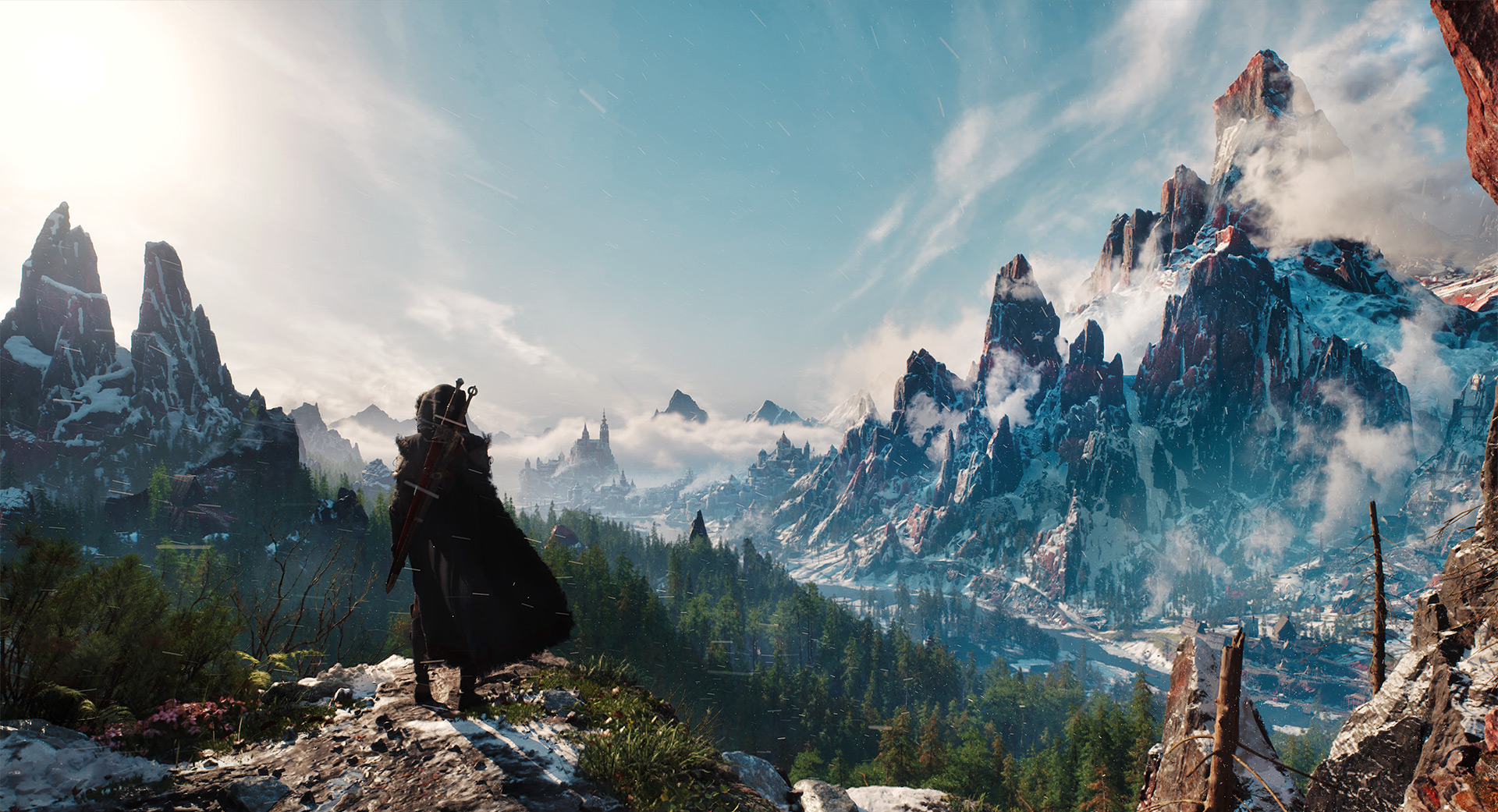
Darrah sums up CD Projekt RED position:
That's a really dangerous place to be.
Darrah made no specific predictions about The Witcher 4 or Cyberpunk 2. In May, though, it emerged that more than twice as many people are working on The Witcher 4 as on The Witcher 3, whose team numbered 240.
CD Projekt RED is targeting a 2028 release for The Witcher 4. The Witcher remake is on hold for now because its progress depends on the fourth game, and a Witcher 3 expansion called Songs of the Past, with a "dark story", is in the works.
- The Witcher 3 Songs of the Past scriptwriter wrote her thesis on Hearts of Stone – is the story in good hands?
- Nintendo is suing the US government over Trump's tariff policy
- Fallout co-creator Tim Cain says trying to cram everything into a game is the most common design mistake