Perfect black and the fear of burn-in: why OLED TVs divide gamers into camps

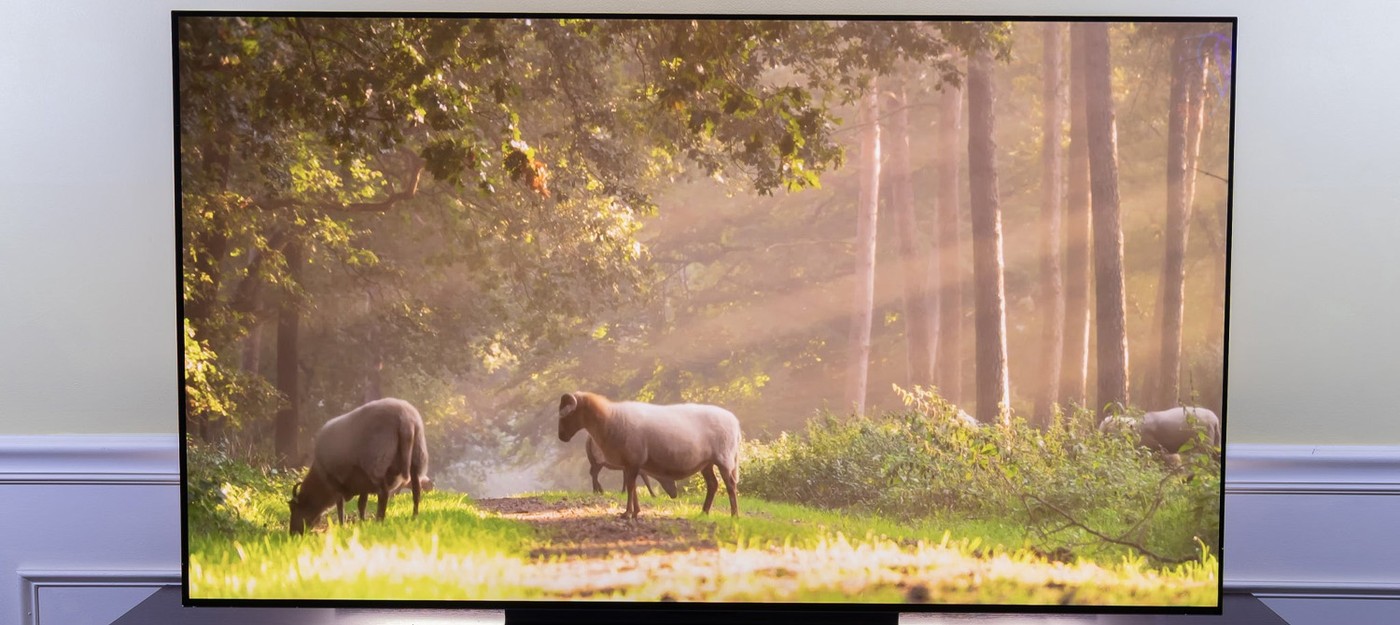
Buying a new monitor comes with a ritual, and almost everyone follows it. A person drops a few hundred dollars on an OLED panel, and the first thing they launch isn't a game but a clip with a black background and colorful lights. Then they stare at it for ten minutes like it's the northern lights.
That ritual is exactly what a short meme video making the rounds on Reddit pokes fun at. It compares IPS and OLED in a dark room: the IPS black glows gray, while the OLED literally dissolves into the darkness.
Many people recognized the clip as an LG demo that has played on store displays for years. The difference comes down to how the technologies work. In an OLED, every pixel emits its own light and can switch off completely, while an IPS backlight stays on constantly, hence the gray black and the signature glow in the corners.
In fairness, a camera in a dark room boosts exposure and noticeably exaggerates the contrast, so under normal conditions IPS looks nowhere near as bad.
OLED owners, naturally, aren't swayed. One described the first minutes with a new monitor like this:
And then 5 minutes after I got it hooked up, I felt as though I had been playing with foggy glasses on my whole life!
The same person admitted they would take a 60Hz 1440p OLED over a curved 144Hz 4K IPS.
The opposing camp's main argument hasn't changed in years: burn-in. Modern panels fight it in different ways. They shift the image by a few pixels, automatically run pixel refresh cycles after a certain amount of use, and many owners also set the screen to turn off after a couple of minutes of idling. One user has logged 5,000 hours without a trace of degradation.
Another had Path of Exile 2 burn a circle into the bottom-left corner, where a white-blue interface element sits, even though every recommendation was followed. Skeptics add that burn-in tests are often run at reduced brightness, and reselling a used OLED is nearly impossible because buyers shy away from such monitors. One put it bluntly:
OLEDs suffer from burn-in regardless, it's just a matter of time and usage conditions.
Still, the price barrier has dropped noticeably. The days when a basic OLED monitor cost around a thousand dollars are gone. A 1440p, 240Hz model can now be found on sale for under $400, and one buyer got a refurbished 280Hz unit for about $250.
Upgrade advocates compare a monitor to a bed: skimping on something you stare at for many hours a day makes little sense. In their view, such a purchase improves the picture more than most GPU upgrades.
VA and mini-LED sit between the two extremes. The unofficial hierarchy goes like this: high-end VA beats high-end IPS, followed by budget IPS, budget VA, and TN at the very bottom. Cheap VA panels are known for smearing, which turns a starry sky in night scenes into a mess.
Modern VA ultrawides with properly tuned overdrive, though, show almost no such problems. Mini-LED with hundreds of local dimming zones closes in on OLED in black depth and wins on HDR brightness, although cheaper models show visible halos around bright objects.