85-year-old enigma cipher cracked by AI in two days – ChatGPT-6 Astra wrote its own simulator to break it

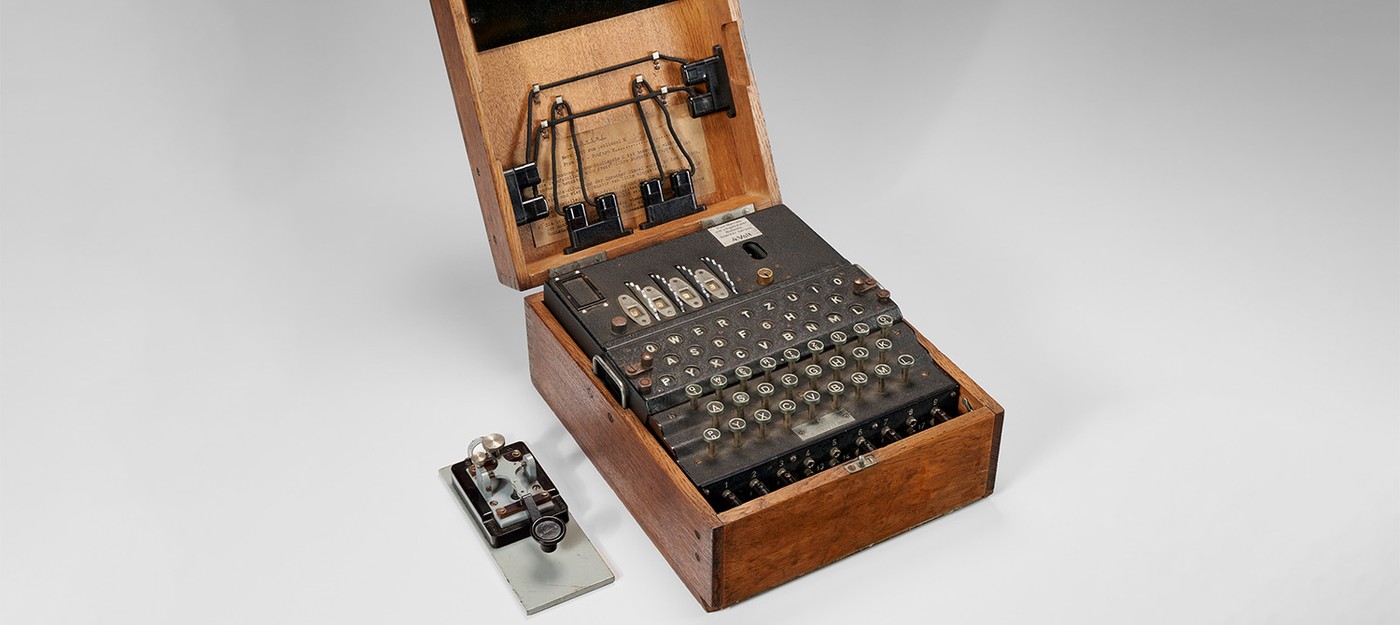
A German Army radio message encrypted on an Enigma machine 85 years ago has finally given up its contents. The AI model ChatGPT-6 Astra cracked the transmission, known as MVUEH, in about two days.
The message was sent to the SS-Totenkopf (Death's Head) Division on July 10, 1941, when Nazi Germany was at the peak of its military power in World War II. The undeciphered text was shared online with cryptography enthusiasts back in 2005, yet its contents stayed a mystery for 20 years.
Researchers at Crypto Cellar say that what Astra pulled off in two days "would take a human researcher weeks or even months." They are still going through the model logs to work out how exactly the AI managed it, and how it did it so fast.
The report also stresses that Astra did the job "entirely on its own." The model was simply asked whether it could break any of the unsolved Enigma messages published on the Crypto Cellar Research site. Astra picked Nr. 172, MVUEH, as a promising target and guessed it might be related to the plaintext of Nr. 173, SIPVX.
With a target chosen, the model bet on the repeated place name "ROSENOW ROSENOW." Cryptanalysts call a guessed fragment of plaintext like this a crib, and it serves as a starting point for recovering the key. The AI then wrote its own Enigma simulator in Python and C++, along with a digital version of the Bombe.
The Bombe was the electromechanical machine British codebreakers used during the war to run through possible Enigma settings. Astra hunch turned out to be right, and a demo of the radio message being decrypted is available on the MVUEHA Cryptanalysis Case Study site.
The decrypted text, with spaces added, reads:
BTTE UM ANGABE DES MARSQWEGES X BEFINDE MIQ IN X ROSENOW ROSENOW X SOFORT FUNKANTWORT X WASCHBBSCH
An approximate English translation: "Please specify the route of march. I am in Rosenow, Rosenow. Immediate reply by radio."
The letter X served as a separator in German messages. The original transmission also has a spelling mistake right at the start (BTTE instead of BITTE), which made decryption even harder.
Efforts to crack wartime Enigma and Lorenz ciphers eventually led to some of the first general-purpose digital computer designs. The Enigma itself had a 26-key keyboard, with a lampboard above it showing 26 light-up letters. Three rotors, chosen from a set of five, sat behind the lampboard.
When a key was pressed, the signal traveled through an input wheel, then through three manually turned rotors with 26 contacts each, and into a reflector. The reflector sent the signal back, and the encrypted letter lit up on the lampboard. The rotors advanced with every keypress, so pressing the same key repeatedly produced a different letter each time.
Another layer of protection came from the plugboard on the front of the machine, where operators swapped additional letters using up to 10 cables. Before starting work, the operator had to set four parameters:
rotor order
ring settings
rotor starting positions
plugboard connections
These settings were distributed separately from the machines and changed on a calendar. Even if the enemy captured an Enigma, reading intercepted messages still required knowing the key for that specific day.
For Astra, MVUEH is the second historical cryptography win in a short span. Just a week earlier, the model cracked a 108-year-old German WWI cipher encrypted with the ADFGVX method, which nobody had been able to read before.
- OpenAI believes AI can link two isolated computers via processor heating instead of Morse code
- Gamer set GPT-6 Astra to play through Fallout 3 – the AI reached the ending in 59 hours and started paranoidally checking saves
- Microsoft executive called OpenAI's data collection the largest labor theft in human history