Control Resonant in 4K without ray tracing and upscaling can only be handled by the RTX 5090 – but with DLSS 4.5 you can play with path tracing even on the RTX 5080

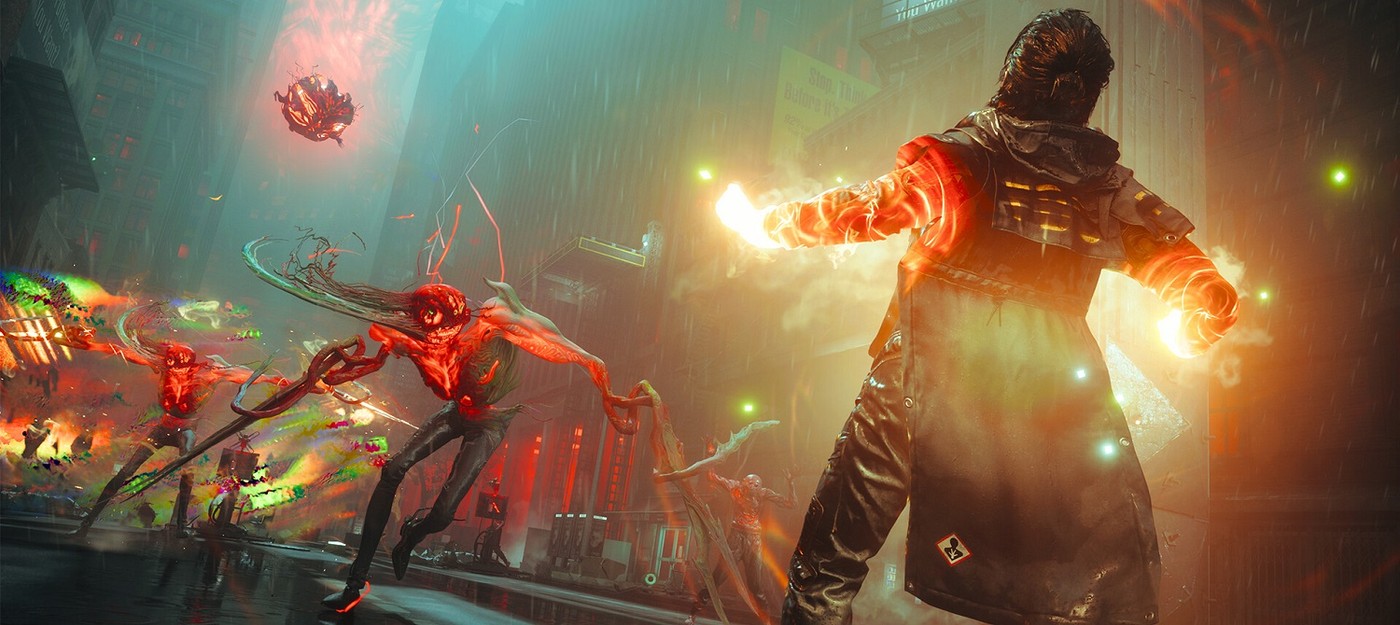
DSOGaming continues testing new video game releases. This time, they turned their attention to the action-adventure game Control Resonant. For the benchmarks, they used an AMD Ryzen 9 7950X3D CPU, 32GB of DDR5 RAM at 6000Mhz, AMD Radeon RX 6900XT, RX 7900XTX, RX 9070XT graphics cards, along with NVIDIA RTX 2080Ti, RTX 3080, RTX 4090, RTX 5080, and RTX 5090. Testing was done on Windows 10 64-bit with the GeForce 610.88 and Radeon Adrenalin Edition 26.7.1 drivers.
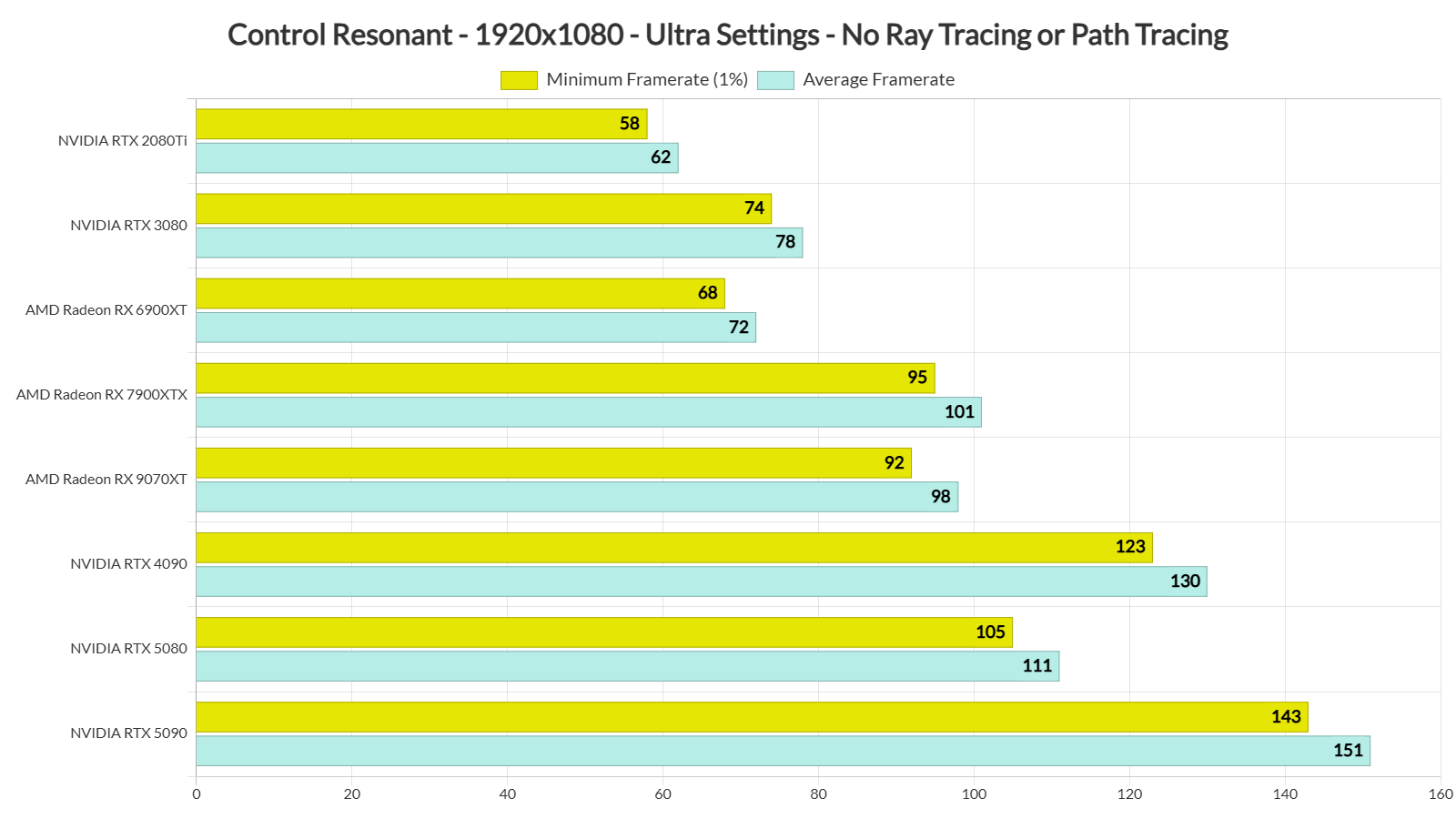
Control Resonant is a game whose performance depends entirely on the GPU. Even at 1080p without ray tracing or path tracing, the top-tier GPUs were pushed to their limits, so anyone running a modern CPU won't hit any CPU-side bottlenecks.
At 1080p with Ultra settings and no ray tracing, most of the tested graphics cards managed to stay above 60 frames per second. Even the aging NVIDIA RTX 2080Ti delivered a comfortable experience, especially paired with a G-Sync monitor.
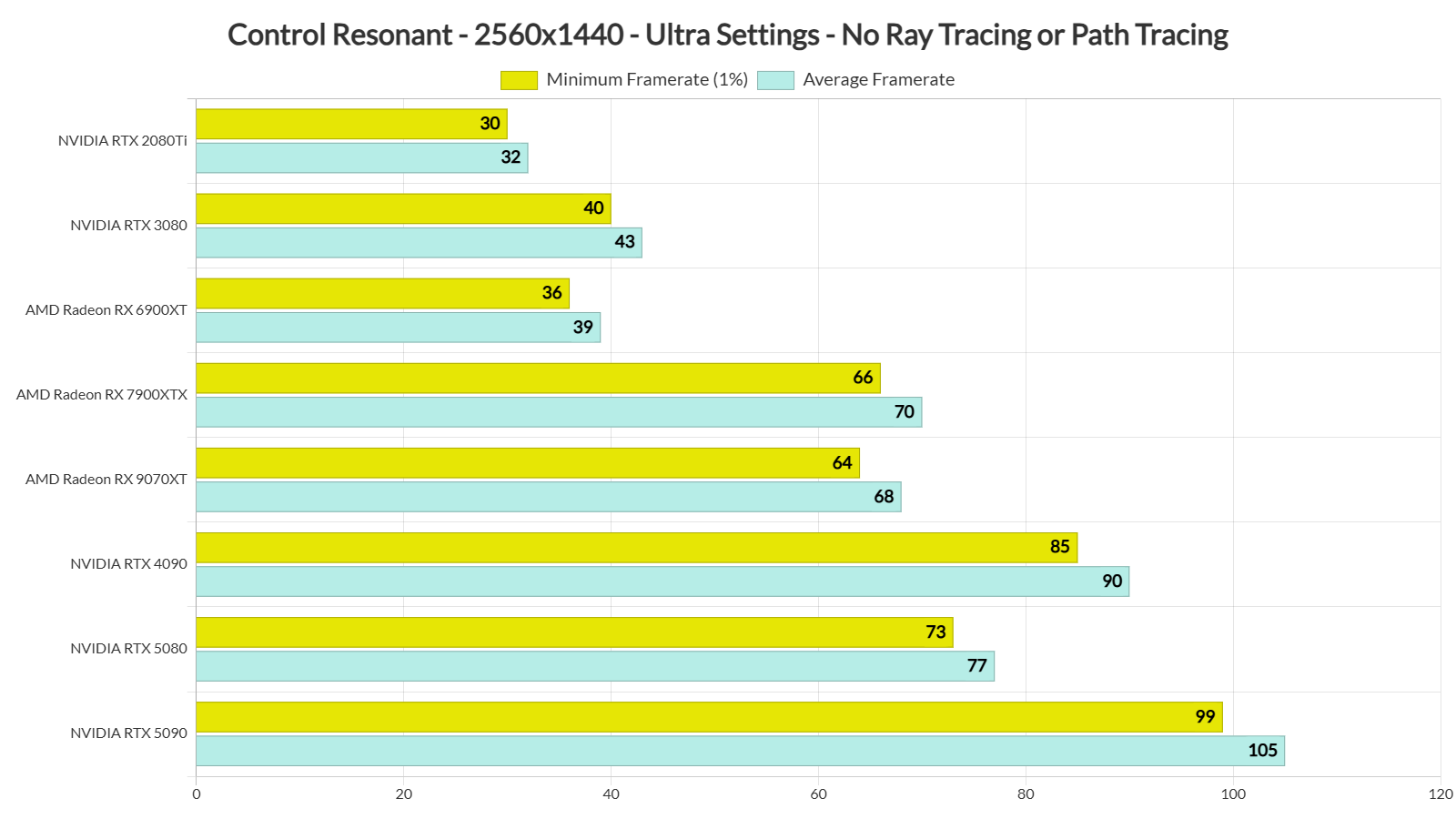
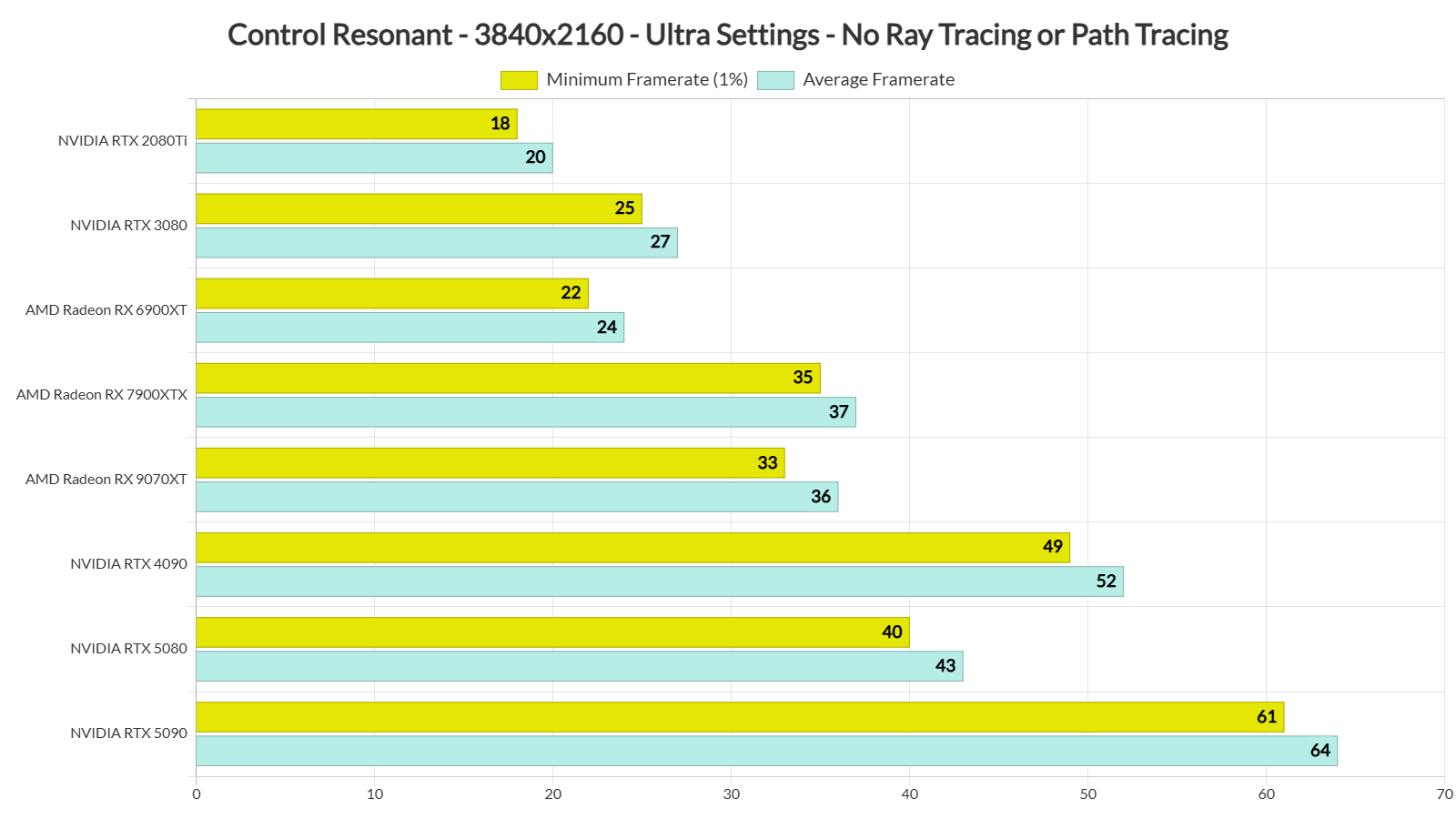
At 1440p with Ultra settings and no ray tracing or path tracing, the top five graphics cards held above 60 frames per second. In native 4K with Ultra settings, only the NVIDIA RTX 5090 managed to deliver a smooth experience.
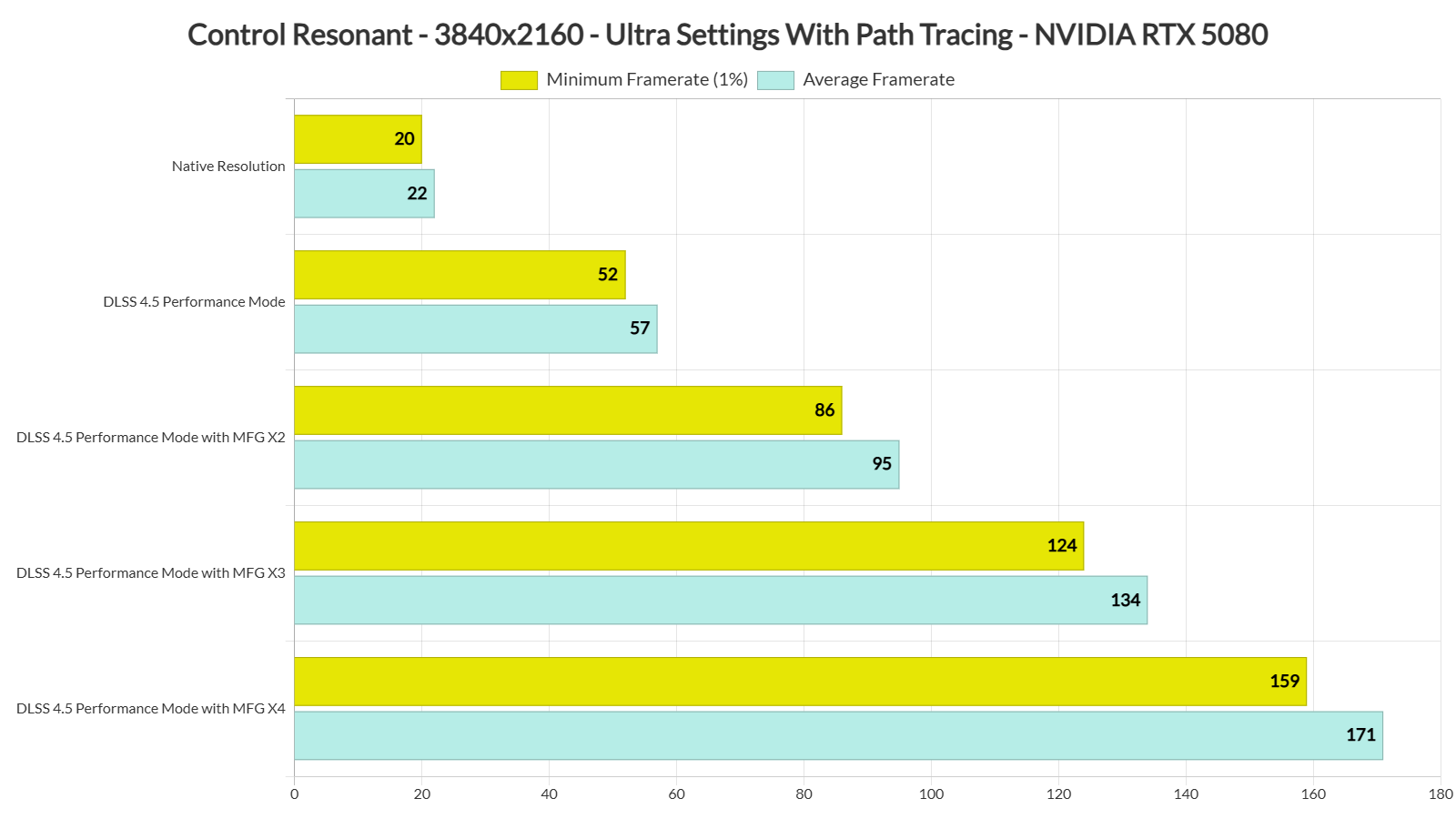
The rasterized version of Control Resonant runs great at 1080p, but requirements jump sharply once you move to 4K. That's where DLSS 4.5 upscaling steps in, giving a solid boost to frame rates. With DLSS 4.5 Performance mode active at 4K with Ultra settings, the NVIDIA RTX 5080 pushed close to 100 frames per second, so there's little reason to skip upscaling.
Beyond ray tracing, Control Resonant also offers full path tracing – the most demanding setting, but also the one that delivers the biggest jump in visual quality. Comparing frames with and without path tracing shows a clear difference in reflections, shadows, and lighting. Thanks to path tracing, environments look far more realistic, and objects blend naturally into the scene.
That level of visual fidelity comes at a steep performance cost. In native 4K with Ultra settings, the NVIDIA RTX 5080 only managed 20-22 frames per second, meaning path tracing essentially cuts frame rates in half. For comparison, 007 First Light on the same card ran even lower in native 4K, at 14-15 frames per second.
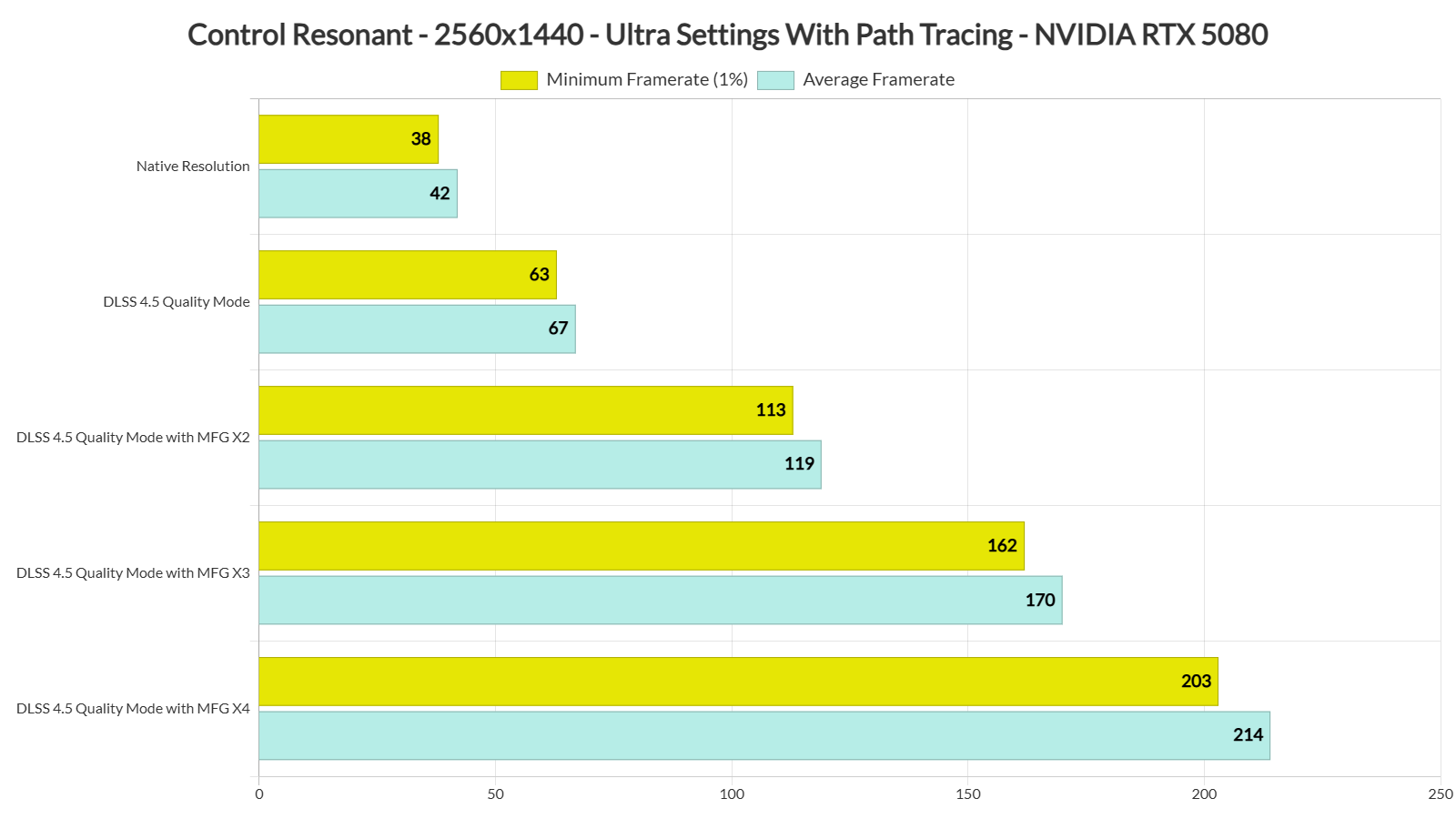
The results from DLSS 4.5 upscaling, though, turned out to be genuinely impressive. In DLSS 4.5 Performance mode, the same NVIDIA RTX 5080 delivered between 52 and 57 frames per second – a performance boost never seen before in any other game. The results were double- and triple-checked, and they held up.
Beyond the frame rate gains, DLSS 4.5 SR combined with Ray Reconstruction (RR) delivers a crisp, detailed image. This is one of the best examples of DLSS 4.5 seen so far.
Graphics-wise, Control Resonant's environments look amazing. They are full of detail, and they are up to what you'd expect from a new PC path-traced title. However, the main protagonist, Dylan, looks awful even on Ultra settings with path tracing enabled. His face and hair resemble PS4-era character models, which is especially strange given how much better the characters looked in the first Control game.
No major stuttering issues showed up during testing either – performance felt smooth and consistent throughout the prologue and most of the first open-world area.
- Fallout 4 fan showed how to turn a supermarket shopping cart into an equivalent of power armor using Bethesda's famous game physics
- Some Fallout 4 fans were surprised to learn that the game is literally packed with references to Blade Runner
- YouTuber created an exact replica of Whiterun from Skyrim using 80,000 LEGO pieces