Perfect Circles in Manor Lords – Player Built a Village from Concentric Roads and Explained the Method

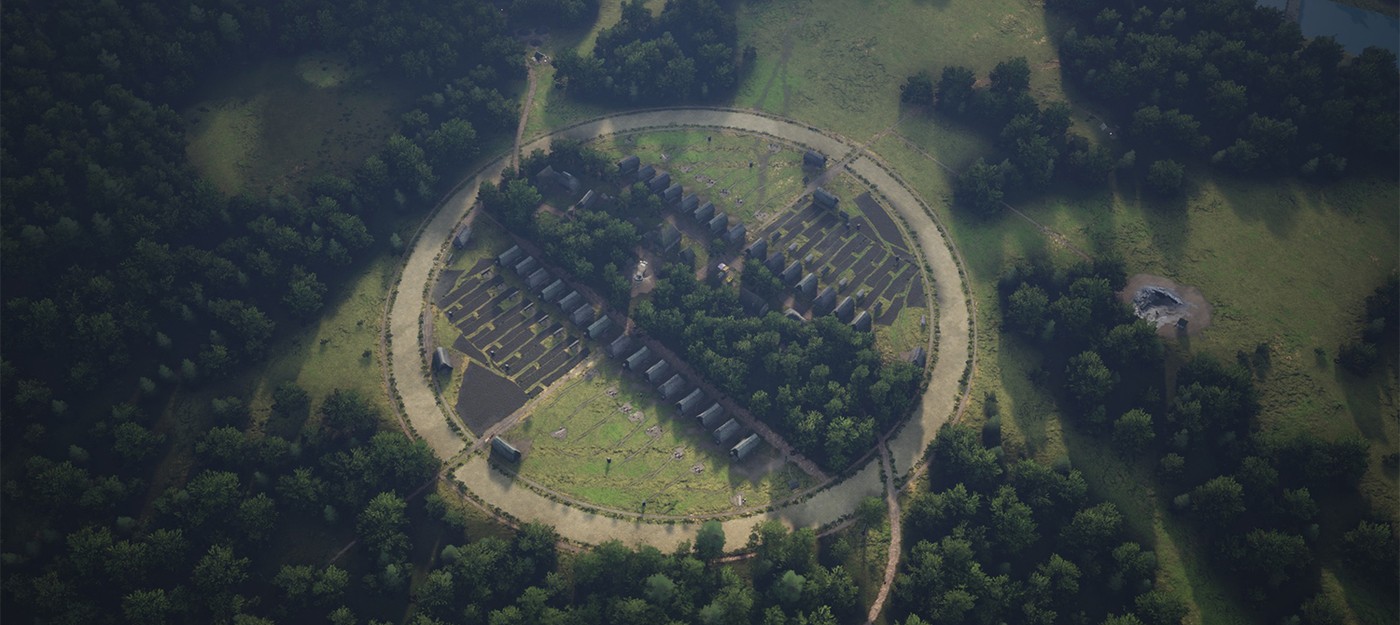
The road grid in Manor Lords nudges players toward right angles, but one medieval city planner decided to fight that logic. In his latest playthrough, he made both the plots and the villages themselves circular, turning each settlement into something resembling a manicured garden. There's no practical value to it, and the player admits as much himself.
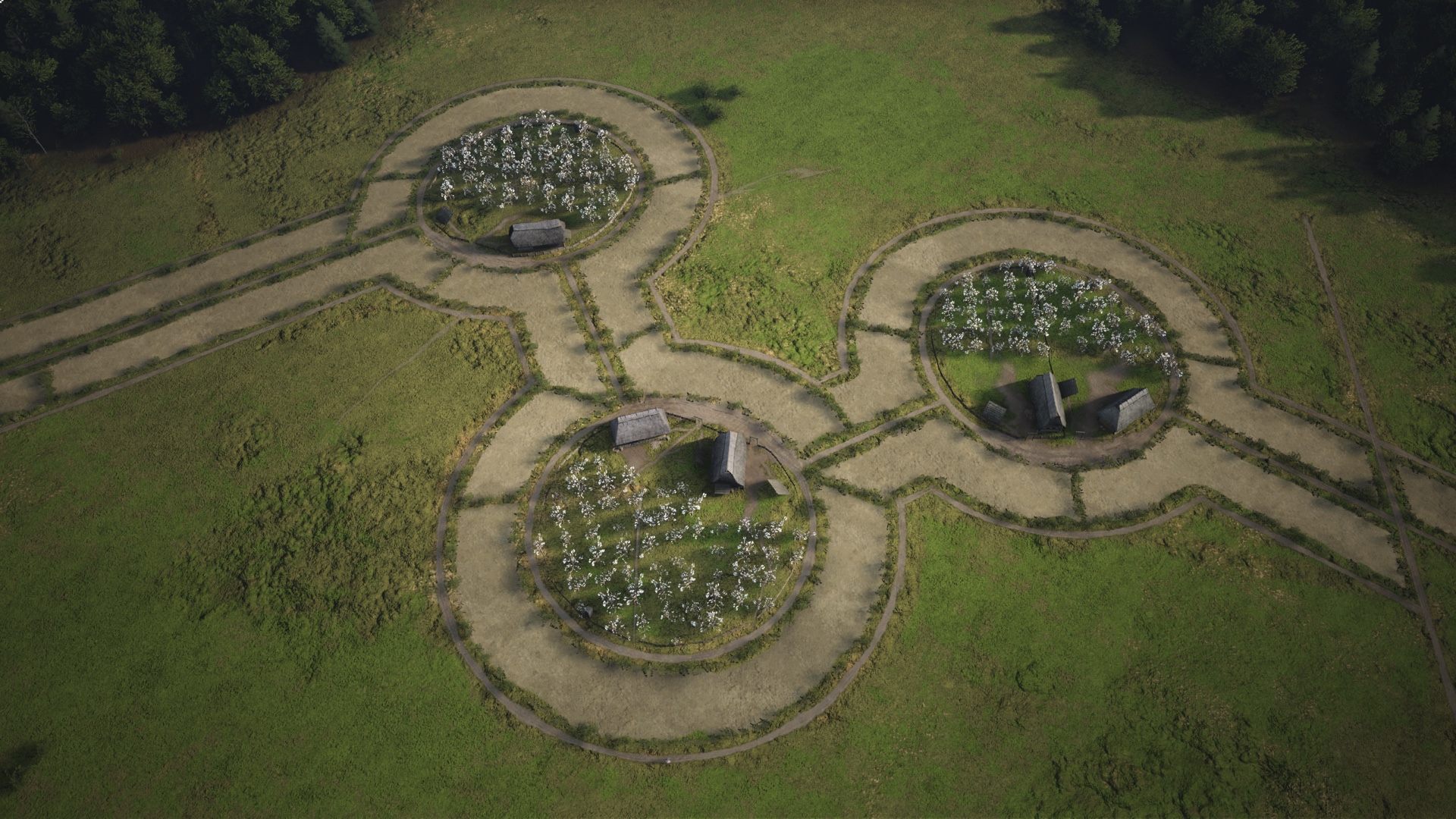
The result is a series of concentric road rings with gaps between them. Those gaps are filled with fallow fields, which always grow hedges along their edges. The player used these for the color contrast rather than for any actual harvest.
Fruit orchards sit inside the rings. The upper left ring has just one plot, while the rest have two each, and every circle grows a different crop. The orchards weren't a random pick either – they handle irregular shapes better than regular farm plots, even though the whole build was really just about looks.
The community's biggest question was how to draw a smooth circle in the first place. The simple approach goes like this: start laying a road, hold the point, and tap the camera rotation key repeatedly without moving the mouse until the line loops back to where it started.
The player who built the circular village went with a different, more tedious but more precise method.
When you draw a road through three or more points, it wants to curve, and you can use that. Corpse pits and other buildings are useful for measuring distances and making right angles. To get a circle, you need to draw two roads at a right angle in a symmetrical X shape, and the four endpoints give you four reference points on the circle.
He later posted a full breakdown in a separate video. By his own admission, the method is finicky and involves a lot of steps, so he doesn't recommend anyone actually replicate it.
Other players chimed in with alternative approaches:
trace a road around objects that are already round in-game, like a hitching post or a windmill
cut a circle out of paper, tape it to the center of the monitor, and trace a road around it
place a windmill, trace a road around it, add stables around that, then another road, and repeat
manually mark four reference points for each individual plot
Fitting a circle between buildings that are already standing is its own headache, since finding the right center of rotation is nearly impossible. One player said he tried building a ring-shaped city and ended up with something closer to a Roman fort.
The functional cost of all this is obvious. Villagers in the game walk everywhere, and spreading buildings out just makes every trip longer. In scenarios involving raiders or invading armies, tight, compact building also matters because it leaves room to maneuver during a defense.
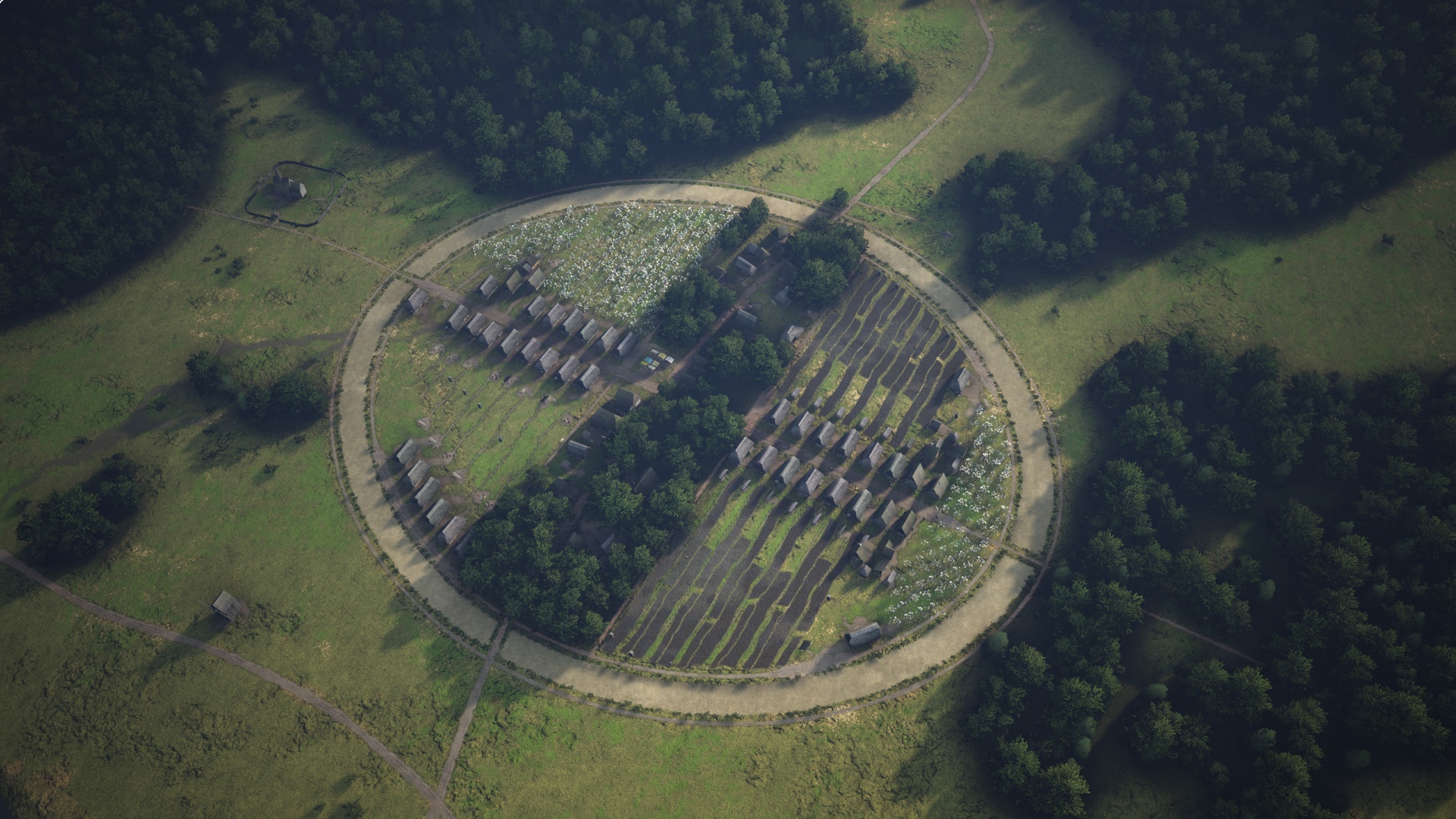
Straight roads are more efficient for the same reason, and rectangular fields beat circular ones because oxen have to turn around less often while plowing. Circular layouts are really for players who've already gone through that optimization phase and want to mess around with aesthetics instead.
The player's next target is hexagons. The main challenge is nailing a precise 120-degree angle, and he's already worked out a solution geometrically using a ruler and compass. Recreating that setup with Manor Lords tools is possible, but it takes noticeably more steps than the circle did.
Other city builders pointed out that tabletop wargames ditched square grids for hexagonal ones decades ago for a reason. The usual way to construct a hexagon relies on step-by-step rotation, a mechanic that city-building sims rarely support, which is also why 3D models are built from triangles.