PC gamer showed a flooded basement with a gaming station and got a list of protective measures

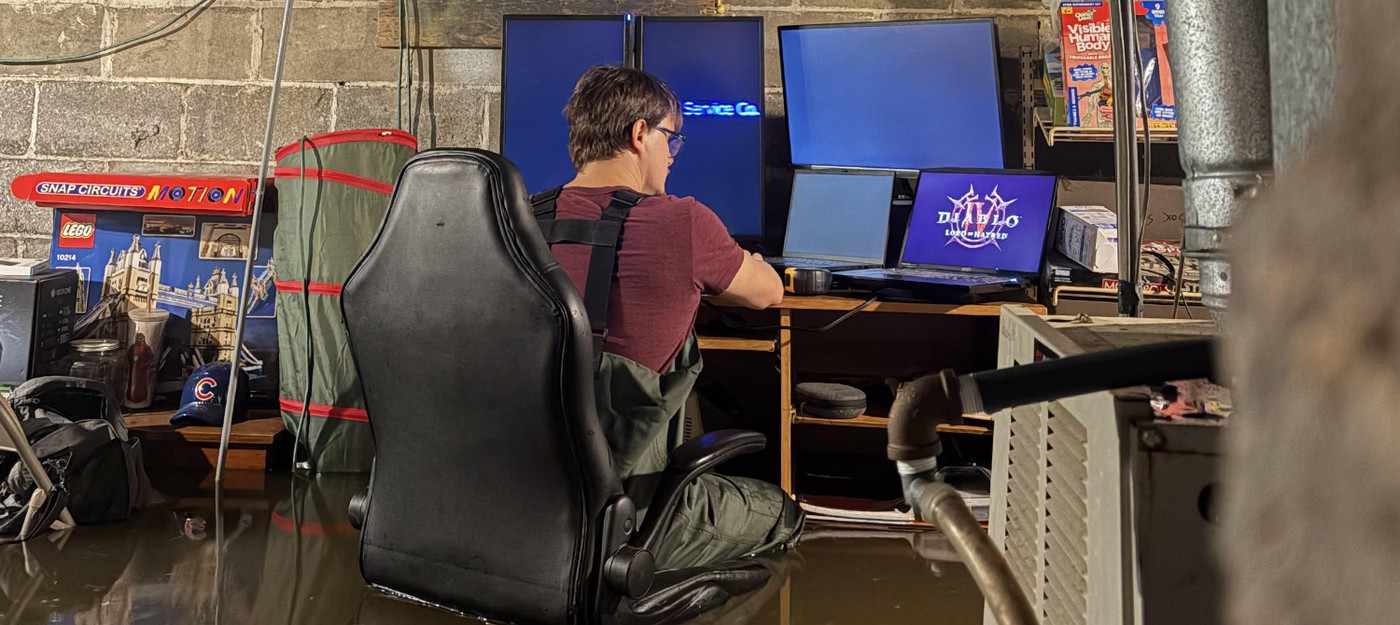
This photo shows one of the scariest nightmares for anyone who decided to turn their basement into a gaming room.
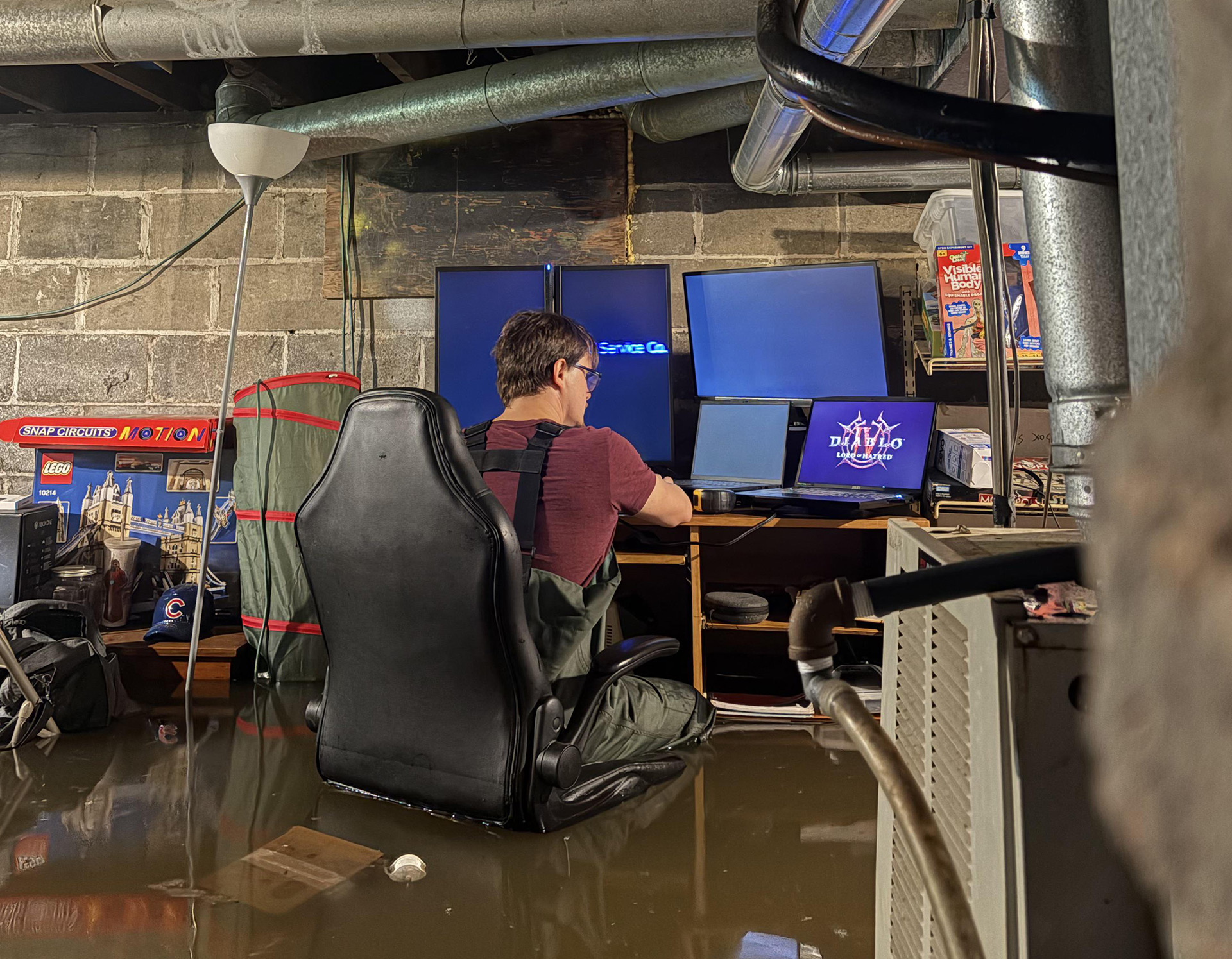
The image shows a man in fishing waders sitting in a gaming chair in the middle of a flooded basement, playing Diablo 4 while water rises to about knee height.
After roughly 150mm of rainfall in under 12 hours sump pump just failed.
According to the homeowner, the city drainage system couldn't handle the load and water backed up into the basement. The photo shows the water level rose above the base of the chair, while a monitor, laptops, and ceiling lights kept running nearby.
Basements remain the go-to spot for a home gaming room. They stay cooler, block out noise, and make it easy to fit in a bulky desk and shelving. Those same qualities make the space the first to flood.
The risk isn't about how rare a downpour is – it comes down to how the house is built. Concrete block foundations without external waterproofing, common in American homes built before the 1980s, let water through on their own. The sump pump ends up being the only barrier, meaning a single point of failure.
Flooding danger comes from three separate factors, and electricity isn't even the main one. Floodwater in a basement mixes with sewage from backed-up septic systems, fuel, solvents, and lawn chemicals washed out of containers. Even without direct contact, the fumes and vapors in an enclosed space pose a health risk.
The second factor is electric current. Basement outlets often sit low to the floor, and once water rises above them, the circuit completes through the water itself. A shock might not be enough to kill instantly, but it can trigger a muscle spasm strong enough to leave someone unable to get up.
The third factor rarely comes up in these discussions. Water-saturated soil weighs noticeably more than dry soil and pushes against basement walls from the outside. Unreinforced masonry in older homes isn't built to handle that kind of pressure, and wall collapse remains one of the more common causes of death during floods.
Here's a set of measures that can lower the risk for a basement gaming room:
a second sump pump, already hooked up to a hose and sitting on a shelf next to the sump pit
a battery backup or generator, since heavy rain and power outages tend to hit at the same time
a backflow valve on the sewer line to stop water from the city system flowing back into the house
a leak sensor with an audible alarm that triggers before water reaches any equipment
outlets mounted at least half a meter above the floor
a PC tower placed on the desk instead of the floor
There's also the question of what to actually store down there. Humidity after a flood can linger for weeks and ruin electronics that the water itself never touched. Collectible sets, documents, and gear stored in cardboard boxes on lower shelves tend to go first.
For homeowners in areas prone to flash flooding, it makes more sense to move work and gaming setups to the first or second floor, leaving only what's expendable in the basement. If that's not an option, the space should be set up assuming it will flood, not assuming it won't.