Enthusiast turned a mini-PC into a fully passively cooled mini-server and retained 95 percent of performance

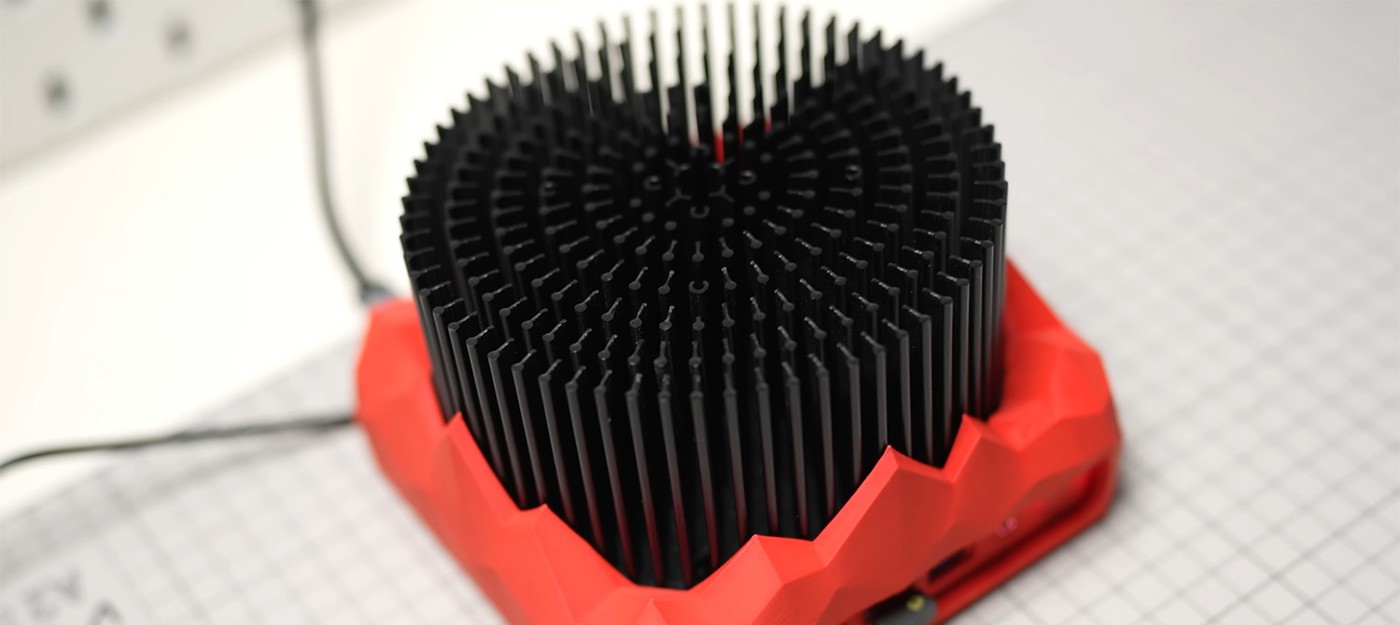
A Korean tech enthusiast running the YouTube channel Reeal Lab turned a Geekom A8 Max mini PC into a completely silent server, swapping out the stock active cooling for a passive heatsink pulled from a light fixture.
After ten minutes of load in Cinebench 23, the modified mini PC scored 14,658 points against 15,329 for the stock version, with room temperature sitting at 29 degrees Celsius.
The hardware itself is fairly standard. The mini PC packs an eight-core Ryzen 9 8945HS and 32GB of DDR5 in a single stick, with a turbine fan inside that needed to go if the machine was going to run around the clock in a bedroom without making noise.
Measuring actual load showed around 20W of draw, which fit comfortably within the roughly 65W thermal capacity of the chosen heatsink. An initial attempt using a 3mm copper plate got scrapped, since the combined weight with the heatsink came to 874 grams, and the processor has no heat spreader lid, meaning it risked cracking under that weight.
The final setup relies on the stock heat pipe. The heatsink mounts directly onto its flat contact surface using thermal padding, while a 3D-printed case with built-in support for the heatsink handles the actual weight.
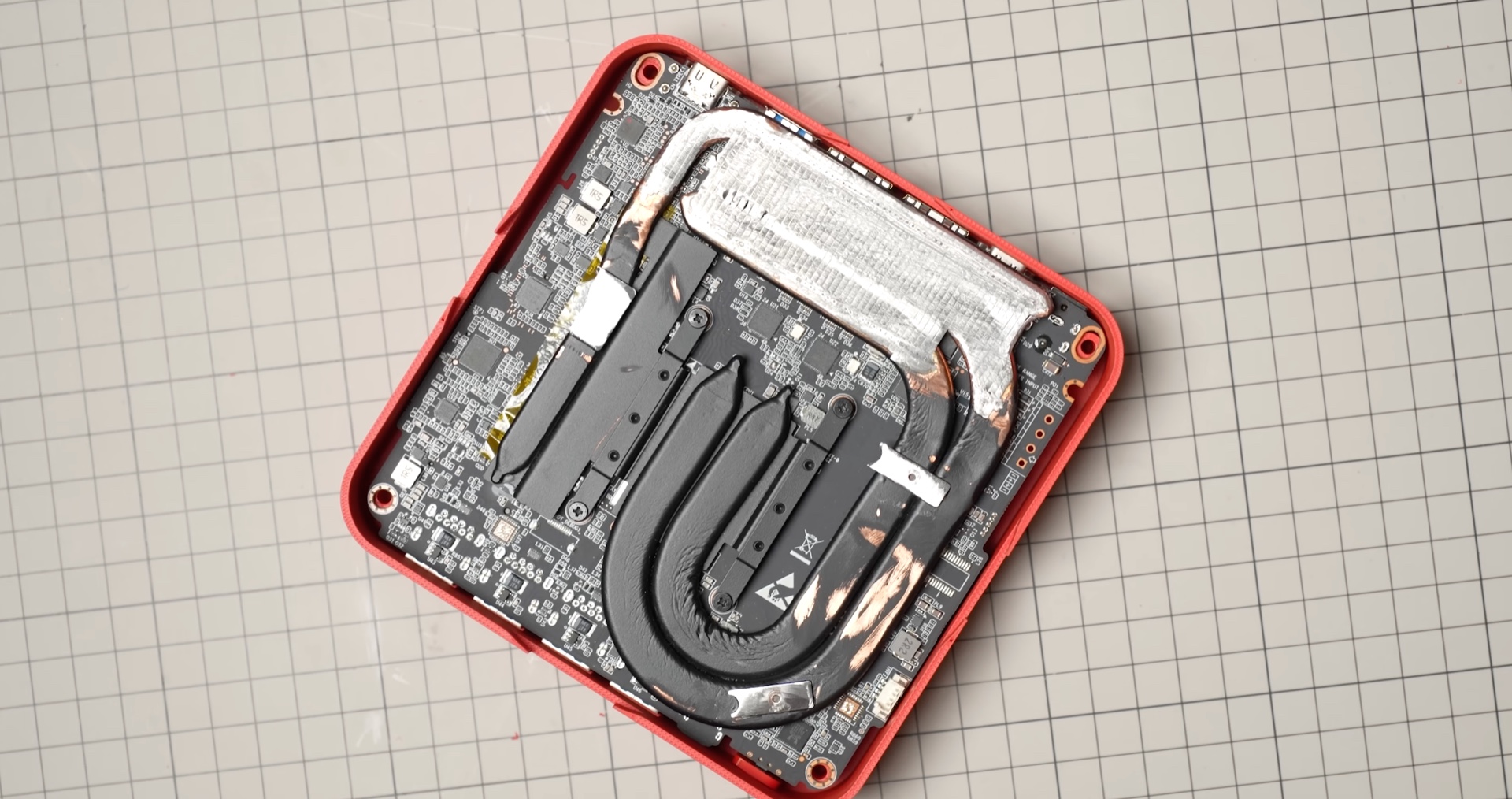
Most of the work involved stripping down the donor heatsink:
the aluminum fins were removed with pliers by rocking them back and forth, with a rotary tool cleaning up what remained
the steel fan mounting posts were cut off at the base
the heat pipe surface was sanded down to leave the smallest possible gap with the heatsink
a steel plate was kept in place for height alignment and covered with thermal padding
Thermal imaging revealed uneven heating due to skipping the copper distribution plate, with the heatsink hitting a peak temperature of 67 degrees. Separately, it turned out that running the mini PC on battery power caused it to shut down during consumption spikes above 100W, and the BIOS offers no option to cap power draw.