Amazing video of a flight over the Sahara led to an analysis of dune geometry

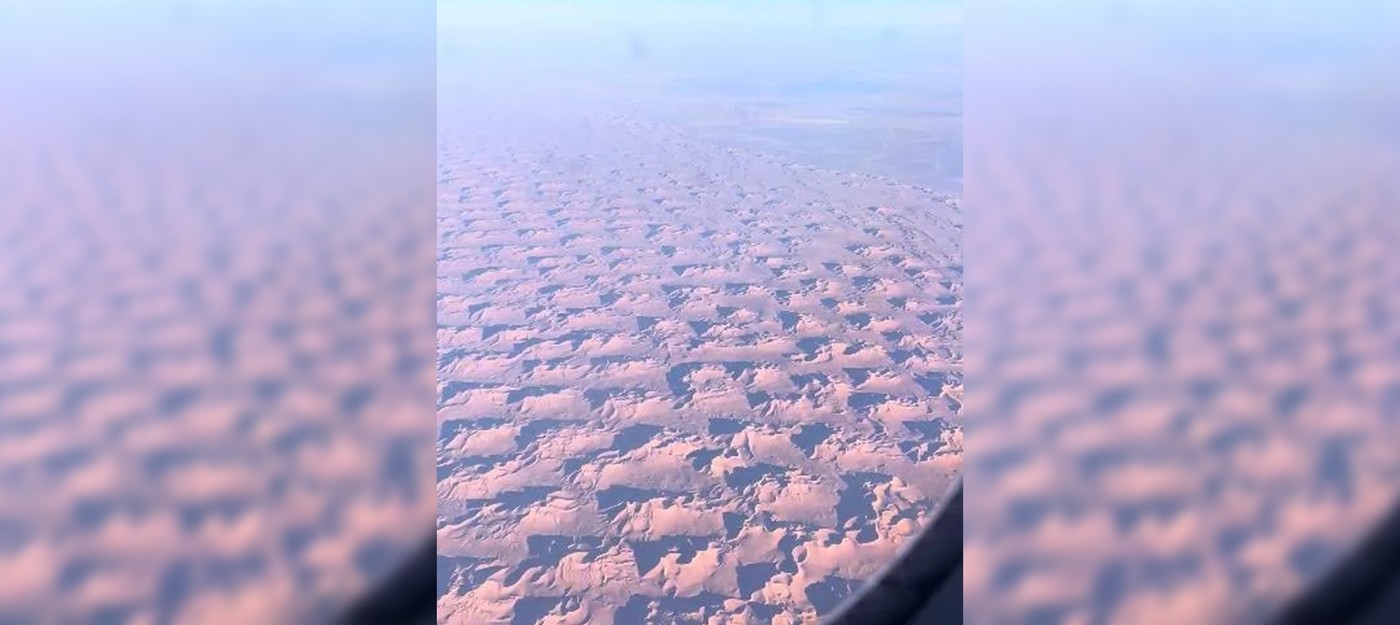
A video shot through a plane window over the Sahara shows perfectly even rows of dunes stretching to the horizon with no landmark in sight. The pattern repeats so precisely that the first wave of reactions boiled down to jokes about copy-pasted textures and lazy developers.
Luckily, the discussion moved on from there into the physics of sand and stories of people who got lost in the desert.
The symmetry comes down to two conditions – consistent wind and a lack of any major terrain features. A uniform surface doesn't disrupt airflow, so the system settles into a simple repeating pattern.
Here's a detailed breakdown of the mechanism from people who know their stuff:
Every time a dune forms, it blocks the wind and creates a calm, sheltered zone right behind it, and that's exactly where the next dune can't grow. A new sand hill only starts building where the wind dips back down to the ground, and that seems to happen at roughly the same distance every time. On top of that, dunes aren't static – they move, with smaller ones traveling faster and slamming into bigger ones until everything averages out, and the whole desert self-organizes into these neat, repeating rows.
The same principle plays out in water, just with particles billions of times smaller. Self-repetition in nature tends to show up wherever a system lacks structural complexity.
A list of similar examples people brought up in the discussion:
tidal locking of moons
basalt columns
wind bands on gas giants
radial "spiders" on Mars
the hexagon at Saturn north pole
concentric ridges on Europa
Earth crust looks unusually chaotic by comparison. Different rock types, seasons, the water cycle, and tectonics all disrupt the system's pull toward a simple, regular pattern, which is why these structures seem rare here – it's really the biosphere complexity getting in the way.
Dune mobility has a very real practical downside. Roads get buried so fast that after a single night's stop, you often can't retrace the same path back, and the desert doesn't exactly have road signs every few miles.
A resident of one Saharan country put it this way:
Большая часть моей страны состоит из пустыни Сахара, и очень многие теряются на дальнем юге, в основном туристы и не местные, а не туареги. Большинство из них погибает, и тела не находят, другие сходят с ума. Ужасающая судьба.
One of the major trade routes illustrates just how serious the problem gets. A stretch of it is too wide for camels to carry enough water across in one go, so caravans used to send out a second group loaded with water from the destination side to meet them halfway.
Among the famous cases that came up was Mauro Prosperi, the Italian who got lost during a marathon race across the Sahara and survived by drinking moisture squeezed from wet wipes and, at one point, bat blood.
Another story that came up was the Lady Be Good bomber, lost over the Libyan desert. One person shared a story from their teenage years, when a group on motorcycles rode past a couple of dunes and, on the way back, couldn't find their own camp, missing it by several kilometers, and only made it back thanks to flares.
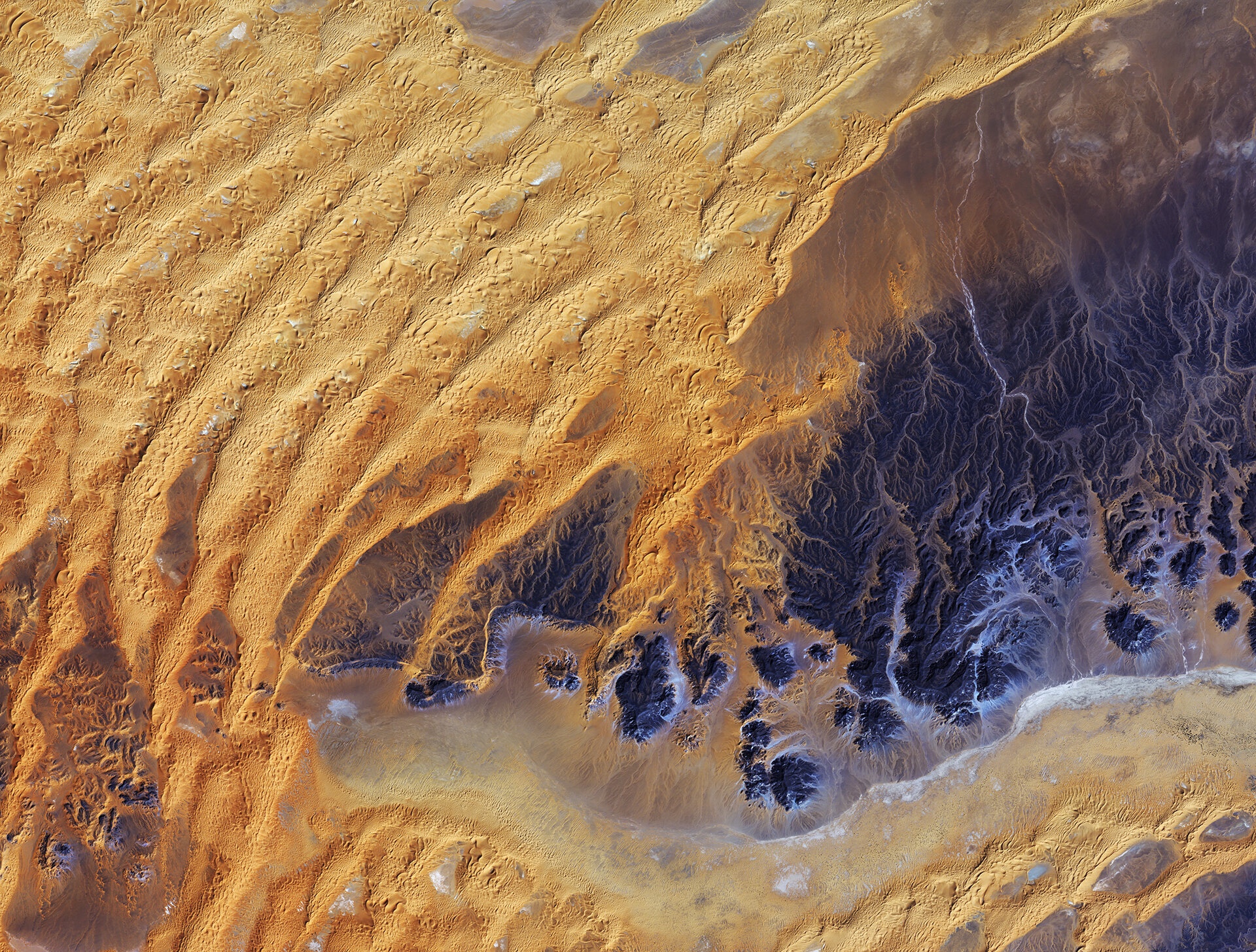
Thinking of the Sahara as one giant sand sea is a common misconception. Pure sand covers less than 30 percent of its area, while the rest is mountains, plateaus, and rocky terrain, some of it looking downright otherworldly.
The desert took on its current dry look after an abrupt climate shift roughly 8,000 to 4,500 years ago. Before that, the region had forests and lakes, and even further back, a sea – something Egypt Whale Valley still hints at with its huge fossilized skeletons.
- Hollywood and VFX specialists panic after release of AI video generator Seedance 2.0