17-year-old schoolboy discovers a way to rid bees of mites and boost honey harvests

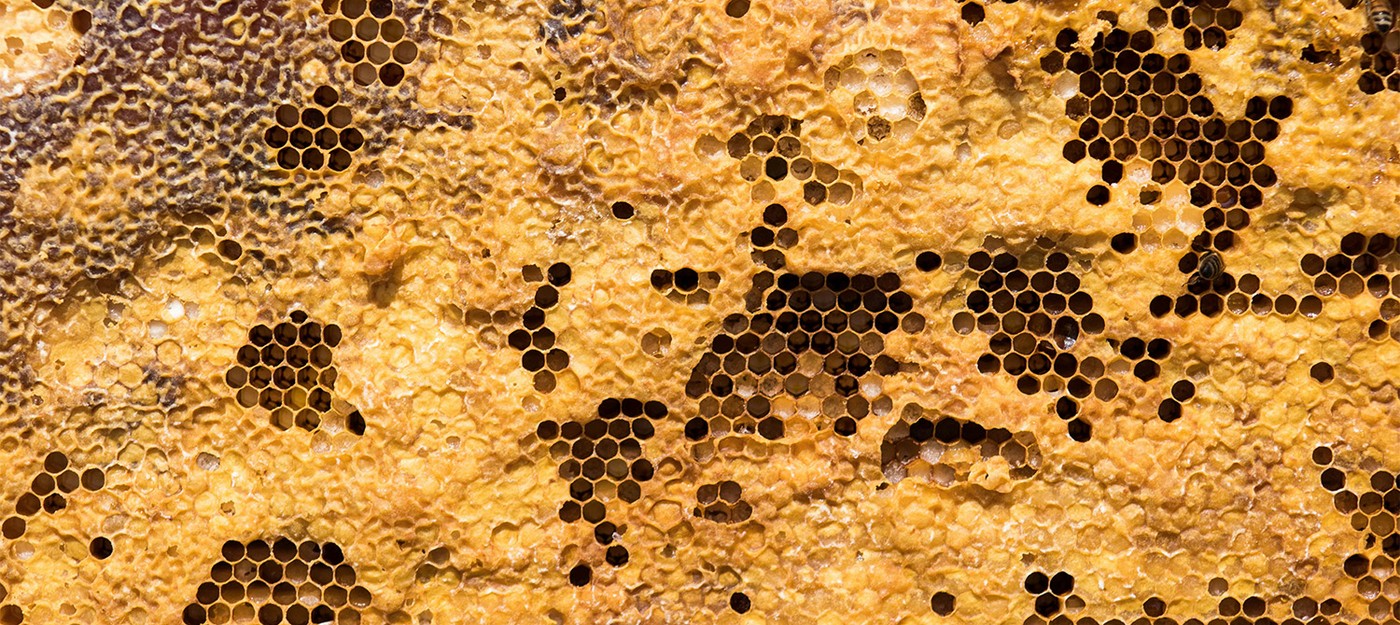
Aakash Manasvi, a 17-year-old from Orlando, Florida, built a system that knocks varroa mites off honeybees using carbon dioxide. Field tests covered 60 active hives, and the treated colonies came out healthier and produced more honey than hives treated with standard chemicals.
His interest in the topic started with a trip to a local apiary with his older brother. He noticed empty hives and asked why – the answer introduced him to the parasite.
Varroa mites feed on bees and spread viruses throughout the colony.

Beekeepers typically rely on chemical treatments to fight the mites. That approach is expensive and gradually loses effectiveness as mites build up resistance. Existing treatments also leave chemical residue in honey and wax, and can harm the bees themselves.
Manasvi found his answer in physiology. Honeybees tolerate much larger swings in blood acidity than varroa mites do, and that gap became the basis for his solution. When carbon dioxide enters an insect body, it forms carbonic acid and shifts the pH of the hemolymph.
His device, called the Mite Blower, attaches to a standard hive and connects to a CO2 tank through a regulator. A custom-built airtight lid distributes a precisely controlled gas concentration that sinks down through the stacked hive boxes.
At the right concentration, bees handle the exposure fine, while mites lose their grip and fall off, after which they get removed from the hive. The gas simply disperses afterward, leaving no residue behind – unlike conventional treatments.
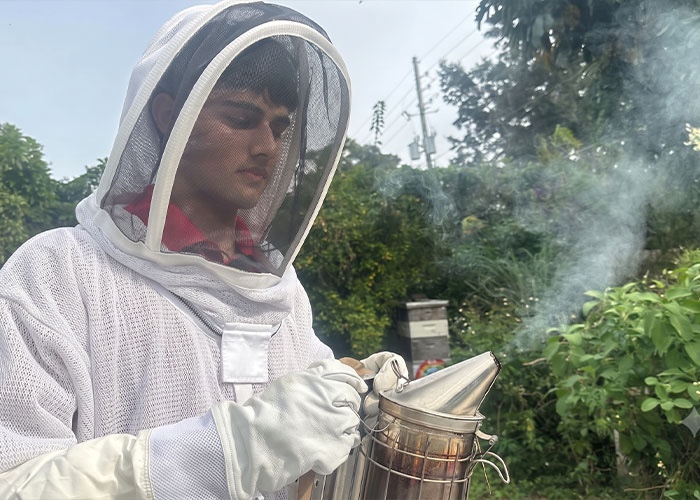
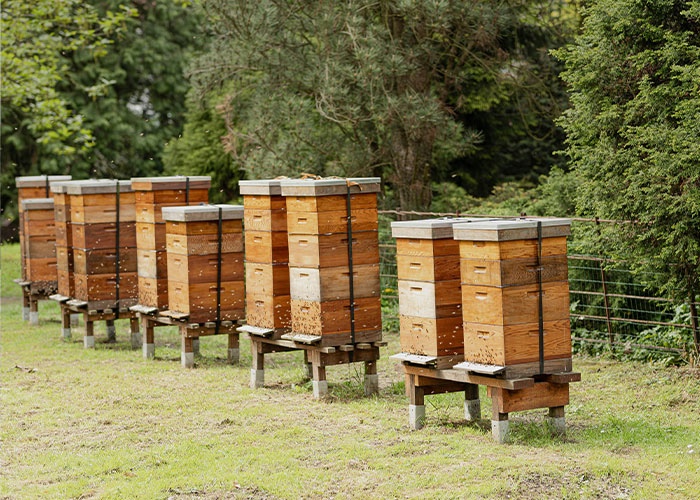
Field trials ran alongside beekeepers and researchers from the U.S. Department of Agriculture. Over ten weeks, the team tracked mite infestation levels, bee mortality, and colony productivity.
The system matched existing pesticides in effectiveness against mites, and often outperformed them, all while avoiding most of the side effects that come with chemical treatments.
Key numbers behind the project:
60 active hives in field trials
10 weeks of monitoring
roughly 13,500 times cheaper than industrial chemical treatments
about $64,000 in potential annual savings for the average commercial beekeeper
$10,000 in prize money for science communication
With one in four native wild bee species at risk of extinction in North America – and the rate more than double that in Europe – this kind of breakthrough could help slow the decline of these insects.
The project grew well beyond a school experiment. Manasvi placed among the top ten finalists at the 3M Young Scientist Challenge, then won the Peggy Scripps Award for science communication at Regeneron ISEF 2026.
He plans to keep spreading the technology among beekeepers and continue working on the broader pollinator crisis.
Aakash Manasvi: When I start talking about my research, something I'm really passionate about, I just completely shift into another state. It's like I'm not a student anymore.
In college, he plans to study entomology and build a career working with insects.