Windows 11 Weather App Consumes 1.2 Gigabytes of RAM for a Forecast

Windows is going through a rough patch, with years of stagnation and neglect finally hitting a boiling point for users.
Lack of optimization, bloatware, ads, forced AI features, and persistent tracking have forced Microsoft to admit its missteps and commit to fixing the OS at large.
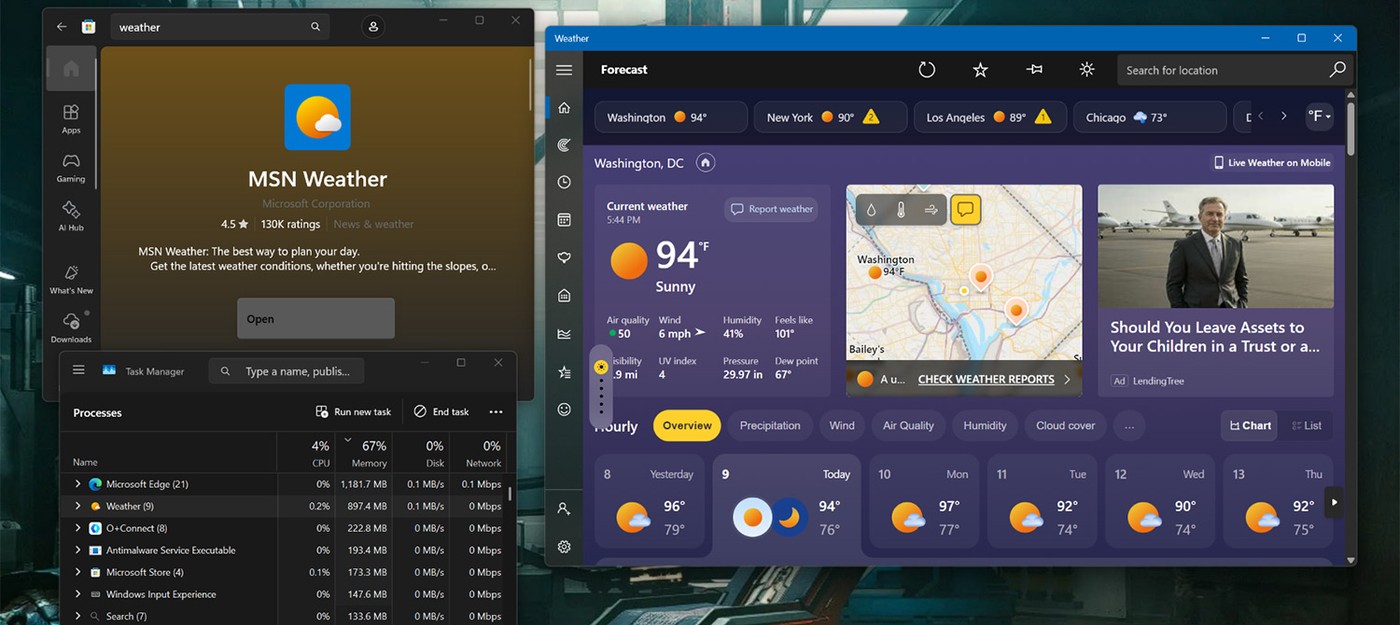
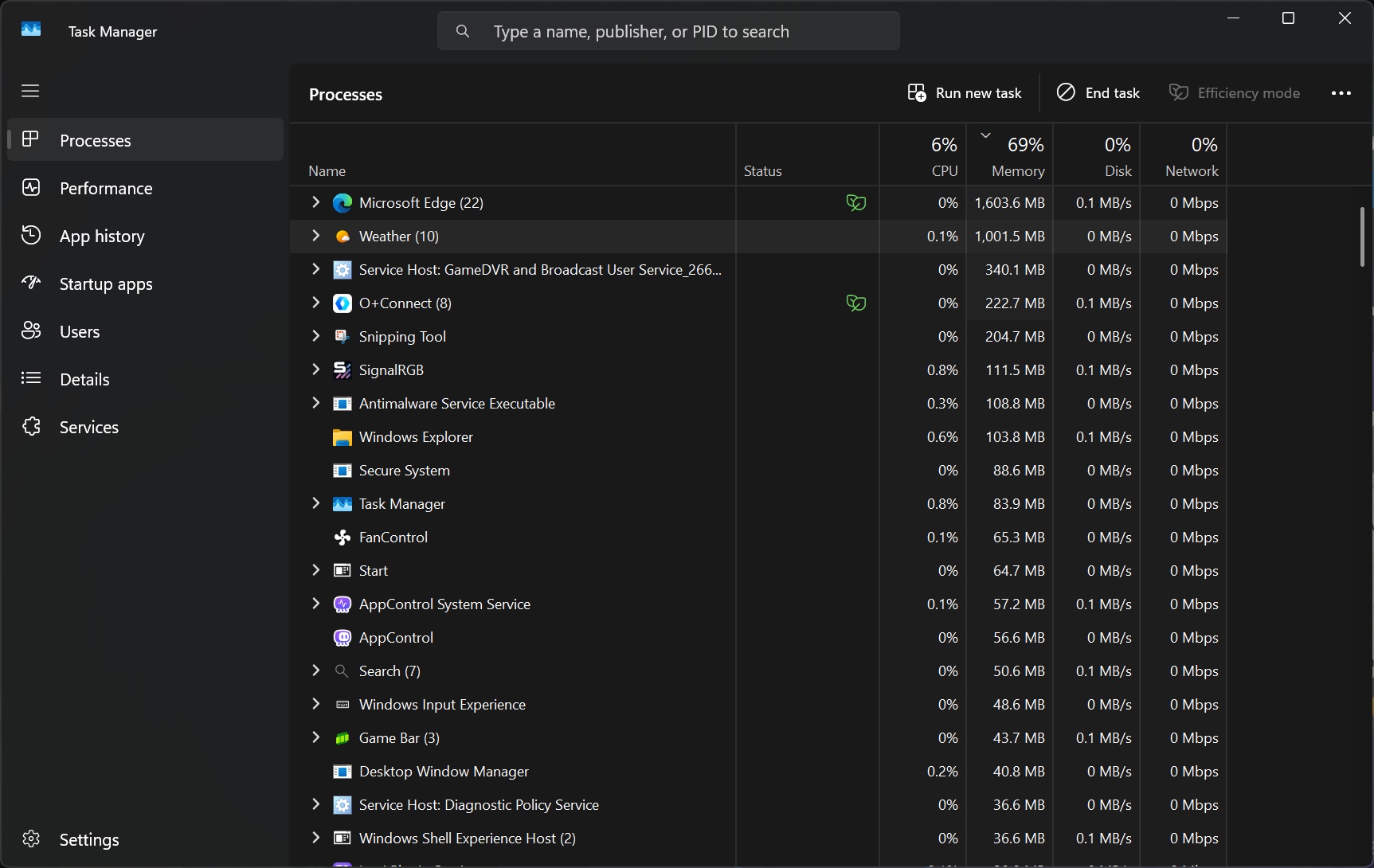
New testing from Windows Latest shows that the built-in weather app is a perfect representation of the state of Windows right now. The "app" consumes up to 1.2GB of RAM while idling and serves up ads while users check the temperature outside.
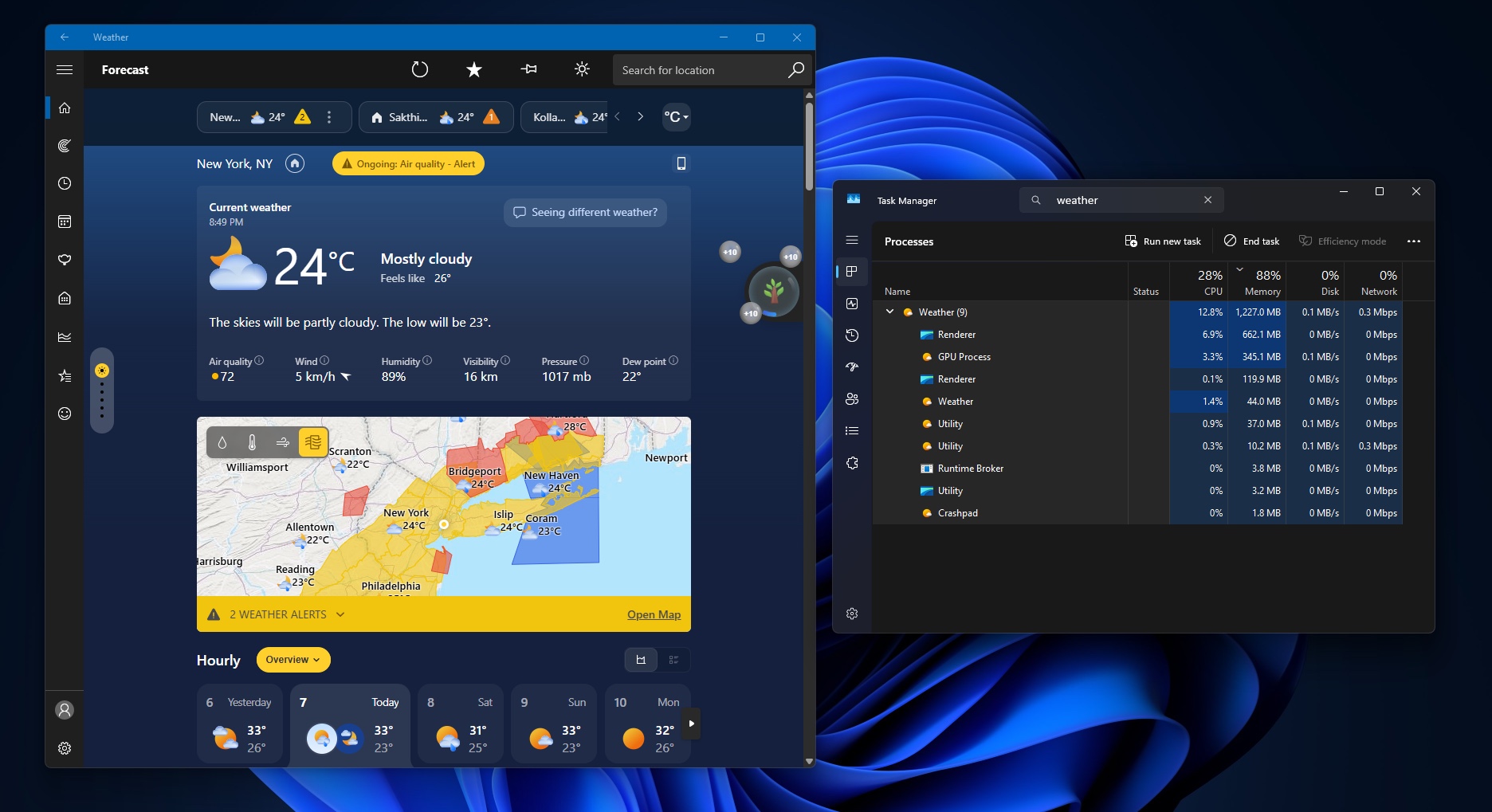
MSN Weather ships with Windows by default, which explains all the promotions scattered throughout despite the OS itself being paid software. The app does look modern, though, and packs in plenty of useful data, including a live precipitation radar, hourly wind and rain breakdowns, an air quality index, and moon phases.
The forecasts are also accurate since the data comes from several providers around the world. Getting precise weather data isn't cheap, so Microsoft isn't exactly running a charity here.
Still, the comparison falls apart once you look at the competition. Apple native weather app on macOS is just as polished, detailed, and accurate, yet it's completely free of ads. It only uses about 250MB of memory to display the same kind of data, five times less than what Microsoft solution needs.
The reason comes down to the fact that MSN Weather isn't really a full app to begin with. It's a web wrapper pinging a set of browser tabs behind the scenes.
Opening the MSN Weather entry in Task Manager reveals eight Chromium-based subprocesses, confirming a simple truth – what users are looking at is just a website rendered through WebView 2. For comparison, native Windows apps are supposed to follow the WinUI framework, which Microsoft is gradually rolling out to replace Win32 and UWP.
Microsoft has committed to updating all of its built-in Windows apps to Win32, which should noticeably improve their optimization. Whether the ads will disappear along with it remains unclear.
While checking the forecast, testers ran into an Adobe Acrobat ad, along with banners for LendingTree and Spotify. Apart from that, scrolling through the app and switching between sections and boxes worked smoothly enough. From a design standpoint, the app really is well put together and detailed, so credit goes to Microsoft, or maybe MSN, on that front.
When Microsoft promised to rebuild all native Windows 11 apps, it never specified whether that list includes MSN-branded services like MSN Weather and MSN News.
Since these apps show up under plain utilitarian names within the OS, there's a good chance these memory hogs will eventually get updated too. Until then, sticking to a smartphone for checking the forecast might be the smarter move, especially for anyone who once googled how to remove the weather widget from the taskbar.